
• Welcome to Photrio!
    Registration is fast and free. Join today to unlock search, see fewer ads, and access all forum features.
    Click here to sign up

Who uses a sky quality meter for estimating night time exposures?

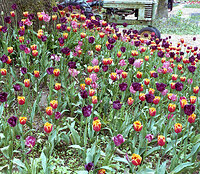
Tractor & Tulips

A
Tractor & Tulips

  • 0
  • 0
  • 12
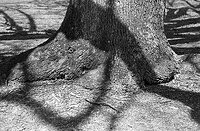
Tree with Big Shadows

Tree with Big Shadows

  • 2
  • 0
  • 71

Forum statistics

Threads
203,456
Messages
2,855,031
Members
101,853
Latest member
Expert Graphics Int.
Recent bookmarks
0
Also What are you going for? Star trails or whole swaths of the sky?
Both. Initially I'd like to integrate night landscape with star trails, but by adding and EQ5 mount I could also go for larger stellar structures (Orion nebulas, Andromeda, patches of milky way, ...)
I think this will make a difference. That device more or less tells you the "quality" of the sky light.

Meaning if there is less "Sky glow" you have a higher quality of sky light.
Well, what it supposedly does is it tells me the brightness of the sky background, and according to the marketing material it does that very accurately. My aim was to derive a maximum exposure length from that before the sky turns grey in my slides.
Ultimately you are going to have stack photo's together (regardless of photo exposure length) if you want to get all of the possible details and colors from film.
The funny thing is I didn't need any of that (well, at least for my lowly standards) when I used negative film. Even with Portra 800 I just pointed my camera in the right direction, opened the shutter and closed it when I got tired of it, sometimes after 20 minutes, sometimes after 1 1/2 hours. It just worked.

Maybe I just shouldn't be doing night shots this with slide film ...
 
I just found an old book I have "Practical Astrophotography," I know there is a section on slide film in there. When I get home I will take a look at it and see what it says. Overall the book is pretty good and talks about a lot of different things.

You don't need an EQ5 mount to shoot photos of constellations, google a barn door tracker or a "scotch mount." They have become as fancy as a double arm mount which is surprisingly accurate.

My computer is about to die, I will post more later
~m
 
bobwysiwyg,
I guess I should have linked that for the group here but my computer was about dead.

As for shooting slides of the night sky the only thing that the book talked about was "Hypering" film or subjecting it to hydrogen under a vacuum for a period of time. This apparently increased the sensitivity of the film at the risk of fogging it. ( http://www.amazon.com/Practical-Astrophotography-Jeffrey-R-Charles/dp/1852330236 ) The book has some good starting point or reference exposure times in the back, I will copy some of them down here for you.

Some things to think about. With a 135mm lens M31 Andromeda will be a faint, small dusty star. Your tracking will have to be really accurate but is possible.

I would love to see some of your stuff with the Portra film. I would suspect that the sky fogging was less would be do to the latitude and maybe even printing technic?

If your interested in exchanging information about this send me a PM with your email. I am working on some clear plans for a double arm "Trott" mount that should allow you to shoot photos up to an hour long.
 
Mr.,

Interesting, thanks. I had never heard of these devices. In case anyone else is interested;

http://en.wikipedia.org/wiki/Barn_door_tracker

I've built one and added a stepper motor to it to automate the turning of screw. They work well for exposures up to about 10 minutes or so and you need to be very careful aligning them to north otherwise you will get drift in the stars.

It's a very good thing to start out with and very simple to make.
 
I've built one and added a stepper motor to it to automate the turning of screw. They work well for exposures up to about 10 minutes or so and you need to be very careful aligning them to north otherwise you will get drift in the stars.


Kirk,
Not entirely true, if you build a double arm tracker you can get exposure of over an hour long. The key is in the design. I am in the process of building one now (should be finished tomorrow once I get home from work) and based on my dimensions mine should track with exceptional results up to the first 30 mins then average results up to 60 mins and then there after exceptional results. The key is getting it to track at 15.04 degrees per min.

But you are right polar alignment is crucial.


If you want to build one, this is a great start http://www.davetrott.com/DoubleArmBarnDoor.html

~mike
 
Mike - make sure you post some photos! They are fun devices and easy to make.
 
Photrio.com contains affiliate links to products. We may receive a commission for purchases made through these links.
To read our full affiliate disclosure statement please click Here.

PHOTRIO PARTNERS EQUALLY FUNDING OUR COMMUNITY:


Ilford ADOX Freestyle Photographic Stearman Press Weldon Color Lab Blue Moon Camera & Machine
Top Bottom
