
• Welcome to Photrio!
    Registration is fast and free. Join today to unlock search, see fewer ads, and access all forum features.
    Click here to sign up

Who does not use a Grain Scope?

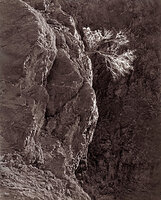
Bush on Canyon Wall

A
Bush on Canyon Wall

  • 0
  • 0
  • 0
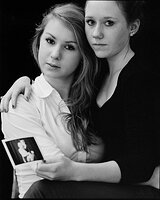
double portrait

A
double portrait

  • 1
  • 0
  • 20

Forum statistics

Threads
203,257
Messages
2,851,997
Members
101,747
Latest member
Tallphotographer
Recent bookmarks
0

photomem

Member
Allowing Ads
Joined
Sep 19, 2009
Messages
624
Format
Medium Format
I have some vision issues (easily corrected with glasses) but for the life of me I have tons (or tonnes) of trouble using a grain scope to focus the enlarger when printing. The system I have adopted involves me taking off my glasses, opening the enlarger to the biggest F stop, and squinting. Luckily, I have not had any issues with focus, all of my prints come out sharp.

But, I am wondering if I am an oddball, do any of you skip the grain scope when focusing the enlarger?
 
I have a Peak and a Micromega Critical Focuser and a Prinz from the '70s, I like and recommend the Micromega.
I'm not sure why anyone wouldn't use one.
 
I am severely myopic and find I can focus without a grain magnifier as well as I can with one: if I focus by eye and then look through magnifier the focus point is already as good as it can be. If one is normal or far sighted then a grain magnifier might be a help.
 
I have never used one. So far nobody has complained about my prints. I often feel I should use one.
 
I use a magna viewer, never have been able to use a grain focuser
 
I am far sighted and could not produce a sharp print without a focusing aid. I do one or two rough prints by eye to determine burn dodge details but THE print is always after using a grain focuser, generally a Peak.
 
I do not use a grain focuser because I don't have one. But, when I use regular microscopes, I have to take my glasses OFF. Otherwise, the distance between my eye balls and the lens is too great that I have trouble seeing the entire field of view. This is with what is called "high point" ocular pieces that are supposedly made for eye glass wearers. Perhaps something similar is happening to you?
 
Whether you need one or not depends on your eyesight, and also on the situation: if you are making prints with small enlargement (2X--3X) then you are probably working at a fairly small f/ number and the depth of field will cover any small error. At high enlargement (10X, say) things become more demanding, partly because the details (and grain) are magnified, and partly because you will probably be working with a wider f/ stop. Similarly, alignment of the enlarger is not critical for small enlargement factors, but it is for large ones.

In the middle range, you may want to try "rolling focus": rock the focus backwards and forwards, and try to sense the two points where it is equally defocused. Set the lens exactly in between these points, stop down, and go. It works surprisingly well, even at high magnification.
 
I am severely myopic and find I can focus without a grain magnifier as well as I can with one: if I focus by eye and then look through magnifier the focus point is already as good as it can be. If one is normal or far sighted then a grain magnifier might be a help.

Me too. I do focus by eye, and I do double-check with a grain focuser, and it is always spot-on. I never realized that was related to being near-sighted. Every cloud has a silver lining. :smile:

-Laura
 
I have some vision issues (easily corrected with glasses) but for the life of me I have tons (or tonnes) of trouble using a grain scope to focus the enlarger when printing. The system I have adopted involves me taking off my glasses, opening the enlarger to the biggest F stop, and squinting. Luckily, I have not had any issues with focus, all of my prints come out sharp.

But, I am wondering if I am an oddball, do any of you skip the grain scope when focusing the enlarger?

Hi,
There are vision problems that make using a grain focuser difficult do to trouble viewing the aerial image. The magna-sight (mentioned by PBrooks) has a focusing screen and you view a magnified image of it instead of an aerial image. This works for many people who have difficulty using a grain focuser. My understanding is that the inability to view the aerial image is related to astigmatism.

My experience in the darkroom has been that you can always achieve a better standard of focus using a magnifier.
Celac
 
If you have severe near sightedness, you might not be able to focus a grain magnifier with your glasses off, as you run out of eyepiece travel before you can focus on the crosshairs at the proper image plane.
 
I have always used a focusing loupe (unknown type) to focus when working in a school darkroom. I found that I could not figure out how to use a grain focuser. Now that I have nearly gotten a darkroom set up in my home, I hope to learn how to use a grain focuser, in part because they are so common.
 
I use one of these (sorry only link I could find) and although I have perfect vision, this could really be a help for someone without the best eyesight. I can literally almost see through this thing from across the room. No need to squint through a tiny eyepiece. It's actually very nice because I can look through it standing up while focusing the enlarger rather than be contorted squinting through a tiny focuser while reaching over my head to rack the bellows.
 
I only use one with 4x5. I can see the grain well enough with my naked eye for the smaller formats. If I were enlarging the 4x5 more (I only go to 11x14 at the moment), then I might be able to see the grain more easily in it as well. Though even with the 4x5 I'm right on by eye - the grain focuser is a second check. My eyes are 20/15 and 20/20 (last I had checked).
 
I only use one with 4x5. I can see the grain well enough with my naked eye for the smaller formats. If I were enlarging the 4x5 more (I only go to 11x14 at the moment), then I might be able to see the grain more easily in it as well. Though even with the 4x5 I'm right on by eye - the grain focuser is a second check. My eyes are 20/15 and 20/20 (last I had checked).

Oh you lucky gal. What I'd give to have vision as good as yours. Yes, I use a grain focuser all the time. I'm so severely farsighted that I must use trifocals. My distance vision is ok, but close up I have real problems and need all the help I can get.
 
My understanding is that the inability to view the aerial image is related to astigmatism.

That must be what it is cause I have astigmatism in both eyes. But with that magna sight thing, I focus on the smallest little bit I can.
 
I always print at smallish apertures anyway. Focusing by eye at f/3ish and the stopping down to f/11 seems to be pretty bulletproof; it seems like you have several centimeters, certainly milimeters, of DOF most of the time.
 
That must be what it is cause I have astigmatism in both eyes. But with that magna sight thing, I focus on the smallest little bit I can.

Question: Can you see the grain? Is your problem with the crosshair?

You might try to see if you can rotate the crosshair to correspond to the axis of your astigmatism. You can get that off of your prescription. It could help, but no guarantees.

I found a whole chest of optometric diopters including the positive and negative cylinders at a thriftstore once. If my glasses didn't correct that for me, I suppose I could build a corrective stack of lenses.

It might be possible to get a corrected eyepiece for your grain magnifier if it's important enough to you. I'm sure it would make life easier. It won't be cheap!
 
How Sharp Is Sharp Enough?

But, I am wondering if I am an oddball, do any of you
skip the grain scope when focusing the enlarger?

For a close look I use reading glasses, both eyes open.
Lens wide open the focus is tweaked until I can see no
further improvement. Exposures are always at least
one stop down from wide open so must be even
sharper than visually discernible.

Sharper than visually discernible is sharp enough
for me. Dan
 
In my old Meopta Opemus IIa there is a device in filmcarrier which, when pulled towards you, projects two lines on "paper". When these lines are sharp and aligned the picture is sharp. Is this really a feature which can't be found from other enlargers?
I often try to use a Paterson grainfocuser, but with glasses it is sometimes impossible to see anything in focuser.
 
In my old Meopta Opemus IIa there is a device in filmcarrier which, when pulled towards you, projects two lines on "paper"...

My Opemus 6a also has this feature, but it doesn't work for me. When these lines are aligned, I get somewhat blurred images, but the manual clearly states that it won't work if you use the glassless negative carriers (as in my case).

Since I don't have a grain scope, I use a slide to project an image, which has sharp lines. I focus with the lens at f/2.8 and stop down to f/8. Whenever I have dust or spots on the negative, I get razor sharp traces of it on the print.
 
I think I'm just an idiot, but I can't use a grain focuser with 120. 35mm is no problem, the grain is crystal clear. But I can't make out any detail, and definitely no grain, when trying to focus 120...
 
The Paper Sees Better

Whether you need one or not depends on your eyesight, ...

A proper focus is a sharp image on the paper. Good vision
or poor if the image one SEES upon the paper is as sharp
as one can see to make it then the image the paper sees
will be sharp. And sharper still for stopping down.

To put it another way: One need only adjust the focus
until the image appears to the eye to be as sharp as
possible. The paper will see the image as being
sharp. Stopping down the lens will produce an
image sharper than that which is visually
perceptible. Dan
 
A proper focus is a sharp image on the paper. Good vision
or poor if the image one SEES upon the paper is as sharp
as one can see to make it then the image the paper sees
will be sharp. And sharper still for stopping down.
...
Dan

True, generally, but there are times and working methods which preclude this technique; particularly if you are using an analyzer or translator to adjust the light with the aperture having the negative removed. I sometimes do this now even with black and white if it makes some project more efficient or just easier. Anyway, I don't trust the stop down method implicitly because I have experienced focus shift more than once or twice. This generally is only a problem with older lenses, and I do still have some of those. I prefer to focus at working aperture because then I'm sure of what I'm getting - unless of course, we get some thermal pop. Then, well, drastic measures must be employed, but that's another issue. And, by the way, a grain magnifier is an essential tool for dealing with that problem. How else would you see it?

Your method is the way I learned it from my stepfather in 1963 and it worked for me then. I still used it until I began printing color in commercial labs. That took care of it for me and I'm not about to go back. It is widely used and explains why we got those weird "preset" lenses with the incomprehensible aperture setting rings that turn on and off that drive me nuts.

However, for most people, most of the time, it will suffice. I just don't see it as a sure thing.
 
Photrio.com contains affiliate links to products. We may receive a commission for purchases made through these links.
To read our full affiliate disclosure statement please click Here.

PHOTRIO PARTNERS EQUALLY FUNDING OUR COMMUNITY:


Ilford ADOX Freestyle Photographic Stearman Press Weldon Color Lab Blue Moon Camera & Machine
Top Bottom
