
• Welcome to Photrio!
    Registration is fast and free. Join today to unlock search, see fewer ads, and access all forum features.
    Click here to sign up

white easel OK?

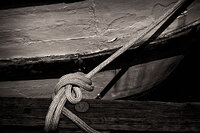
Tied to the dock

D
Tied to the dock

  • 1
  • 0
  • 28
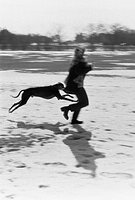
Running in the Snow

H
Running in the Snow

  • 0
  • 1
  • 43

Recent Classifieds

Forum statistics

Threads
203,078
Messages
2,849,544
Members
101,645
Latest member
daniel_sydney
Recent bookmarks
0

David Lyga

Member
Allowing Ads
Joined
Nov 25, 2007
Messages
3,449
Location
Philadelphia
Format
35mm
Back in the 70s and 80s the Saunders yellow easel was highly acclaimed (through advertising) because the yellow base would be less inclined to reflect image light back into the emulsion and, thereby, prevent undo fog.

My question is this: Has anyone ever experienced deleterious effects by retaining the traditional, white easel with any weight of paper? I have not but am concerned, nevertheless.

Was there any real merit with this advertising campaign by Saunders? - David Lyga
 
Who knows, but the Saunders approach may very well have been advantageous with panchromatic or colour materials.
 
David, I have white, yellow, and black background easels, and see no difference between them as far as light bounce through the paper. I use them with all papers, RC, FB single and double weight.
 
I did a lot of printing on a white easel for years and saw no deleterious effects. That said, I never did a comparison test. If you have both colors of easel, just make the same print using both and see if there is any difference (or use a yellow or black backing for one print). The possible degradation would be fogging in the highlight areas (greying, reduced contrast) from light that makes it through the paper and then gets reflected back.

There's always yellow spray paint.

Best,

Doremus
 
The paper underneath the gelatin is itself white and reflects quite a bit of light: just think how different the projected image looks on paper vs. on a black easel. I'd guess that any effect of light going all the way through the paper, being reflected by the easel, then all the way back through the paper again, would be very subtle .. probably like adding a tiny amount of diffusion, which would make the shadow areas "glow" or softly spread.

I make pinhole cameras out of tin cans, and I use photopaper to make the negatives. The inside of the cans are usually shiny metal, or colored white, and I usually spray paint the interior of the can flat black, mostly to avoid reflections from the parts that are not covered by photopaper. One time, out of curiosity, instead of painting the inside black, I left shiny metal behind the paper, and taped 120 black backing paper over the parts of the surface that would not be covered by the paper negative. I thought I could see a subtle difference in the results in general ( a sort of softness ), but when I made a solargraph it was obvious: the streaks left on the negative by the sun did not have crisp edges. So my hunch is that reflections from underneath your paper might affect the print in a tiny, almost invisible way, and it would make the most difference if you have something like a "specular shadow" in your print;: a small area of perfect black surrounded by a bright area. In that case, the edge of the shadow might "bleed" a little or be slightly soft. Although you'd probably have to look at your print with a magnifying glass to notice it :smile:
 
Beseler and Dunco easels are gray.

Half cover a sheet of enlarging paper with a straight edged barrier (like a darkslide). Place the paper over a white and yellow surface 90 degrees to the straight edge. Blast it under the enlarger and see if the black area bleeds to white at all on the print. Now you know.
 
My Saunders easel came with a leaflet that made this statement about the yellow surface. I am skeptical by nature so I made a simple test. I used a light meter to measure how much light passes through printing paper to the other side, I got an answer of approximately 5 stops light attenuation, the paper was a fiber base double weight paper tested in the white margin of a print, RC paper by comparison gave about 4.5 stops. Using this information I reason thus. For light that is reflected from the easel to affect the emulsion the light passes first through the paper, and in doing so is attenuated by 5 stops. It is reflected from the easel, allow 100% reflectance for the sake of argument, the light must then pass back through the paper in order to reach the emulsion at the surface, and in doing so the light is attenuated a second time by about 5 stops. The total light attenuation for the two passes is 10stops. From this I concluded that reflectance from the easel is not an issue under typical printing conditions. I think Saunders had a good story and pushed it regardless of the facts!
 
I recall a problem many decades ago with an image positioned beneath photo paper in the enlarger printing through faintly. Also, when photocopying photographs on paper printed on both sides, placing a black sheet of paper beneath the sheet being copied eliminates most of the image from the reverse side.
 
put a stripe of black electric tape on the easel. make a print n see if you can notice the tape watermark in the print?

i paint my easels flat black.
 
Back in the 70s and 80s the Saunders yellow easel was highly acclaimed (through advertising) because the yellow base would be less inclined to reflect image light back into the emulsion and, thereby, prevent undo fog.

My question is this: Has anyone ever experienced deleterious effects by retaining the traditional, white easel with any weight of paper? I have not but am concerned, nevertheless.

Was there any real merit with this advertising campaign by Saunders? - David Lyga
Yes,white easels cause unnecessary fog. I painted all my easels flat black to stop it.
 
This is the result that I feared: no definitive answer! Thus, it is probably best to hedge one's bets. There are (or used to be) extremely thin papers (lightweight) that probably would not stand the test of safety, however.

Ralph, which paint is best so that, when dry, it will not come off (if double stick tape is applied in order to hold paper flat when exposing)?- David Lyga
 
Last edited:
Yellow easels absorb blue light, appropriate for most graded papers, which are blue-sensitive. Otherwise, they don't make a lot of sense. I paint em black. White?? You gotta be kidding.
 
It doesn't matter regarding centering and composition because one should use a sheet of paper of the same thickness to be printed on anyway. So for alignment and focusing, an unexposed/fixed/washed/flattened sheet can be used. A black background on the easel is of zero negative consequence. That stated, I can't recall a time that a yellow easel affected my printing. I never used polycontrast though... not that I consider that a big deal.
 
I thought the explanation by tedr1 seemed very logical. Where does his logic/test fail? If white easels are seriously prone to fogging I wonder why so many easels are white?

pentaxuser
 
Yes, that's very logical... IMO.
 
here is something i found from a long time ago

(there was a url link here which no longer exists)

thats why i paint my easels flat black.


rustoleum flat black
 
Once again, i use a white easel regularly, with zero ill effect. I suppose if the exposure times where protracted, there may be some light bounce, but it just doesn't happen with short exposures.
 
I'm involved with one type of material where even a black easel is not sufficient, requiring a VERY black velour to prevent reflective exposure. I just
relaminated a Durst baseboard black. It all adds up. Maybe if you do just one kind of printing. But the less light bouncing around due to any reason
whatsoever, the more versatile your darkroom will be.
 
Fire-engine red would absorb both blue and green and give a bit of a splash of color to your darkroom as well. I'd use semi-gloss enamel/lacquer and let it really dry well if I were using double-stick tape. Flat would be better, but might pull off with the tape...

FWIW, you can always just sandwich a piece of construction paper with your print paper... of any color you desire. If I were you, I'd do the test(s) outlined above and see if there's really a problem that needs solving or if you're just chasing after the non-existent. My yellow Saunders easels do fine for me.

Doremus
 
Heck. If none of this matters, and you really want a darkroom where everything is obvious and roomy, just add a skylight, some picture windows, paint EVERYTHING bright white. Some notions just seem counterintuitive. I like that fire-engine red scheme. That way every time your turn your lights on, the simultaneous contrast response in your eye starts seeing a green afterglow. Real handy for evaluating subtle toners etc. Nothing like "Latin neutral". Does you also like chili peppers for breakfast, Doremus?
 
... Does you also like chili peppers for breakfast, Doremus?

I does!

But, the fire-engine red comment was fully tongue-in-cheek. FWIW, however, except for the area around my enlargers, my darkroom is bright, semi-gloss white. My Saunders easels are factory yellow and seem to do the job just fine for B&W, which is the only thing I do and I tone under mixed daylight and incandescent light (daylight floods and 3400°K halogens), which seems the best match for variations in display lighting that I've found.

I like chili peppers (habaneros best) for lots of things, and they're bright white under safelight!

Best,

Doremus
 
I'm surprised that somebody hasn't come up the a developer recipe from chili peppers. The real hot ones would give a high contrast lith look. But my
own darkroom is multipurpose, meaning all kinds of color as well as black and white work, so the less light bouncing around for any reason whatsoever, the better. I do have some white FRP (fire-resistant fiberglass) ceiling panels way up high, above a couple of my big 8x10 vertical enlargers, cause that's the only shade they come in. But the adjacent walls are black.
 
I'm surprised that somebody hasn't come up the a developer recipe from chili peppers. The real hot ones would give a high contrast lith look. But my
own darkroom is multipurpose, meaning all kinds of color as well as black and white work, so the less light bouncing around for any reason whatsoever, the better. I do have some white FRP (fire-resistant fiberglass) ceiling panels way up high, above a couple of my big 8x10 vertical enlargers, cause that's the only shade they come in. But the adjacent walls are black.

Use ghost peppers for truly haunting imagery.
 
I like chili peppers (habaneros best) for lots of things, and they're bright white under safelight!
Doremus
My favorite breakfast is duck eggs scambled with minced Peruvian ají peppers.... served with warm corn tortillas...
I wonder if you could make a developer with those....

Edit: typing late, I see others already had the same thought! Great minds.
 
Photrio.com contains affiliate links to products. We may receive a commission for purchases made through these links.
To read our full affiliate disclosure statement please click Here.

PHOTRIO PARTNERS EQUALLY FUNDING OUR COMMUNITY:


Ilford ADOX Freestyle Photographic Stearman Press Weldon Color Lab Blue Moon Camera & Machine
Top Bottom
