• Welcome to Photrio!
    Registration is fast and free. Join today to unlock search, see fewer ads, and access all forum features.
    Click here to sign up

Where has the grain gone?

Cone and Hoop

A
Cone and Hoop

  • 0
  • 0
  • 14
Snow on Willoughby

A
Snow on Willoughby

  • 0
  • 0
  • 17

Forum statistics

Threads
202,758
Messages
2,845,205
Members
101,511
Latest member
hkoepke
Recent bookmarks
0

gma

Member
Allowing Ads
Joined
Mar 10, 2004
Messages
788
Location
Texas
Format
Multi Format
In the previous millenium photographic films exhibited a quality known as "grain". That was before the T crystal low silver technology became the standard. When press photographers used 35mm cameras for newsworthy and sporting events we became accustomed to the grainy b&w images in every publication. Photo hobbyists and artistic types accepted the grain effect as an inherent property of the few high speed 35mm emulsions that were available. If you can find a 1960's Popular Photography annual you will notice that half of the b&w images are really grainy. You might say that the artists embraced the technology and used it to enhance the gritty subject matter of the times and the 60's had plenty of gritty themes, including civil rights struggles, all sorts of political unrest, SE Asian war, etc.,etc. Does anyone remember the book, The Medium Is The Message? It should be required reading before the purchase of a camera.

I hope there are still some photographers who like to use film with visible grain structure when it benefits the subject. So far I have not seen any examples in the galleries. Maybe it is just that the scanners are depriving us of the real qualities of the actual prints. I believe that most people are trying to avoid the presence of grain in their work. Does anyone have an opinion?

gma
 
I agree that grain does enhance certain subject matter. My thoughts are that this fits very well, for the most part, in the field of photojournalism. I shoot big cameras with big film to eliminate grain and also to obtain smoother tonal gradations.
 
I wonder how different in composition Tri-X really is from the 60's version. Many of the prints I've seen from folks using Tri-x today (Including my own) seem to have no, or hardly any grain. Or what grain there is seems to be different in appearance (structure- wise) from the 1960's journalists' stuff you mention. Developing in Dektol or whatever can accentuate grain, but can it change it's "structure"?
This interests me because I like grain too, sometimes...but the 3200 ASA stuff is not availible in my format (I think)...

Matt
 
One of our members Bjorke has some great grain in his rodinal pics..
 
Grain is something that should be left at the beach. It's a shortcut to the photo as object goal similiar to other photography affectations such as blurry, out of focus, tilted images. Why emphasize a shortcoming of film size you happen to be using when an increase in format enables usage of faster film? Guess I'm in clarity of image camp.
 
Doughowk, is grain a shortcoming of the film? or is it just a characteristic of each film like tonality or sharpness for example. Surely all monochrome film by it's definition has one major shortcoming? After all we have had colour film freely available for a good 50 years now!
 
Wow! I must have struck a nerve here. Let me make a few clarifications. Tri-X of today is different than back then, but it has always been sharp. Sharpness and visible grain co-exist in Tri-X. I never said I like out of focus or motion blurs. I do not consider grain to be an inherent defect in silver emulsions any more than I consider Impressionist paintings to be defective because I can see the brush strokes.

I have always appreciated the quality of LF images and I use 4x5 for architectural color transparencies for publication and for enlargements for display. In monochrome work LF can produce a range of tones impossible to obtain in 35mm. Whatever film/format is used to produce the image, it still results in a representation of reality - not reality itself. I favor using appropriate film for the subject and incorporating the qualities of the emulsion into the final result. Don't get me wrong. I really like the 8x10 view camera photos on this site. I would also like to see more 35mm "old school" work.


gma

Where has all the film grain gone?
Long time passing
Where has all the film grain gone?
Long long time ago
Where has all.... (you know the song)
 
Sharpness and visible grain co-exist in Tri-X

I think that sharply defined grain enhances overall perceived sharpness (and I dont mean resolution here) in the smaller formats. If i compare my MF delta 100 and MF FP4 prints, the FP4s always "look" sharper.

So, IMHO, grain improves my work. It has to be tight and crisp though, mushy grain adds nothing to anything.
 
jdef said:
What were the '60s press photographers using that led to such grainy images?... our materials haven't changed all that much.

Maybe it was the lenses. By the 60's they'd be using 35mm (small neg), with prime lenses. Without a zoom, in unpredicatble (ie newsworthy) circumstances they'd be forced to crop far more than nowdays.Given the choice between getting a grainy shot and spending 30 seconds changing the lens I guess they'd grab the shot, and crop it.

Ian
 
I met a young fashion photographer not long ago who always shoots 400-speed color print film in 35mm to emphasize grain. It gives his work a pointillistic texture that sets him apart from the crowd that's gone digital.
 
There's also been a change in the popular developers - in Europe Neofin Blau and Rodinal were the most popular developers, but they are now facing stiff competition from Xtol and the like. Both the Neofins and (dilute) Rodinal give high acutance and coarse grain.

Try an old film (EFKE KB100 was a fast film when it was called ADOX KB100) and a sharp developer (Neofin was originally formulated to get the best possible results with the ADOX films). Forget T-Max, Delta, and even Tri-X and HP5+. Certainly forget about D-76, Xtol, and all other "compromise" developers. Go for Neofin, Beutler's, or FX-1. They will all give about one stop more speed, which is great when the light is poor. Don't overdevelop, but use a harder paper grade instead.
 
Chris, read Image Clarity by John Williams for answer to your question.

I'm most influenced by the West Coast photographers (Adams, Weston et al). They were rebelling against those who thought photography should emulate other art forms. Today, Photoshop is the easy way to emulation. The strength of film photography (B&W) has been the clarity of image & tonal range. On occasion, you can create a print that transcends the rendering of the subject; then the print becomes an object. Shortcuts - grain, cross-processing film, etc. - are available to those who want to achieve the print as object goal.
 
Tri-X and just about every other film emulsion made by a major manufacturer is different than 40 years ago. As I understand, the principal differences are reduced silver content, finer grain and reduced development times. I think there probably are many, many subtle changes in film technology that we are unaware of. I am not opposed to improvements and I like to be able to produce reduced grain prints when I want. I also welcome the chance to use the European "retro" emulsions of Forte and EFKE.


gma
 
Tri-X and just about every other film emulsion made by a major manufacturer is different than 40 years ago. As I understand, the principal differences are reduced silver content, finer grain and reduced development times. I think there probably are many, many subtle changes in film technology that we are unaware of. I am not opposed to improvements and I like to be able to produce reduced grain prints when I want. I also welcome the chance to use the European "retro" emulsions of Forte and EFKE.


gma
 
I hope there are still some photographers who like to use film with visible grain structure when it benefits the subject. So far I have not seen any examples in the galleries. Maybe it is just that the scanners are depriving us of the real qualities of the actual prints. I believe that most people are trying to avoid the presence of grain in their work. Does anyone have an opinion?

gma

Might be that back then most of the enlargers were condensor types, which made for nice crisp grain images, and on top of that many photojournalists pushed thier Tri-X a good bit on a regular basis because of the unpredictable lighting and the need for a higher shutter speed to catch the action. Theres been many a football or basketball game I've shot on Tri-X at EI 1600 to 3200 developing in anything from Acufine to HC-110. All in available light as the flash was hardly able to overpower the ambient lighting. Grain was so big the pictures hardly needed a halftone screen to print on the press.
 
Back in the old days a lot of 35mm photographers, press and amateur, used Tri-X exclusively to be able to get available light shots under almost any condition. I was not one of them. I always used the slowest film possible for the occasion, usually Panatomic X developed in Microdol. Also Adox KB 14 and 17.

gma
 
shoot trix and process in hc-110 or Rodinal and make 16x20s. That ought to give you grain. Maybe process the trix in Dektol and I know that will give you grain clumps. You could shoot it (trix) at 1200 and process in D76 straight. Make 16x20s. That is how I remember film being shot in the 1960's or 1970's. YMMV.

lee\c
 
I like grain. Grain can be good. Grain can also be bad. Just like everything else.

:wink:

Honestly, I cringe when I hear people refer to anything having to do with photography in terms of right, wrong, good, or bad. IMO anything can be right, wrong, good, or bad, depending on how it is used. If I'm doing a newborn shoot, with their blotchy skin and hairy backs, I'm probably going to go for grainless and smooth out the textures -- it contributes to the softness of the subject matter.

On the other hand, when I'm shooting kids jumping on a bed with a photojournalistic approach, grain can contribute greatly to the feel I'm looking for. I just did a fashion session in which I photographed a male underwear model in the bathroom of a dilapidated building. The shots were gritty by nature, and I used Tri-X pushed to 6400 to increase that effect.
 
Cheryl Jacobs said...

"I just did a fashion session in which I photographed a male underwear model in the bathroom of a dilapidated building. The shots were gritty by nature, and I used Tri-X pushed to 6400 to increase that effect."

Cheryl...dilapidated buildings contribute to grit. I am surprised that you let the guy wear underwear this time. That may be a regressive tendency from your previous gallery posts.
 
Cheryl, right on! We are back to where I started this topic. I think that grain has its place for some subjects and situations and that the grittiness can enhance the artistic quality of the print in those situations. Some no doubt are of the opinion that any visible grain indicates a failure in processing. I seldom see grain in the posted photos, but it might be lost to scanning.

gma
 
gma said:
Cheryl, right on! We are back to where I started this topic. I think that grain has its place for some subjects and situations and that the grittiness can enhance the artistic quality of the print in those situations. Some no doubt are of the opinion that any visible grain indicates a failure in processing. I seldom see grain in the posted photos, but it might be lost to scanning.

gma

I guess that the answer is for you to post some images having grain and then there will be some.
 
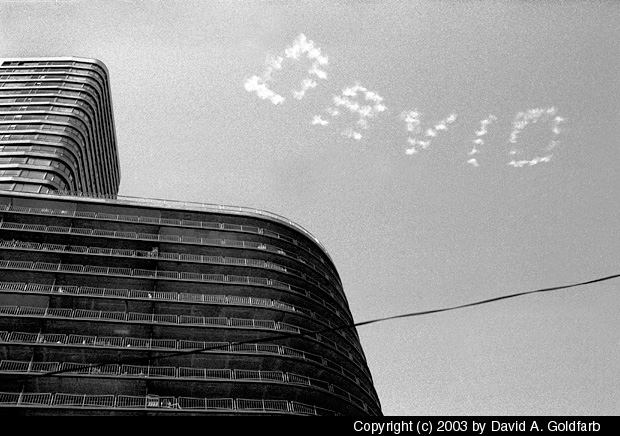
david.jpg


This is really old Double-X 35mm cine stock, EI 80 in Acufine with a little Edwal Liquid Orthazite to keep down the base fog. That's what I use when I want the grainy look.
 
Photrio.com contains affiliate links to products. We may receive a commission for purchases made through these links.
To read our full affiliate disclosure statement please click Here.

PHOTRIO PARTNERS EQUALLY FUNDING OUR COMMUNITY:


Ilford ADOX Freestyle Photographic Stearman Press Weldon Color Lab Blue Moon Camera & Machine
Top Bottom