
• Welcome to Photrio!
    Registration is fast and free. Join today to unlock search, see fewer ads, and access all forum features.
    Click here to sign up

What's wrong with my photos?? Help please

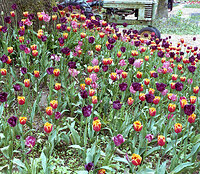
Tractor & Tulips

A
Tractor & Tulips

  • 0
  • 0
  • 0
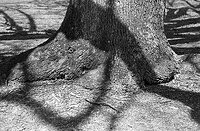
Tree with Big Shadows

Tree with Big Shadows

  • 2
  • 0
  • 67

Forum statistics

Threads
203,455
Messages
2,855,016
Members
101,851
Latest member
Si_Voltage
Recent bookmarks
0

thisispants

Member
Allowing Ads
Joined
Jan 23, 2009
Messages
65
Format
35mm
So I just bought an old olympus om10 camera...I know a lot of people bag it but it came with a bunch of lenses so I thought I could always get an om1 when I get more money.

So I bought a roll of 400 iso fuji standard type supermarket film....shot a bunch and sent it off for developing. The photos I got back were a bit dissapointing.... it seems to just lack colour.

3219820528_8c543d85b8.jpg


What have I done wrong? All the photos look similar to this. I was using a polariser on some shots....but others I didn't and it all pretty much looks the same. Is it the camera or the film.....or me?

I have another SLR....a newer but I thought worse camera...a minolta dynax 440si, and the photos it took with the same film were much more colourful.

Any help would be much appreciated.
 
polarizers are not useful until you are facing the sun.. Something about shooting @ 90 dgrs from the sun is important also.The type of film you use varies from different brands. The guys with the teck. info will be answering you later in the day with far more information than I can provide. I use B & W so I know jack about colour use.
There are too many things that change or make a photo so just keep shooting and you will be able to be proud of your work.
It also looks like you are shooting from the shade into the light which is not a good way to have you pics exposed properly.
 
Last edited by a moderator:
"Supermarket film" with ... maybe ..."Supermarket" processing??

Given that information - I would say there is nothing "wrong" with the camera, and, likely, not much "wrong" with the film. The processing - that is probably another story.

Try again, with the same or different film. Go somewhere else for processing.

Judging a camera from the appearance of a single roll of film - or ten - or twenty ... is ... uh... not a good idea.
 
Some cameras have meters optimized for color slide film. If yours is like this, you will get much better saturation with nominal ISO 400 color negative film by rating this at ISO 250.
 
I'm betting on processing.
 
I don't think the photos we get back from the stores have anything to do with the film anymore. I used to use Agfa for the warmer colours we got on the prints, but with digital printing the prints appear as the computer tells them. Unless the operator goes of auto setting. I think your print is the result of the operator printing the negative choosing the colour settings that he/she thinks best. Ask them for adjustments as you wish.
 
You're spot on....supermarket processing it was. I'm basically trying to get my skills up because I'm going overseas in a month and I want to shoot some scenic stuff to blow up and put on my wall. I'll be using decent slide film for that, but for practice I've been using supermarket film (due to money and the lack of it).

Also, it was with a telephoto lens off tripod, so Im not too concerned about the sharpness, it's probably blurred due to the lack of tripod. Just the colour seems dull. From reading this there seem to be many factors at play.
 
....

I have another SLR....a newer but I thought worse camera...a minolta dynax 440si, and the photos it took with the same film were much more colourful.

Any help would be much appreciated.

I wouldn't discount the glass being used. If you were using Minolta glass, this was (still is) known for the colours that it produces.

OR, as others have stated, the process is just naffed. Of late, I have been getting develop and scan only. The scans are horrible, but the negs are fantastic
 
Hi,

Everything in the process could have contributed to this (film, processing, printing). Or, maybe the camera underexposed just a bit. If you have more film from the same batch, shoot a roll with ISO set to say, 200 instead of 400, then send it through the same lab. That will give you a 1/2 stop more exposure in the camera. It should not make too much difference in print film, but may be just a little more saturation to bring out the colors a bit. Shoot subjects under even lighting so you can better judge exposure performance. The sample that you posted was difficult lighting to get right. Just some suggestions, fwiw. :smile:

--Warren
 
Cleaning the lenses can make a big difference, too. If your bag of lenses haven't had a good bath lately, it's worth a shot.

Peter Gomena
 
Saturation is generally a little better with slower films, too.

That image actually doesn't look that bad. The greens are nice. The scan is a little overexposed; the white shirt lacks detail. (Colour negative film has a lot of latitude so there likely is detail on the negative.)

Some photographic papers are punchier than others... and lighting makes a difference too. Surprisingly, you'll get best colour saturation on an overcast day.
 
I spent MANY years when I first started being disappointed with my results when I got my prints back from a high street lab. Was it my metering, was it something else? Perhaps a bit but then it was colour neg like yourself. No, it was happy-go-lucky-dave on the minilab machine!

If you're making negatives and you land your exposure in the right ball park, you've completed Part 1. Part 2 is making the print!

Don't let it put you off!

PETE.
 
You can never tell if you are doing any right or wrong with negatives, well, except over- or under-exposure. If you send one roll of perfectly exposed negs to 10 developers, you can quite easily expect very different results to come back.

And you need not worry about the lenses. Zuiko lenses are generally OK. And the OM1 and the OM10 all use the same lenses.

First you should check the negs to see if your exposures were OK. You can only start to blame to the processing if your exposures were OK.

The best way to test your Olympus is to shoot a roll of slides. Any Kodak or Fuji slides will do. Make sure your ASA setting is correct. Then you will really find out how good your (or your camera's) exposure is. A little lightbox and an 8x lupe will also reveal how good your lenses are and whether your handholding is really up to it.

Do this and come back and let us know the results.
 
As Windscale posted, the only eyeball method for a halfway decent evaluation of a camera/lens/shutter combination is with slide film shot at box speed, as it has the least possible variables in exposure and processing. Machine prints from negative film from mini lab processing mean literally nothing unless you have a baseline.
 
To me. the "sanctity" given to transparency films/ processing and the final images is misplaced. I would suggest that there is an equal, if not greater, amount of variables associated with transparency film, manufacturing tolerances, shifts in color balance and ISO rating from inappropriate storage (I once had a photographer question me about his transparency film - stored in an automobile glove compartment through an entire New Mexico summer...
Interesting question, BTW .. does anyone have any information regarding acceptable ISO speed tolerances for any film?
Additionally, I am reasonably certain that there must be at least one or two unscrupulous Labs out there, with chemistry used FAR beyond a reasonable capacity ... plain old "I don't give a damn" and "Hey, I've gotta make money" establishments where final quality is nowhere near a primary or secondary - or any sort of concern.

With the nearly universal blind faith given to ALL transparency work, it seems to me that anyone complaining could frequently receive a stock answer, something like, "Hey this is SLIDE film! It must be that your camera is inferior; you screwed up; the moon was in a unfavorable aspect ..." anything other than accepting responsibility for really BAD processing.

One way to gain a measure of information about the processing is to examine the edge numbering, clear space between frames ... etc. - not infallible but useful. Easily done with negative film; how many here have ever pried a transparency out of its mount to do the same?
 
........how many here have ever pried a transparency out of its mount to do the same?

Having used slides for some time I never afforded the luxury of having them MOUNTED. They all came back in strips like negatives. 120s are the same. I do have many slide projectors, up to 6x6 size, but rarely used them. All your film strip numbering can easily be examined by light box and 8x loupe.
 
Having used slides for some time I never afforded the luxury of having them MOUNTED. They all came back in strips like negatives. 120s are the same. I do have many slide projectors, up to 6x6 size, but rarely used them. All your film strip numbering can easily be examined by light box and 8x loupe.
Ah! Then ... Has every transparency film, without exception, from every lab, ALWAYS been processed perfectly? Most commonly, I've noticed differences in overall density - same film lot, same general studio exposure ...

Even with considerations of the "edges", I would expect some sort of varience in color fidelity from time to time ... and that would be difficult to evaluate without instrumentation. I think - and I could easily be corrected if I am wrong, that transparency film construction is somewhat more complex than color negative - leading to more possibility of errors.

... Back to my POINT. I don't think that common E6 processing is infallible - at least not infallable and accurate enough to evaluate a camera/ photographic system.
 
Thisispants, Don't get discouraged. There's lots to learn to get exciting results.

One possible source for disappointment is that your photo is shot under "boring" light. Mid-day light is harsh in character and bland in color. That is why many photographers shoot at the very beginning and end of the day as much as possible. The few minutes around sunup and sundown are referred to as the "golden hour" - though, there's usually much less than an hour of best light.

Your photo was shot with a telephoto and it can be difficult to pull a lot of "depth" from shots by a telephoto, since thet tend to "flatten" the perspective of things. Not to denigrate work with teles, but to say there's more than meets the eye to best use of teles.

Keep at it. Shoot a lot. Discard the less satisfying results mercilessly. Edit ruthlessly. But bear in mind that the more errors you make, the more you are in a "place" for learning. Think of it this way: that if you never get a bad result, you're probably not learning a thing.

Best,

C
 
Ah! Then ... Has every transparency film, without exception, from every lab, ALWAYS been processed perfectly? Most commonly, I've noticed differences in overall density - same film lot, same general studio exposure ...

Even with considerations of the "edges", I would expect some sort of varience in color fidelity from time to time ... and that would be difficult to evaluate without instrumentation. I think - and I could easily be corrected if I am wrong, that transparency film construction is somewhat more complex than color negative - leading to more possibility of errors.

... Back to my POINT. I don't think that common E6 processing is infallible - at least not infallable and accurate enough to evaluate a camera/ photographic system.

As I said, halfway decent for an eyeball evaluation, owing to the narrow exposure latitude which is an inherent character of chrome film, and the fact that your are looking at the end result with no chance of anything being introduced or changed by printing. No photographic process is 100% free of variance, but fresh E6 developed at a decent lab has the least variance of anything commercially available, and is certainly a very useful tool for a cursory evaluation of a camera.

Having shot many thousands of exposures commercially with all manner of various disasters, including camera problems, lab problems, or pretty much anything else you can dream up, in my experience E6 is the "truest" option out there, but of course taking the characteristics of a particular emulsion into consideration. A print is by far the least consistent result available, even by a good lab, because prints must be interpreted from the source in some manner, be it good or bad, and are not a direct result of exposure and processing. A good lab can pull great prints from a mediocre negative and a lousy lab can make dreck out of anything. Neither is going to tell you much about what you made with the camera, which is the neg, and learning how to eyeball a neg comes only from printing experience.

There are of course better ways to evaluate cameras, using shutter testers, densitometer testing of negatives with reference material, etc., but I don't think the OP is headed down that road at the moment, thus the advice to shoot some E6 to further evaluate the camera is sound.
 
Last edited by a moderator:
As I said, halfway decent for an eyeball evaluation, ...

You make some very good points here, J.B.

I'm not saying that using transparency film for an "eyeball" evaluation is useless - only that we should NOT bet the farm on the results. The usual advice I've read is to "Try a roll or two of transparency film - if that turns out well, keep the camera; if not, scrap it." I've see that advice followed - and I still say one or two rolls is NOT enough to determine the fate of ANY camera.

...owing to the narrow exposure latitude which is an inherent character of chrome film,

Well, I've braced myself ... am I to hear again that one MUST expose within 1/10th of a "stop" to be successful with transparency?
I would then question the method used to determine exposure - no exposure meter available to the mortal photographer is capable of that accuracy - the best published accuracy I've seen is that of the Gossen "UltraPro"": +/- 1/3 "stop". Note 1
Even with a meter following the general laboratory practice of "The measuring device should be capable of 1/10 of the accuracy of the allowable deviation of the characteristic." - or 1/100th "stop" - and from extensive experience with a wide variety of light measuring devices (mainly, Cascade Photomultipliers) I feel safe in saying, That won't happen outside a fairly sophisticated lab.

So - given that transparency film has a narrow exposure latitude, how would anyone KNOW that they were, in fact, working within that latitude?

... but fresh E6 developed at a decent lab has the least variance of anything commercially available, and is certainly a very useful tool for a cursory evaluation of a camera.

I'll agree - provided we have reliable information about "fresh" and "decent" as used above. I don''t think that information is readily available - without some intimate contacts within the lab.

Note1; "Stops" - I hate tryig to work with "stops".
 
Last edited by a moderator:
I think we are getting too technical here. Certainly for a common photographer like yours truly. I think the original problem in this thread was, as I saw it, that the photo that came out did not match the scene. which led the author to question the functioning of his gear and film. My simple idea is to ask the author to shoot a roll of slides and see what observations he may come back with. We can't get rid of all the variables, but we can limit them to as few as possible. And I think there are much fewer with slides. The world will be a very complicated place if we all talk in absolute terms. My idea of photography is simply to get as close as possible to the scene in reality or the scene in mind.
 
Last edited by a moderator:
No, I wouldn't bet the farm:smile: As far as being accurate to 1/10 stop, well that is just silly, because it can't be done as exposure is a moving target. You get to pick your poison. What transparency will do is give you a more accurate ballpark evaluation because the ballpark is so much smaller. If you screw the pooch by a stop it will show, and you will know that something is up. Then you have to figure out what that is. In most cases it is the photographer, not the camera, film or processing. If you can get an exposure/camera regimen to work consistently within the window of a chrome, you can drive a bus made out of negative film through the same window.

Like you, I personally I don't feel I fully understand a camera's character until I have shot with it for some time under a variety of conditions with a variety of emulsions and emulsion types. A lot of why I might like a lens or camera or whatever is purely my own subjective reasoning or even a bona fide mystery. That is why I have a difficult time endorsing a particular camera, lens, paper, film,etc.
 
Last edited by a moderator:
... In most cases it is the photographer, not the camera, film or processing...

There is no way I can definitively disagree. It SEEMS to me, though, there Is a great deal of misery in photography as a result of crappy processing.

Like you, I personally I don't feel I fully understand a camera's character until I have shot with it for some time under a variety of conditions with a variety of emulsions and emulsion types. A lot of why I might like a lens or camera or whatever is purely my own subjective reasoning or even a bona fide mystery. That is why I have a difficult time endorsing a particular camera, lens, paper, film,etc.

I agree. Fully.

I apologize for the "1/10th Stop" rant. That idea has been a burr under my saddle for some time, and our conversation provided a "crack", coinciding with a particular peak in my writing energy.
"1/10th stop" is one of those "legends without truth." If you want to get into trouble, visit the average Camera Club (n.b., "average" - not exceptional as will be brought to attention) and disagree with the local All-Mighty-High Guru in residence. I've done that, have the T-shirt and (considerable) scar tissue.

That might be an interesting thread: "Everybody Knows - False Information."
 
Having said what I said about slides, I have always found Velvia 100 to be 1/3 to 1/2 stop underrated. That is, I have always got better results treating it as ASA50-64. Provia was OK though!
 
Not too bad, considering.

So I just bought an old olympus om10 camera...I know a lot of people bag it but it came with a bunch of lenses so I thought I could always get an om1 when I get more money.

So I bought a roll of 400 iso fuji standard type supermarket film....shot a bunch and sent it off for developing. The photos I got back were a bit dissapointing.... it seems to just lack colour.

3219820528_8c543d85b8.jpg


What have I done wrong? All the photos look similar to this. I was using a polariser on some shots....but others I didn't and it all pretty much looks the same. Is it the camera or the film.....or me?

I have another SLR....a newer but I thought worse camera...a minolta dynax 440si, and the photos it took with the same film were much more colourful.

Any help would be much appreciated.


Like you, I use supermarket Fuji colour print film and send it to a commercial lab for processing. I have an Olympus OM2n and various Zuiko lenses.

Generally, Fuji Superia 400 ISO is quite capable of producing satisfactory results, even from a commerical processor.

I found that a larger "National" processor (turn-around of several days to a week) gave much better and more consistent results than your corner franchised operator, where the results tended to be rather patchy (even if the prints were ready in an hour).

My observations: in this shot you have a huge "subject brightness" range wich no film can hope to cover entirely. Your camera (probably using centre weighted averaging metering) has done its best to give you a satisfactory result -under the circumstances- which has blown out some of the highlights (e.g. the man's shirt).

My suggestions would be:

Change to a larger processor with more business (that way, hopefully, you will get a more standardized result as they are likely to have a more streamlined and businesslike operation with better equipment (e.g. scanners, as your prints are likely to be from digital scans of your negatives)

Don't include too much in one shot, thereby reducing your subject brightness rage.

Study the effect of light on the subject andexpose accordingly (with print-film expose either for the most important high-light or shadow, the rest will take care of itself).

Read up on/ask questions about "exposure" (in particular, check out anything on "The Zone System" on the web) and apply what you learn to your shooting technique. You will gradually improve!

Good luck!
 
Photrio.com contains affiliate links to products. We may receive a commission for purchases made through these links.
To read our full affiliate disclosure statement please click Here.

PHOTRIO PARTNERS EQUALLY FUNDING OUR COMMUNITY:


Ilford ADOX Freestyle Photographic Stearman Press Weldon Color Lab Blue Moon Camera & Machine
Top Bottom
