• Welcome to Photrio!
    Registration is fast and free. Join today to unlock search, see fewer ads, and access all forum features.
    Click here to sign up

What would Hollywood do?

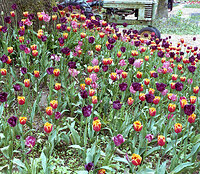
Tractor & Tulips

A
Tractor & Tulips

  • 0
  • 0
  • 12
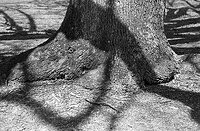
Tree with Big Shadows

Tree with Big Shadows

  • 2
  • 0
  • 71

Forum statistics

Threads
203,456
Messages
2,855,030
Members
101,853
Latest member
Expert Graphics Int.
Recent bookmarks
0
The light HITTING the subject is not complicated. Especially because that light is not directional. But, pbromaghin, that is not all that we are after here. THAT LIGHT has to come back to the camera and the ONLY way that that is going to happen is for it to bounce off the objects that it is hitting.

THAT is where the complicating factors enter the 'picture'.

Yes, correct, 'Old'. - David Lyga
 
What does "open shade lighting" have to do with it other than decreasing overall contrast by reduction or elimination of specular highlights?

Well, he is asking about open shade. So he has already specified that the light will be pretty consistent and evenly distributed throughout the subject. Dark skin will reflect back as dark and light skin will reflect back as light. Neither should be too extreme and lose detail. Edit: By the way, those are some really nice portraits.
 
Last edited by a moderator:
Well, he is asking about open shade. So he has already specified that the light will be pretty consistent and evenly distributed throughout the subject. Dark skin will reflect back as dark and light skin will reflect back as light. Neither should be too extreme and lose detail.

Yes... but that's very soft lighting conditions (very forgiving)... and it's imprecise. What happens when the lighting changes to direct hard sunlight? You'd better know how to control that.
 
The light HITTING the subject is not complicated. Especially because that light is not directional. But, pbromaghin, that is not all that we are after here. THAT LIGHT has to come back to the camera and the ONLY way that that is going to happen is for it to bounce off the objects that it is hitting.

THAT is where the complicating factors enter the 'picture'.

Yes, correct, 'Old'. - David Lyga

David, this is what I don't get about your question - It sounds like you are trying to bring all skin tones to a narrow range of zones on the film. I wonder why you would want to do that.
 
If the Africans and Scandinavians were together in the picture, you'd end up right where you started- EV11. What would you do from there?
 
David, this is what I don't get about your question - It sounds like you are trying to bring all skin tones to a narrow range of zones on the film. I wonder why you would want to do that.

Yes... David "IS" trying to bring flesh tones into a narrow range of tones... but ONLY to keep them within the narrow range of film's (or digital sensor's) range of acceptable VISION. If one underexposes a black person's face too much the skin tones disappear into the abyss. If we overexpose a white person's face too much they disappear into the clouds. There's really only a narrow range of exposure that's appropriate for PORTRAITS. If the person is but a tiny part of the composition then that's a completely different scenario.
 
If the Africans and Scandinavians were together in the picture, you'd end up right where you started- EV11. What would you do from there?

Not really... because we'd EXPOSE for the shadows and DEVELOP for the highlights... AS ALWAYS.
 
I don't know about David but I never set exposure of even the darkest-skinned person to below EV-1 and never even the very lightest-skinned person to beyond EV+1. That's only 2 EV difference. When there was a mix of extreme skin tones then I erred toward overexposure unless shooting chromes.

I agree.
 
Yes... but that's very soft lighting conditions (very forgiving)... and it's imprecise. What happens when the lighting changes to direct hard sunlight? You'd better know how to control that.

But we aren't talking about that...
 
I'd guess the answer isn't what they WILL do but what they ACTUALLY do.

Has anyone heard the stampeding cinematographers heading out to trade in their incident meter for the latest spot meter?
 
Incident vs reflected light readings are not always the same. Which is correct? Understand the following scenario:

You have a group of twenty dark-skinned men from Africa sitting for a group portrait in the open shade, lit by open, cloudless sky, at midday. They are clothed in rather dark attire and the background is neutral. The film being used is T Max 100. The incident meter reading is EV 11, the reflectance meter reading is EV 9.

You have a group of twenty light-skinned women from Scandinavia sitting for a group portrait in the open shade, lit by open, cloudless sky, at midday. They are clothed in rather light attire and the background is neutral. The film being used is T Max 100. The incident meter reading is EV 11, the reflectance meter reading is EV 13.

Which meter reading is correct? My own answer to this question is that both are wrong and a compromise must be reached for best exposure. Thus, I would opt for a reading of EV 10 for the African men and a reading of EV 12 for the Scandinavian women, a decision which both respects and refutes the two rather disparate metering systems.

One is tempted to say that since both scenes are lit identically, the exposure for both would be likewise identical. But this just might not be true since one must, in such similar, but also dissimilar, situations, ‘bias’ the exposure slightly, not completely, towards the predominance of tones in the particular scene. I cannot formulate a specific ‘theory’ backing this up but, intuitively, it does seem to be the correct thing to do.

What would Hollywood do? - David Lyga

When in doubt,always go with the incident reading(dome towards camera)and develop normal!:cool:
 
One can certainly use an incident light meter but he'd better understand the luminance relationship between the important elements of the scene. When objects are both in shade and bright light it further complicates exposure calculation and when in deep shade vs. direct sunlight it's even more difficult. I'm lazy and want to be as precise as is practicable so I'd rather use a spot meter.
 
I'd use EV10

Assuming this is B&W film we are using, EV10 will put dark skin 1 stop below gray. Plenty of details still. Anything below starts to lose detail. That will put white skin +3 but we can always burn it in to recover. In any portraiture, parts of skin are always darker than other parts. If we went -2 under nose or chin some parts will totally lose detail. I'd avoid that.

If this is reversal film, under the proposed condition, there is nothing we can do to other than go with an average reading which would be the same as incident reading, and suffer loss of detail in both. I'd then start considering use of reflectors to illuminate some people more than others.
 
David, this is what I don't get about your question - It sounds like you are trying to bring all skin tones to a narrow range of zones on the film. I wonder why you would want to do that.

Africans ONLY: give a little help (more exposure) to slightly lighten the tones. Scandinavians ONLY: hide (less exposure) a little of the brightness. WHY? This is essentially what we WANT to see: a bit of aggrandizement to mitigate (and complement) reality. We want to see 'into' a bit more of the tonality with the Africans and we want to be less 'blinded' by the Scandinavians.

That is not rocket science and does not even fit into a general theory, other than one of due 'acclimation'. Admittedly, Ixdude, if BOTH parties were in the same photo, we would have no choice but to revert to reality.

I think that I am correct here and this is what I would do. So, to answer your query, pbromaghin, about melding all tones into a melting pot, so to speak: Yes, a little bit we do meld those tones in order to remove the harshness. But, only a little, as we still want the contrast, of course. I cannot explain this more succinctly than that.

I think, pbromaghin, that we are discussing the difference between reality and art. In the days (daze?) of film, how many blacks did I hear complaining about their photo ID being little more than an 'ink spot'? Many, indeed. They were surely pining for clarity, not charity!

tkamiya: I am a bit confused with what you are saying: putting dark skin one stop below EV 10 will LIGHTEN such skin, not darken it as you incorrectly state. The LOWER EV that you shoot at, the MORE detail the shadows will have. Sometimes EVs can be a bit confusing, but their benefits clearly outweigh any deficits for understanding exposure. An EV of 10 could be, for example, 1/60 and f4. An EV of 9 could be 1/30 and f4. Thus, there is MORE shadow detail registered on that negative with the lower EV. - David Lyga
 
Last edited by a moderator:
Modifying the light with reflectors may give as good, or better, results than worrying about one EV more or less than an incident reading.
 
Last edited by a moderator:
Of course, light modification is an option … but in only SOME circumstances, Brian. However, when you have no option you opt for the best way. - David Lyga
 
When in doubt,always go with the incident reading(dome towards camera)and develop normal!:cool:
In my experience Ralph when taking incidental readings of dark subjects with negative film I give half a stop more exposure than the meter reads, and with predominately light subjects half a stop less exposure, it works for me..
 
What's this thread about?
In hollywierd, it'd be an incident meter.
No one in hollywood really uses spot meters any more except for reading lamp shades or when lighting green screen. A DSLR has become the preferred tool when lighting for film, even when lighting for digihell because the "monitor" is essentially held in the cameraman's hand and not off the set in a tent somewhere.
 
Gosh... I don't know how all this gets so complicated. I use the same spotmeter and method for people as for a rock or tree and have never
botched an exposure, even in bright sunlight, and even given the fact that this neighborhood is one of the most ethnically diverse in the entire
continent. Just use the meter you are accustomed to.
 
Photrio.com contains affiliate links to products. We may receive a commission for purchases made through these links.
To read our full affiliate disclosure statement please click Here.

PHOTRIO PARTNERS EQUALLY FUNDING OUR COMMUNITY:


Ilford ADOX Freestyle Photographic Stearman Press Weldon Color Lab Blue Moon Camera & Machine
Top Bottom