• Welcome to Photrio!
    Registration is fast and free. Join today to unlock search, see fewer ads, and access all forum features.
    Click here to sign up

? what to do with box of Kodak Translite Sheet Film

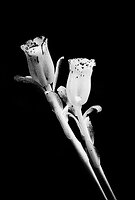
Indian ghost pipe plant.

H
Indian ghost pipe plant.

  • 2
  • 0
  • 23
2026-01-136.jpg

A
2026-01-136.jpg

  • 0
  • 0
  • 30

Forum statistics

Threads
202,940
Messages
2,847,816
Members
101,546
Latest member
Milanw
Recent bookmarks
0

Denis R

Member
Allowing Ads
Joined
Oct 8, 2009
Messages
284
Location
50156 & 5133
Format
35mm
that had best if used by '54 date

10 sheets of 8x10


:confused:
 
Denis:I just finished using the last of my stash of translite film.It is a translucent base with a b&w print emusion coated on both sides and was a grade #2 contrast.You can use it like any other b&w enlarging paper except the image will look like a back lit transparency only diffused.If it is that old (1954) you might try adding an anti-foggant to your developer such as a 10 % solution of Potassium Bromide or , if it available, Edwal Liquid Orthazite.

It can be toned like a b&w print and because of the textured surface it will accept hand colouring.

Hope this helps.

Doug
 
Fast forward to 2014. Doing a web search for the product, I came across the above post.

I happened to look through an old Zone VI newsletter this morning. It talked about using Translite film to eliminate newtons rings when contact printing (hence the web search). You fix and wash the film (unexposed) then use it between the glass and negative.

Not sure if this stuff is still available. Hope you kept yours.
 
3D Anaglyphs.1 each toned red and green, then view with handmade glasses. Use some of the material to make toned lenses for the handmade glasses to view. Make the negs with a LF camera on a rail.
 
what to do with a biox of Kodak Translite Sheet Film

Denis:I just finished using the last of my stash of translite film.It is a translucent base with a b&w print emusion coated on both sides and was a grade #2 contrast.You can use it like any other b&w enlarging paper except the image will look like a back lit transparency only diffused.If it is that old (1954) you might try adding an anti-foggant to your developer such as a 10 % solution of Potassium Bromide or , if it available, Edwal Liquid Orthazite.

It can be toned like a b&w print and because of the textured surface it will accept hand colouring.

Hope this helps.

Doug

I once bought a box of 11 x 14 to use in making "paper negatives", the old kind, not what you folks call "paper negatives" now. You put the negative you wanted to print in the enlarger and made a positive on the translite. Then contact printed the positive on to another sheet of translite which yielded a negative. This negative could be contact printed onto photographic paper for the final print. Ansel would not have liked the final print because it resembled late 19th and early 20th century "pictorial" work. Because you could retrouch almost each step of the way, you had tremendous control over the final print of which you could make any number of copies. Using the translite was my idea, at least to me. Earlier, people used a Dassonville thin base paper to do what I wanted to do with the Translite. I got too busy to go into the darkroom about then so I never got further than the first positive.....I also hope this helps......Regards
 
Photrio.com contains affiliate links to products. We may receive a commission for purchases made through these links.
To read our full affiliate disclosure statement please click Here.

PHOTRIO PARTNERS EQUALLY FUNDING OUR COMMUNITY:



Ilford ADOX Freestyle Photographic Stearman Press Weldon Color Lab Blue Moon Camera & Machine
Top Bottom