• Welcome to Photrio!
    Registration is fast and free. Join today to unlock search, see fewer ads, and access all forum features.
    Click here to sign up

What percentage is N-1 and N-2?

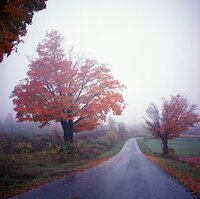
Rainy Day Trees

A
Rainy Day Trees

  • 4
  • 0
  • 59
One Way

A
One Way

  • 1
  • 1
  • 57

Forum statistics

Threads
203,152
Messages
2,850,615
Members
101,700
Latest member
Cpeason301
Recent bookmarks
1

Jarvman

Member
Allowing Ads
Joined
Sep 9, 2006
Messages
791
Location
Cardiff, Uni
Format
Multi Format
I thought the answer to this would be easy enough to find on google. Can't find anything though. What are the percentage decreases for N-1 and N-2?At the moment I've just been doing 25% less time where i want less contrast. Cheers.
 
If you want to know for your film, developer, dilution, temperature, agitation, development method, target contrast, etc., you have to test. Some people may recommend starting points for testing, like 25%, 40%, etc., but there are no fixed percentages for + or - development.

For -2 and less, you might even want to use a different development scheme, like a compensating developer.
 
Oh ok thanks, I thought there might've actually been specific percentages.
 
It depends on everything. You must test to be exact.

If you need a guess in a certain situation, you can probably do OK with -20% or so, and for N-2, take 20% off of the N-1 time. That ends up being about 35% off of normal.
 
I'm doing night shots with delta 100 rated at 100 around 2 stops overexposed for the best shadow detail I can get, looking at exposures of around 17 mins according to the reciprocity chart. The ones I developed n-2 (at - 40%) are beauties but the ones developed n-1 are really blocked up.
 
The older (red) Kodak darkroom dataguide contained a developing dial. A round calculator that compensated for temporature and had a normal notch and a less contrast notch and a more contrast notch. I found that with your normal time at the center normal pointer the less contrast pointer was a good starting point for N-1, the more contrast a good starting point for N+1. Testing is the only way to be accurate but those always got me in the ball park.

I also recorded my times as "developing numbers" used in this calculator. Its too bad Kodak dropped it from its 90's redesign of this manual.
 
I'm doing night shots with delta 100 rated at 100 around 2 stops overexposed for the best shadow detail I can get, looking at exposures of around 17 mins according to the reciprocity chart. The ones I developed n-2 (at - 40%) are beauties but the ones developed n-1 are really blocked up.

I would start trying stand development for what you are doing, and/or pyro, or two bath development, or water bath development; something that compensates in a way other than simply reducing development time. Night photography is some of the most difficult lighting to deal with, and it takes a lot of work and trial and error.
 
When one is using a hi-tech film such as Delta 100-400 or 100-400 tmax testing is even more critical than with a film such as tri-x. These hi-tech films are really good but they require a more rigorous approach than the older style films in exposure and development. If you are interested in night time photography you might find the new 400 tmax very interesting. It recommends only 1/3 stop of compensation for a 10 second exposure.
 
I thought the answer to this would be easy enough to find on google. Can't find anything though. What are the percentage decreases for N-1 and N-2?At the moment I've just been doing 25% less time where i want less contrast. Cheers.


The reason why there are no fixed percentages for -1, -2, +1, and +2 dev times is because there are no fixed "normal" development times----thus the reason for testing, as Mr. Goldfarb mentioned. Testing establishes the "norm" so you will then know how to depart from it in a useful way. Without testing, I would consider the manufacturer's development time as the "norm" with your observations for "reduced" and "increased" development based off of that and using the range of percentages already given by others to guide you.

Some, I included, calibrate "normal" dev time off of achieving a certain negative density at Zone VIII. For me and TMX in d-76 1:1 it is N= 8 min; -1 is 7 min for -12.5% and -2 is 6.5 min for -18.75% ---- +1 is 10 min for +25% and +2 is 11.5 min for +43.75%. It is noteworthy to also mention that at -2 for this combo and my process, a compensating developer is not called for because the mid-tone densities are very robust----when the mid-tones begin to suffer from reduced development, a compensating developer or highly dilute developer is called for.

All these different times will develop the negative to the same density range as that used for the "norm", which is the reason for the notation of "N" minus or "N" plus dev times.
 
Photrio.com contains affiliate links to products. We may receive a commission for purchases made through these links.
To read our full affiliate disclosure statement please click Here.

PHOTRIO PARTNERS EQUALLY FUNDING OUR COMMUNITY:



Ilford ADOX Freestyle Photographic Stearman Press Weldon Color Lab Blue Moon Camera & Machine
Top Bottom