
-
Welcome to Photrio!Registration is fast and free. Join today to unlock search, see fewer ads, and access all forum features.Click here to sign up
- Home
- Forums
- Analog Workflow Forums (100% Analog/Traditional)
- Analog Equipment
- 35mm Cameras and Accessories
You are using an out of date browser. It may not display this or other websites correctly.
You should upgrade or use an alternative browser.
You should upgrade or use an alternative browser.
What makes Acros "boring".
-
A
- Thread starter chip j
- Start date


Recent Classifieds
-
Free Jobo Sheet Film Loader 2508 No Guides
- Started by Roger Thoms
-
Want to Buy 12x20 Film and Film holder
- Started by stray227
-
Free NuArc Vacuum Frame
- Started by Roger Thoms
-
For Sale Copal Press no.1 shutter (CLA'd)
- Started by OAPOli
-
For Sale Bronica ETR 2.8/50 lens cells
- Started by OAPOli
Forum statistics

How's Acros in D76 Stock or 1:1?
My last example above (near Pt Bonito, it's Rodeo Beach at night, that's about a 5 minute exposure) is in D-76. Might give you some idea but heck I use Rodinal, HC-110, D-76 and others and they all work well.

I used to shoot with across in studio and I liked it. I used to shoot landscapes too but with controlled light in studio it is better. But I changed it for Delta 100 because I couldn't get as deep blacks with across as I can with Delta 100. And I like more the graduation on tonalities in Delta 100.

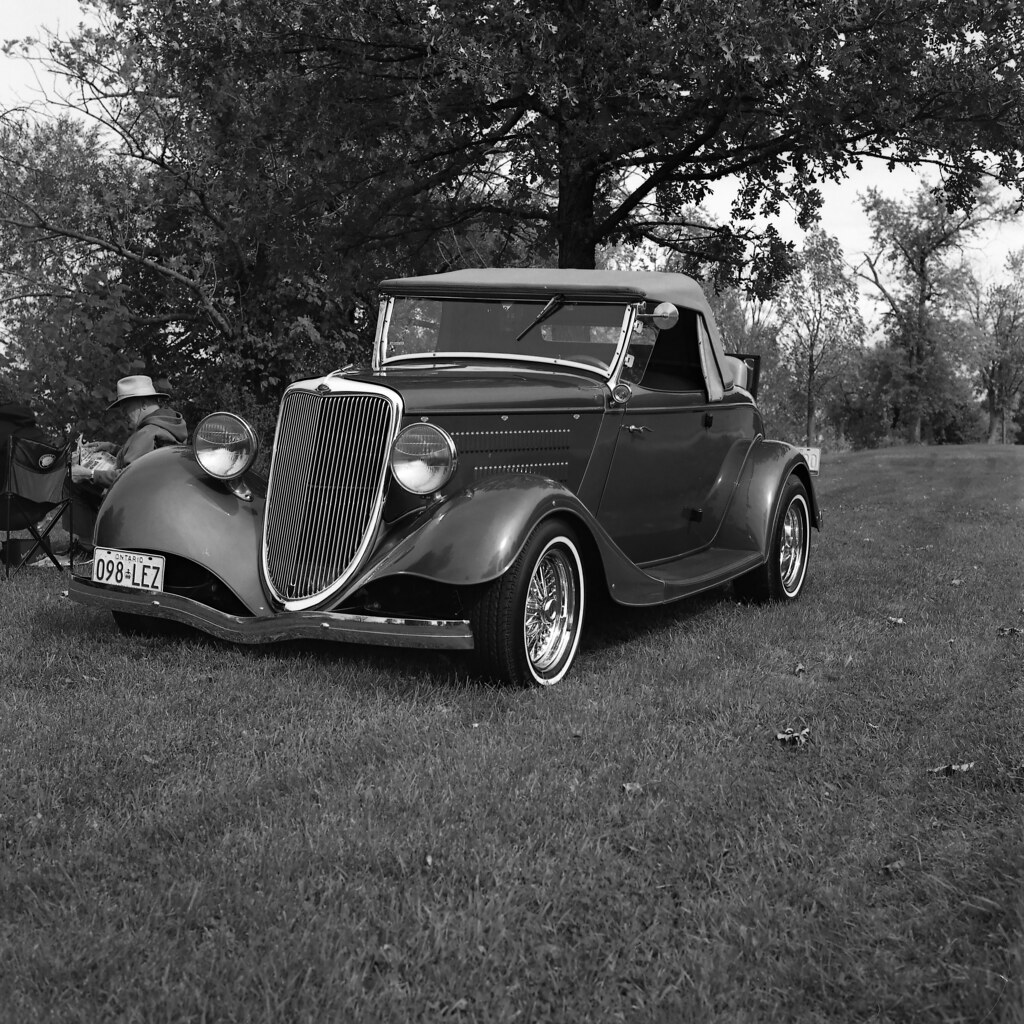

every film is boring ...
acros ... it was made for caffenol c
John, be honest...was there ever a film you didn't see as made for Caffenol C?

- Joined
- Jul 14, 2011
- Messages
- 15,037
- Format
- 8x10 Format
If there's anything boring about actual ACROS, it's gotta be the person behind the camera. It's a wonderful film prized by many, and I've shot it in everything from 35mm to 8x10.
- Joined
- Sep 16, 2006
- Messages
- 1,869
- Format
- 35mm
I like it in Fuji Microfine.

If it is orthopanchromatic, how do you use yellow or orange filters?
You go ahead and use them, just bear in mind they will have a somewhat stronger effect than they do on normal panchromatic films. It isn't "red blind" it's just a bit less red sensitive.
I like Acros a lot. In my view it's anything but "boring" and in fact may be the least boring film on the market, aside from maybe D3200. That is, it's different - different spectral response, different curve, different (almost nonexistent) reciprocity failure curve.
FP4+ is my standard medium speed film but I do like Acros. They are very different. Neither is boring unless YOU are boring.

I love it in rodinal, but don't seem to get out enough at night to use it,
where it really 'shines'
https://www.flickr.com/photos/stormiticus/tags/acros/
-Tim
where it really 'shines'
https://www.flickr.com/photos/stormiticus/tags/acros/
-Tim

destroya
Subscriber
love acros. bought 300 feet from a fellow board member three weeks ago and have burned through 100 already. love it in pyro-HD and XTOL replenished.
just bummed about the price increase over the last year or so. A great film, like all films!
just bummed about the price increase over the last year or so. A great film, like all films!
- Joined
- Jan 22, 2009
- Messages
- 391
- Format
- Medium Format
A nice film that I used to shoot quite a lot of until the prices went up. I used Rodinal 1+100 at 12 minutes and got nice results. I'm a bit confused though...is Acros a T-grain film? I've read that it's a "hybrid" which I took to mean that it was some flat T-grains as well as traditional clumpy grain.
I bought 80 rolls of it when Freestyle cleared it out under the Legacy brand, but have only shot a few rolls of it and can't print it yet(fractured knee). I know this can be subjective, but I've read a few times on APUG that it's "boring" & "clinical". What makes it so?
hope your knee is completely better soon so you can shoot and print your stash.

John, be honest...was there ever a film you didn't see as made for Caffenol C?
*snicker*
Also, to the OP... I'm not sure who is telling you this but I think it's one of the most interesting films, the look is unique and amazing, personally if it were cheaper in sheet film, I would probably only shoot Acros100!
I like it in Fuji Microfine.
Same here, pity they only sell it in Japan.

John, be honest...was there ever a film you didn't see as made for Caffenol C?
Fuji Provia 100F and Agfa Scala

About the original question of the OP: after reading all the threads here my answer is: only the photograher himself and an art-critic.
But using the right combination of camera, negatve and print might help. Could be a nice subject for some books to write.
Wait ... Ansel beat me to it .....
Bert from Holland
http://thetoadmen.blogspot.nl
Last edited by a moderator:
I find it a less "dramatic" t-grain than Tmax and Delta, but I like the subtlety of its midtones.

- Joined
- Feb 12, 2014
- Messages
- 495
- Format
- Medium Format
For me, there are three reasons for using film.
(1) I like the tactile handling of film and film cameras.
(2) I like the fact that film is a physical representation of a physical reality
(3) I like the fact that film is a slightly 'off' representation of reality, which infuses the image with a sujective quality, a bit like a painting.
T-grain fims tend to be more acccurate in their reproduction of reality, so you lose a bit of the subjective aesthetic. Therefore, I feel that rather than shoot a lot of T-grain, I could use digital to save myself time and money.
But that said, I have seen a lot of great work with T-grain films. It's just not something I'm willing to invest a lot of time and money into achieving.
(1) I like the tactile handling of film and film cameras.
(2) I like the fact that film is a physical representation of a physical reality
(3) I like the fact that film is a slightly 'off' representation of reality, which infuses the image with a sujective quality, a bit like a painting.
T-grain fims tend to be more acccurate in their reproduction of reality, so you lose a bit of the subjective aesthetic. Therefore, I feel that rather than shoot a lot of T-grain, I could use digital to save myself time and money.
But that said, I have seen a lot of great work with T-grain films. It's just not something I'm willing to invest a lot of time and money into achieving.
- Joined
- Feb 12, 2014
- Messages
- 495
- Format
- Medium Format
If I can't "transcend" reality, there's no point in photographing it, with T-grain or not.
Well, there is a case for documentary photoraphy as well.
- Joined
- Jul 14, 2011
- Messages
- 15,037
- Format
- 8x10 Format
There's nothing either more or less "realistic" about T-grain films. Anything black and white is an abstraction of the world which exists for normal human vision in color. But otherwise, the usual suspects of panchromatic vs orthopan vs ortho vs blue are what they've always been. Contrast and tonality are determined mainly by development and printing, regardless. Lots of flavors in either camp. I can make prints all day long where
even another very skilled photographer wouldn't be able to decipher whether they were T-grain or not.
even another very skilled photographer wouldn't be able to decipher whether they were T-grain or not.

Thomas Bertilsson
Member
I can make prints all day long where even another very skilled photographer wouldn't be able to decipher whether they were T-grain or not.
This has been my experience also.
- Joined
- Feb 12, 2014
- Messages
- 495
- Format
- Medium Format
This has been my experience also.
It depends. If you make fairly straight prints, then many photographers would probably recognise the most common films.
Recently, my father showed me some old prints from my childhood, and I spotted theTri-X straight away. I am sure I would have spotted T-MAX too, had it been around
Thomas Bertilsson
Member
It depends. If you make fairly straight prints, then many photographers would probably recognise the most common films.
Recently, my father showed me some old prints from my childhood, and I spotted theTri-X straight away. I am sure I would have spotted T-MAX too, had it been around
Why does it matter whether prints are straight or not?
| Photrio.com contains affiliate links to products. We may receive a commission for purchases made through these links. To read our full affiliate disclosure statement please click Here. |
PHOTRIO PARTNERS EQUALLY FUNDING OUR COMMUNITY:  |