• Welcome to Photrio!
    Registration is fast and free. Join today to unlock search, see fewer ads, and access all forum features.
    Click here to sign up

What kind of spots... ?

Forum statistics

Threads
202,942
Messages
2,847,858
Members
101,549
Latest member
mennojim
Recent bookmarks
0

bvy

Member
Allowing Ads
Joined
Jul 22, 2009
Messages
3,280
Location
Pittsburgh
Format
Multi Format
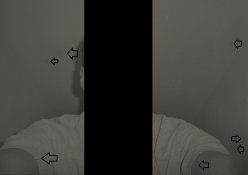
This is from a clip test with a fresh batch of Diafine. I exposed and developed one frame from a new roll of Pan F, 35mm. I placed the clip (about two inches long) on to a reel and developed it in a Paterson tank. Three minutes in each bath at 70F, rinse, fix, rinse, PhotoFlo. I agitated with the twirl stick, very gently as prescribed, for five seconds of each minute, in each bath, and knocked the tank to dislodge any bubbles. This is the developed frame. The spots don't look like airbells to me; they seem to have a more complex structure. There are some streaks too. Any ideas? Thanks.

PS: I've removed my beautiful face so it wouldn't distract (!)
 

Attachments
  • img909.jpg
    img909.jpg
    151.3 KB · Views: 160
Last edited by a moderator:
Most of the spots look like air bells.You may not have knocked the tank hard enough to dislodge them. I know you don't use a presoak with Diafine, but I use the method but not that developer.
 
If the real development happens in the B bath, I wouldn't expect airbells to be a problem given that the emulsion is already saturated. Or maybe that explains why they look different... ?
 
is this scan from a print or direct from film? I only ask because scanners can add flaws, it has been my experience. I've scanned negs that drove me to despair, but the prints were lovely.
 
I'm NOT going to say they're NOT airbells, but here's a piece of neg that I'm fairly sure ARE airbells. And they have a look like I should know what they are (though the closest my brain gets right now is dust on the sensor and that doesn't apply - unless it's a scanner thing).

attachment.php
 

Attachments

  • airbells.jpg
    airbells.jpg
    425 KB · Views: 203
I'm not sure what those are, but I had a similar problem w/ my TD-16 until I started filtering it through a coffee filter/ funnel into the developer gradient. That ended my troubles.
 
is this scan from a print or direct from film? I only ask because scanners can add flaws, it has been my experience. I've scanned negs that drove me to despair, but the prints were lovely.

I meant to mention it. This is a scan with no correction, just inverted to show a positive image.

I'm thinking airbells too, Bethe, though they look a little bit different than what I've seen before. I'll try to run another clip test before holiday company invades...
 
I'm not sure what those are, but I had a similar problem w/ my TD-16 until I started filtering it through a coffee filter/ funnel into the developer gradient. That ended my troubles.

I filtered part A, as it had some floaters that would sink to the bottom and not dissolve. Part B looked fine. I prepared both at 85F with distilled water.
 
I'm convinced now that they're airbells. I ran a second clip test tonight -- a single frame of Tri-X, a flashed shot of my darkroom white wall from about two feet. Again, Diafine 3+3 at 71F, rinse, fix, rinse, Photoflo. For agitation, I did a gentle swirl in each direction, maybe twice, and then gave the tank a good rap against the work surface. I did this initially and after the first and second minute. The Diafine was prepared with distilled water.

The main difference between this and my first attempt is that I was more aggressive and consistent in rapping the tank. This time I got fewer airbells and they look different (different film?). But one is too many.

I'm thinking it's the agitation. With my usual development (using, say, D76) I always use inversion agitation and don't have any problems. With Diafine, the consensus is that inversion agitation for bath B is too aggressive, so I've only used the twirl stick.

Second clip test. A few more spots appear on the exposed part of the leader, which didn't reproduce here.

attachment.php
 

Attachments

  • img911.jpg
    img911.jpg
    148.7 KB · Views: 156
You might be right. Still, I want to change only one variable at a time. My options for my next clip test are:
- Lengthen development times from 3 to 5 minutes
- Inversion instead of swirl agitation for bath B
- Different method of rapping the tank to dislodge air bubbles (but what?)
 
Inversion is the ticket. I ran another clip test and did three ridiculously slow inversions of bath B, followed by a bump each time. No air bubbles. Will do one more clip test before I drop anything critical into it.
 
Glad it is fixed. To date I have never experienced airbells but have never used the twirling stick. I can't in either of my two makes of tanks,Jobo and Durst. Rapping the tank was drilled into me at the first night-school class and then I joined APUG and read the horror stories of what happens when you don't rap hard enough or often enough so probably I tend to overdo it, rapping after each cycle of inversions but it is better to be safe than sorry.

By the way on a lighter note airbells are not the only problem in the picture. Where's the number underneath :D

pentaxuser
 
I learned to rap the tanks after inversion here on APUG. Unfortunately, I did take a tiny divot out of the bathroom sink with a steel tank, lol. Now I hit the tank against a folded rag, or the palm of my hand.
 
Using a prewet with a 2 bath developer is indeed not a good idea, but with defects like shown in the OP, I could think of nothing else that would eliminate airbells and I was convinced that was what they were.

Another possibility is oil in a fine spray being deposited on the film somehow. This includes any type of oil even cosmetic oils or household sprays.

The only way to check this out properly is to use a known good conventional single bath developer and then you can go back and examine both processes side by side. Once you do that and prove that the conventional developer has no bubbles, you can examine the Diafine. If the conventional developer has bubbles as well, then we go back to examining your workflow and equipment.

PE
 
Photrio.com contains affiliate links to products. We may receive a commission for purchases made through these links.
To read our full affiliate disclosure statement please click Here.

PHOTRIO PARTNERS EQUALLY FUNDING OUR COMMUNITY:


Ilford ADOX Freestyle Photographic Stearman Press Weldon Color Lab Blue Moon Camera & Machine
Top Bottom