

• Welcome to Photrio!
    Registration is fast and free. Join today to unlock search, see fewer ads, and access all forum features.
    Click here to sign up

What is wrong with this image?

Recent Classifieds

Forum statistics

Threads
203,474
Messages
2,855,357
Members
101,862
Latest member
Justagram
Recent bookmarks
0

pcsaba1981

Member
Allowing Ads
Joined
Oct 2, 2012
Messages
28
Format
35mm
Hi All,

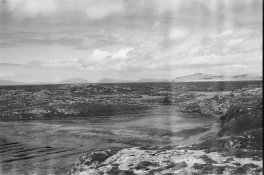
something went wrong when I took this image. You can see the vertical "lines".

It was approx. the 30th shot of a 36 roll. There are one or two images before and after with similar issues.
Can it be the film? The development?
Or can it be the exposure? I haven't used any hood, I used some filter, I don't remember orange or red one. Probably a polar filter was also attached, but I'm not sure.

Thanks for any ideas.
 

Attachments

  • wrong.jpg
    wrong.jpg
    189.5 KB · Views: 384
How was it developed? Some detail is needed to rule in/rule out development as the cause.
 
uneven exposure of the negative, but need more information. what kind of camera you using? Focal plane shutter? has it been serviced of late? Was this a fast exposure or slow one?

for example, if you have curtains on a horizontally running focal plane shutter not tracking evenly, and the two curtains are catching up to each other at times, that might give you this sort of banding effect, especially at a high shutter speed where the traveling slit is narrow and variations would show up more starkly.

this is highly unlikely to cause this sort of banding, however -- usually when that happens you get one end of the film unexposed, the other exposed.

you don't make it clear that this is nowhere else on the whole strip of film -- if it is, that might indicate a development problem -- lack of agitation, perhaps? Developer flowing over the film slowly instead of through proper agitation might explain the relatively even spacing of the banding because it flows through/around the sprocket holes.
 
Looks like a light leak from the film canister as the banding corresponds to the sprocket holes in 35mm film.

Mike
 
I'm just sorry the shot didn't work out for you. The scenery is awesome, hope you can get back for another try.
 
Streamers from the sprocket holes that are on this image are caused by uneven 35mm film development.
 
The camera is Olympus OM2n. Light seals of the camera are OK.

It was developed by a lab - snapshotphotos.co.uk - they always provided me very good and consistent results in case of B&W processing.
I double-checked the negative, the last four image is wrong - it's happening it's the the last strip, as the negative is cut into strips.

The shot was taken on Inishbofin, a small Irish island west from the mainland. It was a very lucky day, sunshine, nice weather and beautiful shots, my first image in this gallery was also shoot that day.

Mike, "Looks like a light leak from the film canister as the banding corresponds to the sprocket holes in 35mm film." - I'm just wondering that factory Ilford cannisters can leak?
 
I reiterate, this is a classic sign of uneven development caused by under agitation, look it up in any book about film processing, not any kind of light leak.
 
I reiterate, this is a classic sign of uneven development caused by under agitation, look it up in any book about film processing, not any kind of light leak.

this would be my guess too -- a light leak anywhere would fog the film in a huge blob, not leave neat little bands like this.

Someone at the lab didn't shake the film enough. It can happen.
 
Someone at the lab didn't shake the film enough. It can happen.

As in hand inversion? I would have thought that in a lab a machine was used that involves regular agitation, possibly continuous?

Maybe the OP should ask the lab how it processes B&W film?

pentaxuser
 
I would put it down to uneven development as well but feel that it may be caused by aggressive agitation leading to surging through the sprocket holes.
 
I would put it down to uneven development as well but feel that it may be caused by aggressive agitation leading to surging through the sprocket holes.

Wouldn't that affect all of the frames, though? OP says it's just on a few frames.
 
We had a drug store recently mess up developing c-41 in a similar fashion. All the sprocket holes had streaks that were much more obvious than the one in the original post. Rolls of film exposed 20 minutes before and after came out fine, and inspection of the camera showed no problems.

I'm not saying it is your problem, but the drug-store in question used the typical machine that is supposed to be fairly fool-proof, so it is possible to get these results with an automated process.
 
uneven exposure of the negative, but need more information. what kind of camera you using? Focal plane shutter? has it been serviced of late? Was this a fast exposure or slow one?

for example, if you have curtains on a horizontally running focal plane shutter not tracking evenly, and the two curtains are catching up to each other at times, that might give you this sort of banding effect, especially at a high shutter speed where the traveling slit is narrow and variations would show up more starkly.

this is highly unlikely to cause this sort of banding, however -- usually when that happens you get one end of the film unexposed, the other exposed.

you don't make it clear that this is nowhere else on the whole strip of film -- if it is, that might indicate a development problem -- lack of agitation, perhaps? Developer flowing over the film slowly instead of through proper agitation might explain the relatively even spacing of the banding because it flows through/around the sprocket holes.

I agree. The spacing of the bands makes sprocket hole drag unlikely. With a horizontally running focal plane shutter, this banding is much more apt to occur at the highest shutter speeds. Avoiding them may be the quick cheap alternate to a clean-lube-adjust on the camera.
 
Jim, if it would be the shutter, all my images should be wrong which were taken after this shot. But the next roll had 36 almost perfect exposures.
 
Jim, if it would be the shutter, all my images should be wrong which were taken after this shot. But the next roll had 36 almost perfect exposures.

So the next roll( same camera, same make of film and same lab) was perfect? If the answers to these questions are "Yes" then it would seem to point to something going wrong at that lab on that particular processing session.

If you are a regular customer and it values your business then if they don't think you are about to slap a big compensation claim on them you might get an honest response to the effect that something might have gone wrong.

Worth a try. You could rely on us coming up with the right answer but neither you nor we will ever know if we have got it right.

pentaxuser
 
Referring to my previous post, my theory on the film we had developed, seeing that the drug store developed two rolls and one was fine, is that either the machine jammed to an extent, or perhaps something momentarily happened with the chemical levels/flow. Just a thought.
 
Thanks for anybody for ideas!

I don't see any point to highlight this issue to the lab. If it's happening again, I can choose another lab anyway.
 
Also possible that it is a light leak through the light trap on the cassette if you wind the film right in and expose to a bright light source. This will always happen with IR film if you take the cassette out in the daylight, and the banding looks just the same...I know, I've done it!
Realize that this is not IR, but there is a slight chance this could happen?
 
The fault looks to linear to be a process fault. I think it's a sticking focal plane shutter.
 
Also possible that it is a light leak through the light trap on the cassette if you wind the film right in and expose to a bright light source. This will always happen with IR film if you take the cassette out in the daylight, and the banding looks just the same...I know, I've done it!
Realize that this is not IR, but there is a slight chance this could happen?

Yes, leaky cassette makes sense since its only a couple of frames.
 
Also possible that it is a light leak through the light trap on the cassette if you wind the film right in and expose to a bright light source. This will always happen with IR film if you take the cassette out in the daylight, and the banding looks just the same...I know, I've done it!
Realize that this is not IR, but there is a slight chance this could happen?

Seeing that banding is what made me think x-ray damage, it would penetrate in a similar fashion. I remember that with the Kodak HIR, only made that mistake once!
 
Ancient eyeballs are reading the print as properly exposed between under exposed or underdeveloped stripes. Hard to say light leak with the quality in the shadows of the good sections. my $0.02 or less worth.
 
Photrio.com contains affiliate links to products. We may receive a commission for purchases made through these links.
To read our full affiliate disclosure statement please click Here.

PHOTRIO PARTNERS EQUALLY FUNDING OUR COMMUNITY:


Ilford ADOX Freestyle Photographic Stearman Press Weldon Color Lab Blue Moon Camera & Machine
Top Bottom
