
• Welcome to Photrio!
    Registration is fast and free. Join today to unlock search, see fewer ads, and access all forum features.
    Click here to sign up

What is the Hasselblad "exposure test plate", and how does it work?

Temporary Jewels

H
Temporary Jewels

  • 1
  • 0
  • 40
Horicon Marsh-5

A
Horicon Marsh-5

  • 2
  • 0
  • 95

Recent Classifieds

Forum statistics

Threads
201,259
Messages
2,821,331
Members
100,624
Latest member
ericstoynov
Recent bookmarks
1

markaudacity

Subscriber
Allowing Ads
Joined
Jun 20, 2013
Messages
182
Location
Houston TX USA
Format
Med. Format RF
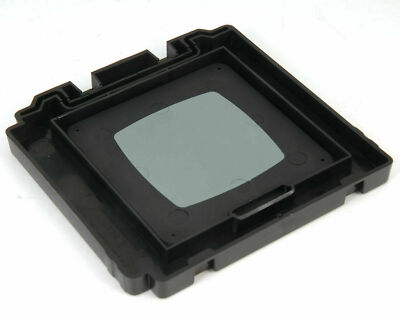
It's mentioned in the D-Flash manual as a way to check exposure without wasting film. There are no pictures nor discussion of it that Google or Kagi can find, which is wild, and I can't imagine how it would work.

Does anyone know anything about this thing, or even better, have pictures?
 

John Wiegerink

Subscriber
Allowing Ads
Joined
May 29, 2009
Messages
3,900
Location
Lake Station, MI
Format
Multi Format
It's mentioned in the D-Flash manual as a way to check exposure without wasting film. There are no pictures nor discussion of it that Google or Kagi can find, which is wild, and I can't imagine how it would work.

Does anyone know anything about this thing, or even better, have pictures?
I never heard of this, but I'm sure somebody here will chime in. I'm now a little curious myself.
 

mshchem

Subscriber
Allowing Ads
Joined
Nov 26, 2007
Messages
15,728
Location
Iowa City, Iowa USA
Format
Medium Format
It's a body back cover with a gray finish for testing the TTL flash before actually exposing the film. Like a 18% reflectance test card
 

mshchem

Subscriber
Allowing Ads
Joined
Nov 26, 2007
Messages
15,728
Location
Iowa City, Iowa USA
Format
Medium Format
1766034772745.jpeg
 

mshchem

Subscriber
Allowing Ads
Joined
Nov 26, 2007
Messages
15,728
Location
Iowa City, Iowa USA
Format
Medium Format
 
OP
OP
markaudacity

markaudacity

Subscriber
Allowing Ads
Joined
Jun 20, 2013
Messages
182
Location
Houston TX USA
Format
Med. Format RF
Wild. So it’s just a test target for the OTF sensor. I was imagining you somehow looked through it.
 

mshchem

Subscriber
Allowing Ads
Joined
Nov 26, 2007
Messages
15,728
Location
Iowa City, Iowa USA
Format
Medium Format
Wild. So it’s just a test target for the OTF sensor. I was imagining you somehow looked through it.

I always wondered if this would match up to actual film. This would sure help if you were doing some sort of macro work. Probably would need fancier flash. The flash is almost certainly Sunpak, it's a nice flash, I never use (but I'm ready!)
 

itsdoable

Member
Joined
Aug 26, 2013
Messages
857
Location
Canada
Format
Medium Format
It is for TTL flash exposure testing. The grey is the same reflectance as film. With TTL film, the sensor in the body measures the flash reflecting off the film during exposure, and shuts off the flash when the correct amount of light has been detected. To avoid exposing film for testing, you put on the body cap. An all black body cap would not reflect the correct amount of light, so the exposure would be more.

You can tape some grey material to your existing body cap to do the same thing.
 
Last edited:

John Wiegerink

Subscriber
Allowing Ads
Joined
May 29, 2009
Messages
3,900
Location
Lake Station, MI
Format
Multi Format
Now I understand! Might have been fine when I shot weddings, but at that time all I had was the 500C models. I got by just fine with two Sunpak "potato masher" flash units. The Sunpak 555 and 622 was used with the 500C's by mounting the flashes sensor module in the Hasselblads side shoe. I never, ever had problems with those units and they worked excellent output wise. I have a 553ELX with TTL, but wouldn't waste my time or money with the "test plate". I'd just slip my sensor module on it and fire up the remaining Sunpak 555. Of course, that's just me.
 

Sirius Glass

Subscriber
Joined
Jan 18, 2007
Messages
50,734
Location
Southern California
Format
Multi Format
I read that it reads the light reflected off the film to time the exposure. It must work well because of all the sales and no complaints.
 

itsdoable

Member
Joined
Aug 26, 2013
Messages
857
Location
Canada
Format
Medium Format
In the studio work with multiple lights, you can take a few test shots without film to determine the range and power that the TTL flash would use before the session so you don't run out of range. Normally you would use manual flash power with a flash meter.

In daylight fill flash use, you can take a few tests shots with different aperture settings to see what power was needed on the flash when using TTL mixing with ambient.

You could also test with a Polaroid.
 

pentaxuser

Member
Joined
May 9, 2005
Messages
20,257
Location
Daventry, No
Format
35mm
In the studio work with multiple lights, you can take a few test shots without film to determine the range and power that the TTL flash would use before the session so you don't run out of range. Normally you would use manual flash power with a flash meter.

In daylight fill flash use, you can take a few tests shots with different aperture settings to see what power was needed on the flash when using TTL mixing with ambient.

You could also test with a Polaroid.

I am still puzzled. What is it that tells you what the range and power is required i.e what actually indicates what the film will record. I take it that what looks like a small grey card inside the back is just that - a small grey card - so it is not that which tells you anything

All the e-bay advert talks about is that it checks for vignetting and for that you use holes in the corners so that bit knd of makes sense but not the rest
Thanks

pentaxuser
 

wiltw

Subscriber
Allowing Ads
Joined
Oct 4, 2008
Messages
6,622
Location
SF Bay area
Format
Multi Format
I always wondered if this would match up to actual film. This would sure help if you were doing some sort of macro work. Probably would need fancier flash. The flash is almost certainly Sunpak, it's a nice flash, I never use (but I'm ready!)

Color neg emulsion brightness can differ from color transparency emulsion. And dependent upon brand of film, too.
It would be simple to use a 135 canister with emulsion leader sticking out, and compare its brightness vs. what looks to be 18% midtone (seen in post #7) of the Hassy or knockoff unit.
 

itsdoable

Member
Joined
Aug 26, 2013
Messages
857
Location
Canada
Format
Medium Format
I am still puzzled. What is it that tells you what the range and power is required i.e what actually indicates what the film will record. I take it that what looks like a small grey card inside the back is just that - a small grey card - so it is not that which tells you anything

All the e-bay advert talks about is that it checks for vignetting and for that you use holes in the corners so that bit knd of makes sense but not the rest
Thanks

pentaxuser

what eBay adverts? Can't speak to that as I have not seen them - but you are not checking for vignetting with this, maybe another item.

You can do the same thing by gluing a piece or film with the emulsion out on a back cover. When you trigger the TTL flash, you can check the flash to see how much it discharged. If you do not have the correct reflectance at the film plane, the flash will not discharge the correct amount.

Color neg emulsion brightness can differ from color transparency emulsion. And dependent upon brand of film, too.
It would be simple to use a 135 canister with emulsion leader sticking out, and compare its brightness vs. what looks to be 18% midtone (seen in post #7) of the Hassy or knockoff unit.

Yes, and in the film days, all TTL flash systems measured the reflectance off the film emulsion during exposure, as did OTF AE meters like the one on the Olympus OM2/4 and Minolta CLE. It turns out the reflectance is pretty similar for most emulsions so you can use an average. I don't know anyone who compensated for different emulsions, but you can if you are that picky. But if you are that picky, you probably did not use AE or TTL flash.

We use to put a piece of film, or grayish/coloured paper in the film gate of OM2's to test the shutter and AE system. Without that, the OTF sensor would see the black pressure plate, and give a long exposure not in keeping with the estimated exposure shown in the finder.

the spot is not 18% gray, as film emulsion is not
 
Photrio.com contains affiliate links to products. We may receive a commission for purchases made through these links.
To read our full affiliate disclosure statement please click Here.

PHOTRIO PARTNERS EQUALLY FUNDING OUR COMMUNITY:


Ilford ADOX Freestyle Photographic Stearman Press Weldon Color Lab Blue Moon Camera & Machine
Top Bottom
