
• Welcome to Photrio!
    Registration is fast and free. Join today to unlock search, see fewer ads, and access all forum features.
    Click here to sign up

What is the biggest size print from a good 35mm photo ?

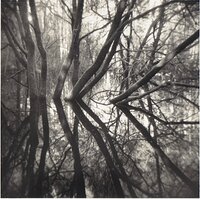
Flooded woodland

Flooded woodland

  • 3
  • 0
  • 20
Babylon

D
Babylon

  • 2
  • 1
  • 41

Recent Classifieds

Forum statistics

Threads
202,832
Messages
2,846,183
Members
101,555
Latest member
MartinWild
Recent bookmarks
0

BADGER.BRAD

Member
Allowing Ads
Joined
Apr 27, 2017
Messages
100
Location
Dudley in old England
Format
35mm
Hello All,

Can anyone tell me what is the biggest print I can reasonably take from a good 35mm photo ? I have a few I would like to frame from my Cosmic 35m .

Thanks all
 
I just made 5- 6 ft wide silver Gelatin prints from XPan negatives for a new Gallery opening in Toronto... As long as the original intent is held and one is sharp at the printing stage it can work.

this would be a 27 x magnification in the above case.
 
i agree with bob that you can make a print pretty much as big as you can imagine from a 35mm negative
but it really depends on who you talk to, some people believe that 8x10 might be the limit, and if someone
jumps the shark and prints something bigger, it is nothing short of a catastrophe ...
i've regularly printed 11x14 and 16x20 from 35mm film, and made even larger enlargements from
miniscule pieces of tech pan to fill an 11x14 sheet ( miniscule meaning a like as big as this "0" ) if i made a full
print from the negative it would have been 40x60..
 
Last edited:
Although my usual prints are 8X10 to 11X14 I have printed 16X20 from 35mm, I believe that with Tmax 100 which resolves 200 l/mm I could print 20X24, decent lens, like Konica 57 1.7, on a tripod, mirror up, cable release, exposure right on, develop in D76 1:1 or MCM 100. Don't know about the Cosmic, what lens?
 
not to hijack the thread, but do you think it matters if its a B&W neg vs a a color neg? was thinking tmax 100 vs ektar kinda thing.
 
The larger your print, the more it will tend to reveal any limitations in your technique and your equipment.
That includes any technique and equipment involved in any intermediate steps such as scanning.
What size were you hoping to enlarge that 24mm x 36mm negative - 8" x 12"?
 
Depends upon the viewing distance, doesn't it? Many 35mm movies get enlarge to theatre screen size without most viewers having any issues with the resulting image. And that's half-frame compared to still 35mm cameras.
 
I has a 16X20 print made from a 35mm Ektar 100, camera Minolta 9, lens 50mm 1.7, bracketed exposure, UV haze, tripod, shutter up, I don't have the remote for the 9, tripped shutter by hand. Processed by Tempe Camera. Very nice, but still wished I had taken the shot with my Mamyia press 6X9.
 
The Cosmic appears to be a Smena 8 Russian viewfinder camera of the 1960s. Unless any of us has this camera and has experience of biggish enlargements which we can show accurately here on Photrio, I'd suggest that the OP tries 8x10 upwards until he gets to the point where the print in his opinion ceases to be acceptable to him. Only he will know when he reaches this point.

pentaxuser
 
I'd suggest that the OP tries 8x10 upwards until he gets to the point where the print in his opinion ceases to be acceptable to him. Only he will know when he reaches this point.
+1 to this. I've made 11x14s of some of my B&W ones, but I wouldn't do it with all of mine. I've also seen a shot taken with a disposable camera blown up to 16x20 inches that really wasn't bad - the stars were aligned just right, I guess. It depends on how you want it to look.
 
The movie comparison isn't completely fair, persistence of vision, 24 frames per second and all that, but still it's a good point.
I have been using mostly medium format in recent years, and just got back to 35mm with a collection of rangefinders. I forgot how good it can look. I'm currently printing 35mm negs to 16x20 using outdated generic c41 drugstore 200 speed film. Wow- I am really impressed with how good it looks. I have a roll of Ektar to process next, that ought to be amazing. I printed 35mm Kodachrome on 16x20 Cibachrome years ago, still looks great. Like Bob said, make a compelling photo and with care you can make it any size you need. I try not to get hung up on acquisition format, I do this for fun-- I'm not shooting furniture catalogs with someone else's money.
 
+1 to this. I've made 11x14s of some of my B&W ones, but I wouldn't do it with all of mine. I've also seen a shot taken with a disposable camera blown up to 16x20 inches that really wasn't bad - the stars were aligned just right, I guess. It depends on how you want it to look.

I take it that was only OK when the Moon is in the Seventh House and Jupiter aligns with Mars :D

pentaxuser
 
I've done several very nice 13x19 prints from 35mm, mostly from Kodachrome slides or lower-speed negatives. That's the largest I can print.
 
If one adheres to the suggested: viewing distance = 1.5 x image diagonal,
looking at an 8" x 10" print at 12" viewing distance is IDENTICAL in subjective quality to viewing an 80' x 100' image from a 120' viewing distance!

The problem comes when (as commonly occurs) the viewer is 'too close'. So in the past I would call 16X my own 'limit' to enlargement factor of a negative because the GRAIN is highly visible when magnified by 16X and you are looking at the 16" x 20" print from 18" away rather than from 25"
But 'acceptability' of grain is a highly individual thing. I laugh whenever I hear the modern digital photographer complain about 'grain' in high ISO (ISO 12800) digital shots, because today's digital camera is far less noisy/grainy than viewing a 16x enlargement from Tri-X at ISO 400!
 
This has been covered in older thread. I have three 24"x36" color prints made from a color negative. It can be done, but only for relatively few negatives.
 
As others have said the only way you will know is to enlarge a negative to the size you want and see for yourself. I will take a 5" X 7" sheet of paper and place it in an area of the image that contains highlights, shadows and some detail at the enlargement size I want. Gives me a better idea if the enlargement will work without wasting a large sheet of paper.
 
not to hijack the thread, but do you think it matters if its a B&W neg vs a a color neg? was thinking tmax 100 vs ektar kinda thing.

Yes, it matters. A problem comes about in trying to compare B&W grain vs. color clouds, however.

Generally color films top out at about 80 line-pairs per millimeter of resolved detail, while B&W can achieve 80 lp/mm with Plus-X and 170 lp/mm with Panatomic-X (about 2X better resolving power), but comparing resolving power is very different from comparing apparent 'graininess'. The lowest (Tri-X) still outresolves the lowest color film (Ektachrome 160) by almost 2X
 
I routinely had Fuji type R prints made to 24x36" from 35mm Velvia for clients in the 90's, they looked awesome, even viewed fairly close.
I just don't worry about grain anymore, it's all about the vision behind the actual content of the photograph.

In 2008, Dead Link Removed had a phenomenal show of his often gripping work shot in 35mm on Tri-X. I think the smallest print was 20x30" with 30x50" being average, viewing distance or not, the enlargements looked superb because the content was.
 
Hello All,

Can anyone tell me what is the biggest print I can reasonably take from a good 35mm photo ? I have a few I would like to frame from my Cosmic 35m .

Thanks all
a 16x20 inch print without a problem but ,I have made prints as large as32x40 inches from from MF film and17x28inches from an FX digital.
 
There are two issues, one is image quality; when a bigger print is made all the flaws are also made bigger. Whether this matters depends on the picture, there are no hard and fast rules, sometimes the flaws become obnoxious, sometimes they don't matter. When evaluating flaws take viewing distance into consideration, things that stand out when viewed from one foot may disappear when viewed from 5ft. The other issue is the size limitations; greater enlargement requires a taller enlarger, a bigger enlarging easel, bigger print trays and sink.
 
the only people who would view an enormous print with their nose to the glass
would be a photographer. a photographer would scrutinize every square millimeter of the image
and make note of ever flaw, and the grain and clouds and everything else. regular people might not.
in the end, it depends on your audience, as much as anything else.
 
I recommend you don't make it bigger than the wall you want to hang it on. :wink:
Other than that, first question is: do you care about sharpness? If you're like me and love grain, motion and other types of unsharpness, the bigger the better.
If however you prefer sharpness (in which case I'd recommend shooting medium or large format) it depends on the sharpness of the negative and the viewing distance. 30x40cm is typically fine, it gets critical with 40x50 or 50x60 prints. But like others said, when viewed from some distance those will be fine too.
 
Many of the Kodak Colorama prints were 35mm. The most influential photo in history was 35mm and routinely printed twenty to forty FEET across (the Marlboro Man - it's killed more people than some wars). But I rarely print 35mm bigger than 6X9 inches.
 
But I rarely print 35mm bigger than 6X9 inches.
Yep, that's a good size, fits nice on 8X10 paper. My 35mm half frame jumbo size is 6X8 on 8X10 paper, other wise I print half frame on 5X7 paper and then if it looks ok I'll go up to 8X10 paper. Never tried scanning a fine grained B&W (never tried scanning at all for that matter) . For film mostly stick to 400 ISO B&W, what ever I can get the best deal on when I order. So not really planning for super size enlargements. I suppose I should try some 'T' grained film just to see what it will do.
 
Photrio.com contains affiliate links to products. We may receive a commission for purchases made through these links.
To read our full affiliate disclosure statement please click Here.

PHOTRIO PARTNERS EQUALLY FUNDING OUR COMMUNITY:


Ilford ADOX Freestyle Photographic Stearman Press Weldon Color Lab Blue Moon Camera & Machine
Top Bottom
