• Welcome to Photrio!
    Registration is fast and free. Join today to unlock search, see fewer ads, and access all forum features.
    Click here to sign up

What is meant by tonality?

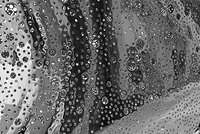
Wheels within Wheels

D
Wheels within Wheels

  • 1
  • 0
  • 20
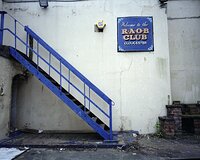
R-A-O-B Club

A
R-A-O-B Club

  • 0
  • 0
  • 28

Recent Classifieds

Forum statistics

Threads
203,223
Messages
2,851,669
Members
101,731
Latest member
berncat
Recent bookmarks
0

markbarendt

Member
Allowing Ads
Joined
May 18, 2008
Messages
9,422
Location
Beaverton, OR
Format
Multi Format
The word seems to bounce around in an ephemeral manner.

What is it? :confused:
 
Several concepts:
Smooth and continuous gradations of tones without boundaries or sharp transitions between varying shades shades
Wide range of tones​
Come to mind. Others will have more concepts.

Steve
 
The mind can perceived approximately 200 tones or shades of gray. When the gray is mixed with color we get various shades of the color. So when using tonality to describe an image, we are speaking about the various levels of tones or shades we see. Tonality can be smooth and gradated, or sharp and contrasty.
 
Well, in common photo parlance, the term 'tonality' usually encompasses the range of tones and the continuity of transitions between them.

To understand why both issues are important, consider a very flat image e.g. with no white point or black point- it might be perceived to lack highlight and/or shadow tones, while still having very smooth continuity of tone within the tonal range***. Another example: a posterized image, which we still sometimes see in amateur digital work or scans with low bit depth. In that case, the white and black points might be there, but the transitions can be posterized, leading to noticeable tonal boundaries.

***N.b. I am not saying that an image must have a black point and white point to have good tonality... but quite often, effective images do.
 
I still have a hard time nailing the tonality I want in shots. I done some reading but haven't hit the point of actually starting to measure yet. Maybe that is what I need to do to keep moving forward. Perhaps I am thinking about tonality incorrectly, but I relate it to capturing the desired dynamic range to tones in the print/negative.

I have a hard time aesthetically judging what sort of tonality I want in shots. I originally preferred contrasty shots but am slowly finding more balance. I don't really know how to judge a few of my latest ones. The range of tones is better than what I've generally shot in the past - and there are traits I like - but something about them seems missing.

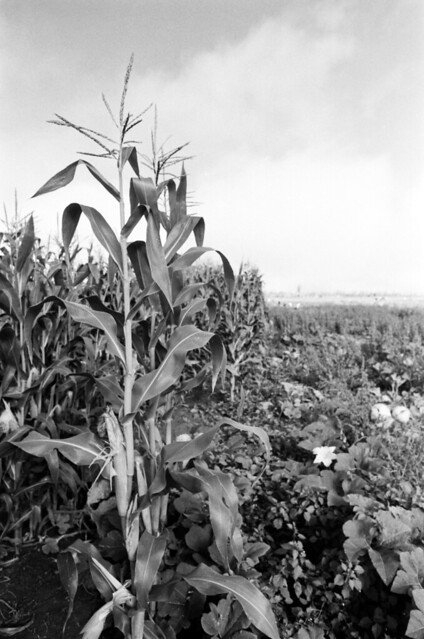
5097931503_ec23def33d_z.jpg

http://www.flickr.com/photos/cannelbrae/5097931503/
 
I still have a hard time nailing the tonality I want in shots. I done some reading but haven't hit the point of actually starting to measure yet.

<snip>

5097931503_ec23def33d_z.jpg

http://www.flickr.com/photos/cannelbrae/5097931503/

Hi Brian,

Like so many things ("3D, Depth, Leica Look, Leica Glow, Zuiko colours") we "see" in photographs, I suspect that tonality is a combination of:

  • A technically accomplished image or print, with the full range of tones from white to black, smoothly graduated in a non-posterised manner, and
  • (Most important) a shot made in good light that gives the images interest and/or depth

By my account, you corn image has excellent tonality (and all other technical qualities perceivable from a tiny web image), but I feel the lighting is flat and uninteresting, so the tones in the image do not conspire in a harmonious way to illuminate your subject. This shot, in early morning or late afternoon, would have held much greater interest to me (well, as much interest as a rather "normal perspective" shot of corn in its surroundings can have).

I feel that B&W film photography (and light) is like sailing (and wind) - no matter what equipment you have, it ultimately boils down to the light (or wind). Of course, for the first part of "good tonality" (as per my hypothetical explanation above, I may be wrong), larger formats seem to contribute to better tonality because of the smoother tonal graduations (because of the lower enlargement factor, the image is much tighter/denser).

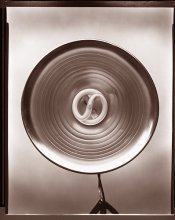
For example (and I am by no means a master of "tonality") this is the "smoothest" image I have yet printed. Of course, it's difficult to see on a web image, but it's clearly visible in the print. I suspect it has a lot to do with the fact that it's a large-ish print made from a 4x5in negative shot on grainless ISO 6 film:

"Reach for the light"
Reach_for_the_light_by_philosomatographer.jpg

There appears to be nothing wrong with your technical process (no need to read up any further) you just need to chase the good light :smile:
 
The word seems to bounce around in an ephemeral manner.

What is it? :confused:

IMO tonality when refered to in photography is mostly a reference to a range of tonality, and how the range of those tones is arranged and displayed in the pattern that makes the print. Most of the time I think this involves some subjectivity, but I think the idea is that "good" tonality generally helps define and communicate textures, light, and other tactile qualities, and in some cases even creates a feeling that isn't really there in real life. Perhaps many or few as appropriate to the interpretation. Part of it is light, but much of it is realized in exposure, developing, and printing, at least for me.
 

Attachments

  • 2949585868_1a57b331d8.jpeg
    2949585868_1a57b331d8.jpeg
    91.1 KB · Views: 435
Last edited by a moderator:
I am glad that someone had the courage to ask the question I have been wondering about.
 
I am glad that someone had the courage to ask the question I have been wondering about.

Alan, you definitely were not alone. Since I had to come up with my "own" explanation, I certainly also didn't "know" - and I suspect the same goes for so many others. We will see a hundred different answers to this thread.

We have to draw comparisons to other disciplines and aqcuired tastes, which are equally filled with "buzz words" like photography is. Wines can have good bouquet, and photographs can have good tonality. I suspect these things all mean different things to different observers... But we all know it when we experience it!
 
I use it as a term to describe the general subject of tonal relationships and placement of tones evident in a piece of art. I do not quantify it by using words such as "more" or "greater" with it. I think of it as a general term. Tonal range, tonal palette, local contrast, tonal differentiation, specific tones used, where the tones are located, and the like are all specific things that contribute to the general tonality of a piece, and which can themselves be specifically quantified and/or described.
 
I am glad that someone had the courage to ask the question I have been wondering about.

Yeah, I hesitated a bit simply because it seems like one of those terms, that you are supposed to know without asking.
 
I think the idea is that "good" tonality generally helps define and communicate textures, light, and other tactile qualities

This definition of "good" tonality makes sense to me.

I think that's what 2F/2F is saying too.

Part of it is light, but much of it is realized in exposure, developing, and printing, at least for me.

I also feel that being able to realize good tonality requires the context of the rest of the variables.
 
Tones to zones and back to tones again. Read about the part.

http://en.wikipedia.org/wiki/Zone_System

I do get the idea of being able to get a full & continuous range of tones from black to white.

What I'm not always getting is when someone says; "x" has better/more tonality than "y".

Why are they saying that?

Is it real or is it just what they happen to have working well to get the look they want?

Are they really just happy with the "curve" of that film or paper?

Is bad tonality just a mismatch between film and/or paper and/or the technique?
 
What I'm not always getting is when someone says; "x" has better/more tonality than "y".

I wouldn't worry about it. It's the same when people say a (2D) image has more "3D" to it, than another. It almost always has to do with selective focus, light, and texture. Both are 2D images, and the myth of, for example, the Zeiss/Leica/Insert-your-favourite-brand-here "3D rendering" usually comes into play.

I have seen far too many spectacular images with with mediocre glass, and mediocre images made with spectacular glass, to entertain such notions.

Same thing with any two given images with the full range of tones (black to white) - one may be described as having better "tonality" then the other, whereas the observer surely means something different, such as smoother tonal transitions, or just outright "more pleasant" - usually due to light, texture, composition, and other qualities.

Post some more of your work?
 
Tones to zones and back to tones again. Read about the part.

http://en.wikipedia.org/wiki/Zone_System

The late Peter Goldfield summed it up as:

Zone . . . . . Tone . . . . . Ton . . . . . Ten . . . . . Zen
Craft . . . . . . . . . . . . . . Heavy ! . . . . . . . . . . . Aesthetic
. . . . . . . . . ----------- Ten Tones --------

Tonality is often used as a comparative term when comparing images, or the properties of films & negatives, the effects of developers, and also the effect of particular lenses/designs.

Ian
 
Dear Mark;
You have received some very good answers to your question regarding tonality. I'm sure that you have also noted that most photographers have a favorite film and often give tonality a a reason for their preference. What hasn't been mentioned is the fact that many films offer slightly different responses to colors as gradation. For myself and many others, the Tmax films seem to render color response in an almost linear Panchromatic fashion, while films like Efke seem to favor a slightly more Orthochromatic response and these differences affect tonality in more than subtle ways. These are important considerations when choosing a film that suits your vision and is often the difference between work that just looks so right and work that just misses.
Denise Libby
 
In addition to Denise's comments the use of B&W filters (yellow, orange, red, green etc) also affects the way colours are rendered as tones, so shifting the perceived tonality of an image.

Ian
 
Tonality is often used as a comparative term when comparing images, or the properties of films & negatives, the effects of developers, and also the effect of particular lenses/designs.

Ian

So, with say a film, are you saying tonality can be represented by the bend, height, straightness, and steepness of the film curve?

I can see this with a Tranny but with a negative there is another curve that will be in play, the paper.

It seems to me that with a negative you would need to define the paper, enlarger, and developer in play before the discussion would become meaningful, is that a fair thought?
 
Dear Mark;
You have received some very good answers to your question regarding tonality. I'm sure that you have also noted that most photographers have a favorite film and often give tonality a a reason for their preference. What hasn't been mentioned is the fact that many films offer slightly different responses to colors as gradation. For myself and many others, the Tmax films seem to render color response in an almost linear Panchromatic fashion, while films like Efke seem to favor a slightly more Orthochromatic response and these differences affect tonality in more than subtle ways. These are important considerations when choosing a film that suits your vision and is often the difference between work that just looks so right and work that just misses.
Denise Libby

Great thought Denise,

As with my comment to Ian, it seems to me that you are saying this is definable on the curve.

A matter of local and total contrast controlled by the choices of materials to get a certain response.
 
In addition to Denise's comments the use of B&W filters (yellow, orange, red, green etc) also affects the way colours are rendered as tones, so shifting the perceived tonality of an image.

Ian

It seems to me that in your comments I could almost substitute the word "contrast" for "tonality".

Is that close or ... ?
 
So far most definitions of tonality have included the word tone. Perhaps if we substitute density for tone the meaning would be clearer. Here would be another attempt; different negative densities create the variety of tonal values produced in the final print. The greater number of stops in the range, up to the capabilities of the paper, the greater the tonal range.

John Powers
 
It seems to me that in your comments I could almost substitute the word "contrast" for "tonality".

Is that close or ... ?

Contrast is a factor in Tonality but it's not the same. The master of tonal control is John Blakemore, he plays with tonality using the Zone system in a way that goes way beyond Ansel Adam and Minor White's original thinking.

Tonality is the way the tones are handled in a print, it's controlled at all stages from the exposure, development etc so yes the curves of films & papers are big contributing factors.

However we all print to our own parameters there's not a right or wrong way.

Ian
 
Photrio.com contains affiliate links to products. We may receive a commission for purchases made through these links.
To read our full affiliate disclosure statement please click Here.

PHOTRIO PARTNERS EQUALLY FUNDING OUR COMMUNITY:



Ilford ADOX Freestyle Photographic Stearman Press Weldon Color Lab Blue Moon Camera & Machine
Top Bottom