• Welcome to Photrio!
    Registration is fast and free. Join today to unlock search, see fewer ads, and access all forum features.
    Click here to sign up

What happened to the negative?

Lowlight freestyle

A
Lowlight freestyle

  • 0
  • 0
  • 54
man arguing 1972

A
man arguing 1972

  • 7
  • 4
  • 114

Recent Classifieds

Forum statistics

Threads
203,026
Messages
2,848,777
Members
101,603
Latest member
xil
Recent bookmarks
0

Valerie

Subscriber
Joined
Jul 22, 2005
Messages
1,198
Location
Conroe, Tx
Format
Multi Format
My dear APUG gurus,

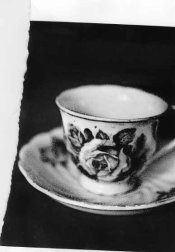
Not sure what happened here....what's with these white spots?? Maybe it is something pretty simple (grain? never seen grain like that!), just not something I have ever seen before. :confused:

HP5+ developed in Pcat HD, 1:1:150 stand dev 45 minutes 70 degrees. (WATER instead of stop, so don't suggest that!)

2 rolls, developed separately, turned out the same way.

A roll of FP4 developed a few days earlier, in the same manner, turned out beautifully!

Be kind on this novice if its something basic! :D
 

Attachments

  • mysterydots003.jpg
    mysterydots003.jpg
    14.2 KB · Views: 369
It looks very much like reticulation to me, but is hard to tell from the scan. Anyhow, that is my best guess at this time.

PE
 
I'm not sure if it is exactly reticulation or not but I have seen the same thing, scans are here: (there was a url link here which no longer exists)

Different film, but similar result. Maybe it is reticulation. I do think it has something to do with the stand development. Hard to say why it shows up in one roll and not another. That certainly seems like reticulation.
 
Did somebody say reticulation :smile:

Maybe its a form of reticulation, I purposely reticulate film emulsions
the best one to do it with is Neopan 400. here is a result.
Its caused by temperature fluctuations during washing or developing of the film.

I will find the negative and scan an enlarged section of this image as it uniform cracks to it giving the print a mosaic tile effect.

~Steve Frizza
The Lighthouse Lab
 

Attachments

  • markie.jpg
    markie.jpg
    36.1 KB · Views: 219
I see you are in Houston - similar temperatures to mine in Florida. What were your temperatures for all of your solutions - including wash water? Wide temperature variation could cause reticulation. I had it with Efke PL100 because my wash water was above 80F - I had to standardize on temperatures that matched my wash water.
juan
 
Valerie

Sorry to throw a spanner in the works, but on the print scan that you show, the patterning does NOT look like the reticulation that I have experienced, as the patterning looks like large round grain, where as the grain of a reticulated negative usually looks like small worms (pill shaped), for want of a better expression.

When looking at the negative under the focus magnifier, a reticulated negatives grain will not resemble the grain structure of a normal negative. It is so destinct in its structure.

The first time I reticulated a negative I turned the hot tap on very briefly when washing the film. I have never used running water to wash film since that day.

Sorry that you will be none the wiser after reading this.

Regards

stoo
 
Excuse me if I'm wrong but that's like a test print/strip, yes? What size is the negative and what sort of enlargement are you making? Just curious, it looks like it might be grain to me(possibly) but you'd probably be enlarging 8x10+ size for that look.
 
I have to agree with Stoo, even though my first thought was reticulation, the only times I have seen it , forced and by accident , the pattern did indeed look like worms as he says.
I can only see a small view of the object therefore if you posted more images it may help.
sorry.
Valerie

Sorry to throw a spanner in the works, but on the print scan that you show, the patterning does NOT look like the reticulation that I have experienced, as the patterning looks like large round grain, where as the grain of a reticulated negative usually looks like small worms (pill shaped), for want of a better expression.

When looking at the negative under the focus magnifier, a reticulated negatives grain will not resemble the grain structure of a normal negative. It is so destinct in its structure.

The first time I reticulated a negative I turned the hot tap on very briefly when washing the film. I have never used running water to wash film since that day.

Sorry that you will be none the wiser after reading this.

Regards

stoo
 
Maybe it's a combination of reticulation and pyro effects. I've never tried to reticulate a pyro neg, so I don't know quite what it would look like, since you've got other things going on that don't happen with normal reticulation. The pyro hardens the gelatin, so maybe it reticulates differently, and the stain image probably clumps differently from the silver image.

So the solution to this is to try to keep the temperature of your process more even. Sometimes this is difficult when you're combining freshly mixed developer, say, with room temperature fixer, or when the "cold" rinse water is too hot out of the tap in the summer in some locations. Ideally, you want everything at the same temperature, but if that's not possible, at least try to keep it so that each step is within 5 degrees of the previous step.
 
I think David may be a genius here.
Stand development, Air bells on the gelan , some of the small bells harden in the emulsion to create a circular pattern,
The best attribute of Hutchings Pyro for my money is the hardening effect that stops grains from Migrating or Blooming, which results in a much more sharper and defined highlight region on pyro negs.
I think Mr Goldfarb has hit the nail on the head re the potential cause.
The solution I think is a method of releasing the airbells that may be adhering to the emulsion.
I do not think it is a water temp issue.

Maybe it's a combination of reticulation and pyro effects. I've never tried to reticulate a pyro neg, so I don't know quite what it would look like, since you've got other things going on that don't happen with normal reticulation. The pyro hardens the gelatin, so maybe it reticulates differently, and the stain image probably clumps differently from the silver image.

So the solution to this is to try to keep the temperature of your process more even. Sometimes this is difficult when you're combining freshly mixed developer, say, with room temperature fixer, or when the "cold" rinse water is too hot out of the tap in the summer in some locations. Ideally, you want everything at the same temperature, but if that's not possible, at least try to keep it so that each step is within 5 degrees of the previous step.
 
Larger image (maybe)

Tried to enlarge part of the image.

I did not think it was reticulation myself, as what I have seen of it is that "wormy" appearance. The water temps are also fairly consistent (although I will not rule out variations there).

I rather like the look for some of the shots--so knowing what it is and being able to repeat it would be nice.

Using 120 film, enlarging to a 7x7 inch image.
 

Attachments

  • mysterydots006.jpg
    mysterydots006.jpg
    152.4 KB · Views: 159
I have been able to get reticulation in the regular fine pattern as seen in the samples above. It usually happens with harder films, and / or with gentler temperature fluctuations. I have been able to actually just get a mild haze in the emulsion by gentle enough means.

The severe methods with softer films will indeed give worm like effects.

I also agree that it might be severe grain caused by a combination of effects. I think it is hard to tell at this distance and with a scan.

PE
 
The second scan shows a pattern just like on my film (see above). I'm sure there wasn't any wild temp variation, but maybe some slight ones +- 2 or 3 degrees. It is an interesting pattern, and perhaps it could be useful. The common threads seem to be: Ilford film, pyro-cat, stand development, and 120 format, although format shouldn't be much of a factor. Interesting.
 
If that is a positive image in the scans above though, then the spots are black to reproduce as white circles in the positive image.

If this is correct, then it is neither air bubbles nor reticulation, but something else such as undissolved developing materials touching the film and causing darker spots to form.

PE
 
Yes Ron, that is the positive. Undissolved developing materials? My pcat hd is in liquid form.

Thanks for all the suggestions.... looks like my best bet for the future is to watch my temps more carefully (except in cases where I want to repeat these results!) Oh, and pray ;-)
 
Just a thought, but I ran across a similar problem; but with high contrast film. Traced it to developer contaminated with a small amount of fixer.
 
If I remember CORRECTLY - and I think this makes sense - reticulation is caused by immersing the film in water that is much hotter than the emulsion is designed for. The coefficient of expansion for gelatin is much higher than for a polyester base. So - the gelatin expands by a factor of something like TWICE the area (in an extreme case) and the brainlike pattern is the result of the binding to the film base failing at certain points to accomodate the increased area required by the expanding gelatin. In essence - one is 'cooking' the gelatin in a process not entirely unlike cooking pasta or baking bread.


What are the causes of reticulation?
 
Photrio.com contains affiliate links to products. We may receive a commission for purchases made through these links.
To read our full affiliate disclosure statement please click Here.

PHOTRIO PARTNERS EQUALLY FUNDING OUR COMMUNITY:


Ilford ADOX Freestyle Photographic Stearman Press Weldon Color Lab Blue Moon Camera & Machine
Top Bottom