Nikkors, I've had a few... Let's keep this brief and on topic of the 135mm in 35mm (Mamiya TLR 135mm tasty).
I could and have gone on and on about the time shooting sports indoor B&W for a small newspaper and the choices of shooting the 135mm versus the 180mm, for some brighter arenas the 180 was better (larger venues usually had better light but further away) whereas in some (most) HS gyms of the era f/2 was f/2 and I had a wider but closer range to work with. Especially with Basketball season where the 85mm f/1.4 Ai-s sat on one body for weeks, the 135mm f/2 was a valued optic that was usually specifically packed for use.
However, I wish to discuss one of my very favorite lenses period, and that's the Nikkor 135mm f/3.5 in the early "K", hopefully
Ai-converted as I found. This is the earlier 4 element/ 3 group lens from the previous larger F 1960's style mount which itself was a slightly tweaked version of the Super OG Nikkor-S for rangefinder, of DDD Lore and such. Very few changes to the optical formula, the K series has the smaller 1970's style build but natively didn't have the Ai specification so a homemade or factory conversion has the most flexibility.
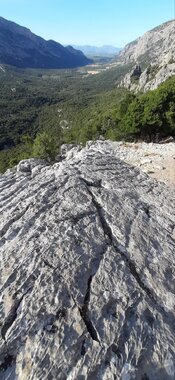
This lens in any of the early 4/3 versions has a couple of fun tricks that make it a useful tool. It is a stellar portrait classic; at moderate distances for a 'thigh-to-hair' vertical portrait at wide open to f/5.6 is the sweet spot, bonus bokeh points if you can line up a brighter background without a hood for dreamy sharp flare. An easily wonderful lens just for these two looks, but stopped down to f/8 or f/11 with a small tripod or even a bean bag stabilization makes an astounding landscape lens. Deep Field and the whole frame sharp, to the limits of the local air quality. The build of the earlier Q and Q.C. types are superlative but a bit overkill, they still take 52mm filters and need a hood, my favorite is the HN-7 but the usual clip on works well and is a requirement for lower level of flare in backlit situations; th Q.C. and K versions have the updated Nikon Multicoating which cleans up the color and contrast especially with a hood. The earlier Q versions are very sharp in black and white with a hood. I prefer the K series version that I found with factory conversion, it works very well on both film and converted to Z6 for my uses as a tag along tele for beach days or hiking to shoot landscapes and the occasional portrait in the style I described.
The later Ai and Ai-s 135mm is also a fine lens with a slightly altered 4 element / 4 group that has a similar look but the background bokeh had a stronger look, overall a more 'sharp and modern' look. Both versions are lighter than the Q's but the Ai is the lightest and also has the longest focus throw, so check the feel of that if it suits your uses. These Ai and Ai-s versions are on a much smaller build and have a pull out hood which is handy for traveling.
Those inclined to discover more about the lineage can read the always excellent Nikon Thousand and One Nights series, this one
https://imaging.nikon.com/imaging/information/story/0043/ discusses this lens.
"As the point images do not undergo any unnatural transformation, the lens seems to produce images that are unaffected and devoid of any quirks. Notably, the low field curvature produces a pleasing blur (bokeh) quality in the image background. A nice and simple blur quality can be expected, coupled with a tendency for the bokeh to increase closer to the edge of the image. The lens is also good at correcting for distortion (which is supposedly difficult to correct for), with the level of distortion being around 0.6%"
This lens is always priced as a bargain and easily found and I think others will enjoy shooting with it, on either film or digital.


I was thinking of my undergrad McGill years....but i was by coincidence in gradschool at UBC during that time but was more interested in climbing...& had trimmed down to a single M4.
 : https://open.library.ubc.ca/search?...&dEnd=284083200000&c=1&collection=ubysseynews


