• Welcome to Photrio!
    Registration is fast and free. Join today to unlock search, see fewer ads, and access all forum features.
    Click here to sign up

What does reciprocity failure in color negatives look like?

Sunk

H
Sunk

  • 0
  • 0
  • 11
Sentry

A
Sentry

  • sly
  • Dec 16, 2025
  • 1
  • 1
  • 25

Forum statistics

Threads
201,224
Messages
2,820,719
Members
100,597
Latest member
Filmzgerald
Recent bookmarks
0

Les Sarile

Member
Allowing Ads
Joined
Aug 7, 2010
Messages
3,427
Location
Santa Cruz, CA
Format
35mm
I enjoy conducting really long exposures and have tested quite a few film brands but I can't say I've ever encountered any semblance of a failure.

In Fuji Superia 100's datasheet, no compensation between 1/4000 to 2 seconds but start adding stops for longer. They state +1 for 64 seconds and probably more with even longer exposures? However, when I tested it with no compensation, the results seem normal well beyond 64 seconds . . .

Fuji 100 long exposure by Les DMess, on Flickr


The specsheet for Kodak Gold 100 - and other, states, "You do not need to make any exposure or filter adjustments for exposure times of 1/10,000 second to 1 second. For critical applications with longer exposure times, make tests under your conditions." Like Fuji 100 above, the results with no compensation looks normal as well . . .
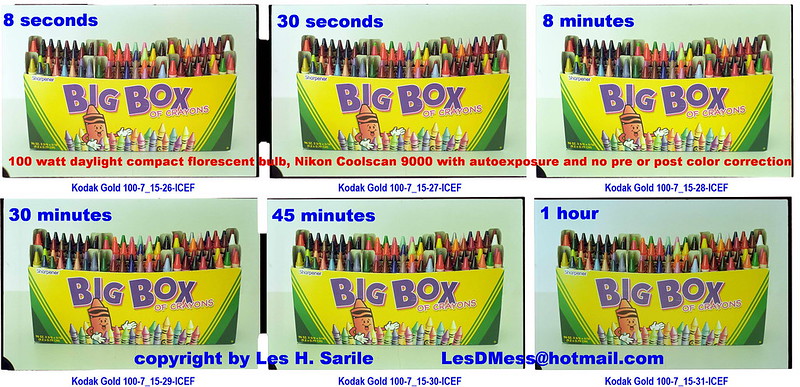
Gold 100 long exposures by Les DMess, on Flickr

Have any examples of what reciprocity failure looks like?
 

BrianShaw

Member
Allowing Ads
Joined
Nov 30, 2005
Messages
16,948
Location
La-la-land
Format
Multi Format
As always, very interesting; thanks for sharing the images of your knowledge and experimentation.
 

Sharktooth

Member
Joined
Apr 4, 2022
Messages
412
Location
Canada
Format
Medium Format
Can you describe the methodology for this testing.

The difference between a one second exposure and a 2 hour exposure, in the same lighting, is almost 13 stops. Most camera lenses might have a range of 8 stops or less, from wide open to smallest aperture. For example, if your 1 second exposure was at f1.4, then the equivalent exposure at f22 would be a bit more than 4 minutes. How were you able to achieve equivalent exposure at 2 hours?

It would also be interesting to see the actual negatives.
 
OP
OP

Les Sarile

Member
Allowing Ads
Joined
Aug 7, 2010
Messages
3,427
Location
Santa Cruz, CA
Format
35mm
Can you describe the methodology for this testing.

The difference between a one second exposure and a 2 hour exposure, in the same lighting, is almost 13 stops. Most camera lenses might have a range of 8 stops or less, from wide open to smallest aperture. For example, if your 1 second exposure was at f1.4, then the equivalent exposure at f22 would be a bit more than 4 minutes. How were you able to achieve equivalent exposure at 2 hours?

It would also be interesting to see the actual negatives.

I used my Pentax LX in aperture priority mode and I would change the lens aperture after each exposure as well as update the Sekonic. I was verifying the autoexposure times of the LX compared to my Sekonic to verify the accuracy of the timing as well as seeing the results of it on film. If you view the fullsize of the image, you can see the exposure times displayed on my Sekonic which matches the LX autoexposure times using a stopwatch. They match up to 50 seconds but as I remember it, the Sekonic display would time out for longer exposures and no longer match. After aperture f22, I turned my lightsource down sufficiently guessing it would result in a much longer exposure. In this case the LX conducted a 2 hour autoexposure.

Incidentally, I am referencing the Fuji Superia 100 datasheet that recommends +2/3 compensation at 16 seconds but the Fuji 100 film I used then was not labeled "Superia" and may in fact be different.
 

Sharktooth

Member
Joined
Apr 4, 2022
Messages
412
Location
Canada
Format
Medium Format
Can you show some pictures of your negative strips. If there is no reciprocity effect, then there should be no density change in the negatives.
 

Chuck1

Member
Allowing Ads
Joined
Jul 4, 2022
Messages
769
Location
Arlington ma
Format
Multi Format
Very long color exposures result in a color shift, do you use any filters to correct for this(I forget if it the same as a tungsten correction)?
 
OP
OP

Les Sarile

Member
Allowing Ads
Joined
Aug 7, 2010
Messages
3,427
Location
Santa Cruz, CA
Format
35mm
Can you show some pictures of your negative strips. If there is no reciprocity effect, then there should be no density change in the negatives.

I am showing individual scans of each frame without pre or post adjustment. How else would you suggest to do this? Been awhile since I conducted these tests but I'll see if I can find them.
 
OP
OP

Les Sarile

Member
Allowing Ads
Joined
Aug 7, 2010
Messages
3,427
Location
Santa Cruz, CA
Format
35mm
Very long color exposures result in a color shift, do you use any filters to correct for this(I forget if it the same as a tungsten correction)?

No I didn't use any filters or conduct any pre or post adjustments.
 

pentaxuser

Member
Joined
May 9, 2005
Messages
20,253
Location
Daventry, No
Format
35mm
So can anyone see a flaw in Les' tests and results that appears to have resulted in outcomes that at the very least appear to range from the unexpected to something that defy the laws of colour film exposures?

I can't but there are certainly more things in Heaven and Earth that are dreamt of in my philosophy or knowledge of the behaviour of colour films with long exposures

pentaxuser
 

DREW WILEY

Member
Allowing Ads
Joined
Jul 14, 2011
Messages
14,776
Format
8x10 Format
Hard to say, since every single exposure looks odd, and certainly not normal. All of the Superia shots are quite cyanish and washed out, way off; the Gold exposures, inconsistently greenish. Sorry, but I have to question the entire workflow. You'd first have to attain an OPTIMIZED standard exposure for sake of comparison; but there's nothing like that here.

Otherwise, I never trust any "auto" anything for testing purposes.

What is it you have in the background of each of those sets of exposures?
 

koraks

Moderator
Moderator
Joined
Nov 29, 2018
Messages
26,115
Location
Europe
Format
Multi Format
How else would you suggest to do this?

Scan entire film strip in one go, as positive. Then invert and apply an adjustment curve which is the same for all frames. This can be done with a flatbed scanner or a digital camera repro setup. It can also be done with a darkroom contact print of course.

Any comparison method that relies on individual scans of individual frames where the scanner does some form of color balancing (which appears to be the case here) is difficult/impossible to interpret.

The way the contrast and colors wobble from frame to frame makes me believe your scanner is trying (fairly succesfully) to compensate for inconsistencies between the actual negatives. I expect these inconsistencies will show up as a more coherent drift if you remove the influence of the auto-color magic that the scanning software has applied here.
 
OP
OP

Les Sarile

Member
Allowing Ads
Joined
Aug 7, 2010
Messages
3,427
Location
Santa Cruz, CA
Format
35mm
I am simply testing in my conditions as recommended by the specsheet specially since these are well beyond are listed.

In the first exposurre of each film type shown above, I shot what my meters indicated as a perfect exposure under the lighting condition I provided to establish a baseline. In subsequent exposures, I metered perfect exposures at longer shutter times by adjusting apertures that my Pentax LX autoexposed corresponding with the Sekonic meter up to 50 seconds. No compensation times added. My stopwatch. confirmed those times. Given that the longer result looks very similar to the control first shot, I conclude that I don't see any failure particularly in terms of color and contrast. I will accept that my baseline may not be perfect, but surely any failure should still be evident if there are any.

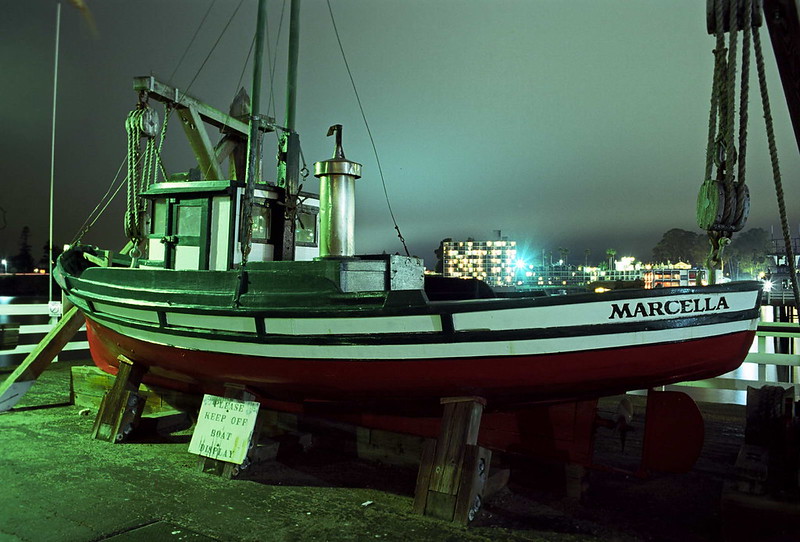
Of course in the real world, there will be no way to provide a baseline so any failures - if any at all, cannot be known to be the result of reciprocity. Most of the time, color effects could be due to mixed lighting. For instance I took this shot on Kodak Ektar 100 using the Pentax LX aperture priority autoexposure that lasted about a half hour . . .

Kodak Ektar 100_37-31B by Les DMess, on Flickr

Looks like a "normal" result to me with the influence of mix lighting.

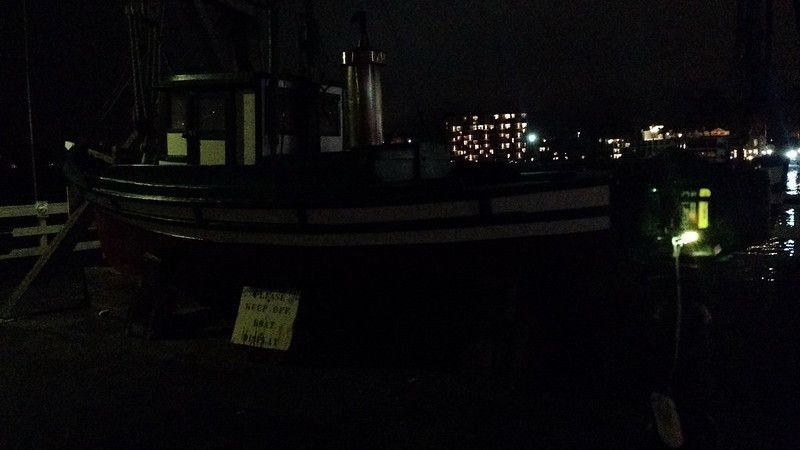
This scene is so dark that I took a shot of it with my phone just so I can remember how dark it was. Of course your pupils will adjust . . .

IMG_20160703_223609044 by Les DMess, on Flickr

I've made so many far longer exposure on many other films and have not seen any "negative" results so I was just wondering what reciprocity failure might look like in color negatives . . .
 
OP
OP

Les Sarile

Member
Allowing Ads
Joined
Aug 7, 2010
Messages
3,427
Location
Santa Cruz, CA
Format
35mm
Scan entire film strip in one go, as positive. Then invert and apply an adjustment curve which is the same for all frames. This can be done with a flatbed scanner or a digital camera repro setup. It can also be done with a darkroom contact print of course.

Any comparison method that relies on individual scans of individual frames where the scanner does some form of color balancing (which appears to be the case here) is difficult/impossible to interpret.

The way the contrast and colors wobble from frame to frame makes me believe your scanner is trying (fairly succesfully) to compensate for inconsistencies between the actual negatives. I expect these inconsistencies will show up as a more coherent drift if you remove the influence of the auto-color magic that the scanning software has applied here.

I suppose it's possible that reciprocity failure - even in these extremely long exposures, can be so subtle that my workflow copes with it automatically.

I'll try what you suggested as soon as I can find those film strips. In the meantime, have you encountered - or noticed, the effects you would attribute to reciprocity failure?
 

Sharktooth

Member
Joined
Apr 4, 2022
Messages
412
Location
Canada
Format
Medium Format
Hard to say, since every single exposure looks odd, and certainly not normal. All of the Superia shots are quite cyanish and washed out, way off; the Gold exposures, inconsistently greenish. Sorry, but I have to question the entire workflow. You'd first have to attain an OPTIMIZED standard exposure for sake of comparison; but there's nothing like that here.

Otherwise, I never trust any "auto" anything for testing purposes.

What is it you have in the background of each of those sets of exposures?

I'm with Drew on this one. There are too many uncontrolled variables in the test, so there's no way to make any reasonable conclusions from it.
 
OP
OP

Les Sarile

Member
Allowing Ads
Joined
Aug 7, 2010
Messages
3,427
Location
Santa Cruz, CA
Format
35mm
I'm with Drew on this one. There are too many uncontrolled variables in the test, so there's no way to make any reasonable conclusions from it.

I already answered that question by making a perfect exposure for the first shot as verified by my Sekonic meter and the Pentax LX autoexposure matches it in duration as verified by my stopwatch. Should I have put a watch in the shot to show this time?

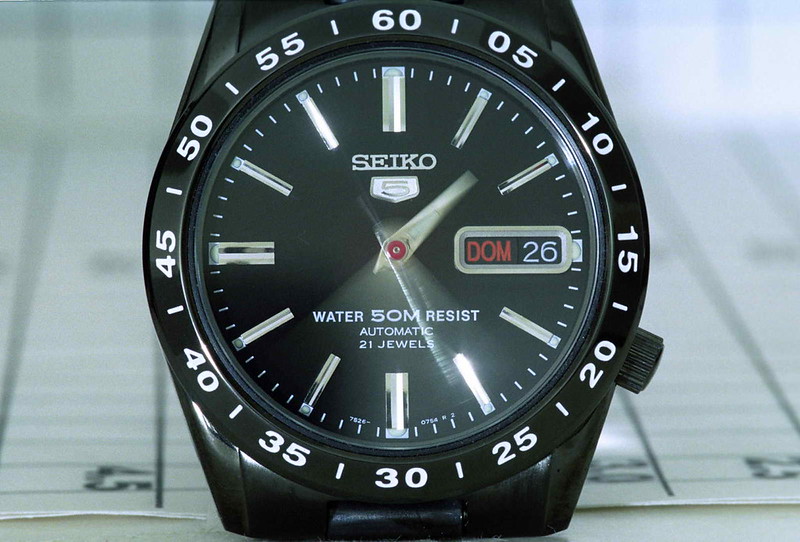
I always wondered how I could do that so it is unquestionable so I was playing around with ways to convey this lapsed time. Of course a digital clock would just be blurred so I thought I would try my analog watch to capture the time lapse. This is about 15 minutes on Kodak Gold 100 as can be verified by the hour and minute hands. Yes I know, nobody uses analog watches anymore . . .

Kodak Gold 100-7_30-24 by Les DMess, on Flickr

Even with no compensation it just looks perfectly normal.

More importantly - specially if my test methods are questionable and results unclear, have you seen the results of reciprocity failure and can you share what that looks like?
 

Sharktooth

Member
Joined
Apr 4, 2022
Messages
412
Location
Canada
Format
Medium Format
What is your definition of perfect exposure?

The primary issue with this test is that it's entirely subjective. The dynamic range of your scene is probably less than 3 stops. The dynamic range of the film is probably around 10 stops. If you target your exposure to center it on the characteristic curve of the film, you could probably underexpose by another 3 1/2 stops before you start losing significant detail off the toe of the curve. If your initial exposure was on the overexposure end, you could even have more "underexposure" from that point until there is any noticeable effect.

The advantage of negative film is that in can capture a huge range of brightness, and be adjusted in printing or scanning to achieve the positive image.

If there's a reciprocity failure happening here, it could be masked by the dynamic range of the film. To do this properly, you really need to be using a densitometer to see if the density in the negative is changing with the longer exposures.
 

Sharktooth

Member
Joined
Apr 4, 2022
Messages
412
Location
Canada
Format
Medium Format
More importantly - specially if my test methods are questionable and results unclear, have you seen the results of reciprocity failure and can you share what that looks like?

It just looks like underexposure. When exposure times get very long (or very short), fewer silver halide crystals get "triggered" than would normally be expected.
 

MattKing

Moderator
Moderator
Joined
Apr 24, 2005
Messages
54,718
Location
Delta, BC Canada
Format
Medium Format
There are two ways that reciprocity failure manifests itself.
Both ways involve changes in film density, despite the fact that exposures would be equal if there was no such failure.
Usually, we are dealing with low light level reciprocity failure, and negatives come out thinner.
In many cases, the thinner negatives are still capable of producing good positives, due to the latitude inherent in the film.
But also, in many cases, that failure affects the different parts of the colour emulsion differently, and as a result problems with colour casts, colour crossover and contrast distortion are introduced into those positives.
Unfortunately, with respect to the subject used for the demonstration, the relatively diffused light used and the low Subject Luminance Range means that any such problems may be relatively hard to see in the results.
My suggestion to @Les Sarile would be to first check for the existence of any reciprocity failure at all by comparing the apparent densities of the negatives themselves - a backlit digital photo of the various versions side by side would do that reasonably well.
The harder test would be one that reveals those problems with colour casts, colour crossover and contrast distortion. A more demanding subject would also be more revealing. But in any event, the introduction of the variables contributed by scanning and digital processing greatly complicate the examination.
 

_T_

Member
Joined
Feb 21, 2017
Messages
425
Location
EP
Format
4x5 Format
I'm with Drew on this one. There are too many uncontrolled variables in the test, so there's no way to make any reasonable conclusions from it.

Well you can draw exactly and only the conclusion that if you did exactly what op did then you might also find that the effects of reciprocity failure on the look of the images produced would be minimal.

Which is still interesting in and of itself and might be taken as encouragement to explore the topic further
 
OP
OP

Les Sarile

Member
Allowing Ads
Joined
Aug 7, 2010
Messages
3,427
Location
Santa Cruz, CA
Format
35mm
It just looks like underexposure. When exposure times get very long (or very short), fewer silver halide crystals get "triggered" than would normally be expected.

Well that's anticlimactic . . . but in a good way as that is certainly something I have not encountered.


There are two ways that reciprocity failure manifests itself.
Both ways involve changes in film density, despite the fact that exposures would be equal if there was no such failure.
Usually, we are dealing with low light level reciprocity failure, and negatives come out thinner.
In many cases, the thinner negatives are still capable of producing good positives, due to the latitude inherent in the film.
But also, in many cases, that failure affects the different parts of the colour emulsion differently, and as a result problems with colour casts, colour crossover and contrast distortion are introduced into those positives.
Unfortunately, with respect to the subject used for the demonstration, the relatively diffused light used and the low Subject Luminance Range means that any such problems may be relatively hard to see in the results.
My suggestion to @Les Sarile would be to first check for the existence of any reciprocity failure at all by comparing the apparent densities of the negatives themselves - a backlit digital photo of the various versions side by side would do that reasonably well.
The harder test would be one that reveals those problems with colour casts, colour crossover and contrast distortion. A more demanding subject would also be more revealing. But in any event, the introduction of the variables contributed by scanning and digital processing greatly complicate the examination.

Thank you for that.

Now I know conclusively I am not encountering any reciprocity failure. In another thread discussing the latitude of Kodak Portra 160 I had provided my latitude testing on some films and one can clearly see the differences in results over and under exposing by a few stops.

This is a test I did using Kodak Ektar 100 . . .

Kodak Ektar 100 latitude by Les DMess, on Flickr


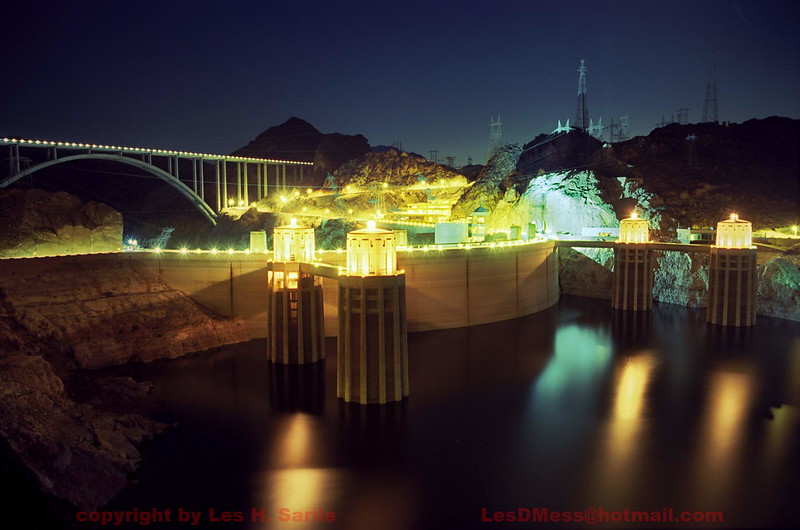
This an aperture priority autoexposure from the Pentax LX lasting about 45 minutes on Kodak Ektar 100 with no compensation . . .

Kodak Ektar 100_31-12 by Les DMess, on Flickr

I am confident that there is no reciprocity failure but just more mix lighting colors . . .
 
Last edited:

koraks

Moderator
Moderator
Joined
Nov 29, 2018
Messages
26,115
Location
Europe
Format
Multi Format
have you encountered - or noticed, the effects you would attribute to reciprocity failure?

I've not specifically tested for it and what long exposure work I've done with color film, was all under artificial lighting and with ample compensation (seat of the pants style) for any reduced sensitivity. So no, I've not seen anything I could attribute with any degree of certainty to reciprocity failure. But since color film is a silver halide film just like b&w, it most definitely will exhibit non-linearities under very low light levels, and by the nature of color film this will affect color rendition as well as contrast.

If you can find those film strips and scan/digitize them in one go, it will be possible to visualize the effects of LIRF. It would be a very interesting example!

Now I know conclusively I am not encountering any reciprocity failure.
Looking at the examples posted in #1 I'd arrive at the opposite conclusion, but I would also conclude that your scanning software does a decent job in keeping color rendition approximately constant despite the variations in the negatives.
One clear clue in your first set of images (the Fuji exposures) is that the contrast is starting to drop away at around the 2 minute mark, possibly even earlier. If there were no effect of reciprocity, contrast would have remained perfectly constant. Given that exposures of several minutes imply LIRF (not HIRF), the expectation is that contrast would increase, since the higher values in the image will be less affected by LIRF than the lower values. The fact that contrast is reduced in the images shown proves that the scanning software is somehow auto-adjusting final image rendition based on image content. Which emphasizes that "all bets are off" when trying to draw conclusions from frame-by-frame scans.
 
Last edited:

Romanko

Member
Joined
Sep 3, 2021
Messages
890
Location
Sydney, Australia
Format
Medium Format
There are two ways that reciprocity failure manifests itself.
In practice, these manifest as: (1) decreased film speed; (2) different color rendering.

In your examples it might look like the reciprocity does not exist. Apparently, the film latitude was sufficient to deal with the loss of speed. Then, human eye is practically color blind at very low light levels so there is no "correct" or "accurate" color rendering.

Basically, don't bother with reciprocity. You seem to arrive at correct exposures for your night scenes, continue using them. If in doubt, bracket and overexpose by a couple of stops.
 

koraks

Moderator
Moderator
Joined
Nov 29, 2018
Messages
26,115
Location
Europe
Format
Multi Format
Apparently, the film latitude was sufficient to deal with the loss of speed.

It would still show up in the negatives in that case. There's no such thing as latitude compensating for lower speed with the negatives remaining exactly the same. It would effectively mean that the film would have no sensitivity at all, since it wouldn't respond to differences in expose. If that were the case, it wouldn't form an image...

I.e. either there's an influence of reciprocity and it will show up in the negatives, regardless of latitude etc. Alternatively, reciprocity does not kick in, which would be evidenced by identical negatives regardless of the combination of exposure time/light intensity as long as the product of these is the same cumulative exposure.

Then, human eye is practically color blind at very low light levels so there is no "correct" or "accurate" color rendering.

That's a bit like a philosophical question, but overall I don't agree, for two reasons:
1: With light levels that are still readily visible to the human eye (including color perception), we can still run into long exposure times that would push us into reciprocity failure territory; think also of exposures made with small apertures.
2: I don't agree with the implied statement that color only exists if we can perceive it. If you close your eyes, you can also not see color, but you might still want to record it accurately on a photograph.
 

Romanko

Member
Joined
Sep 3, 2021
Messages
890
Location
Sydney, Australia
Format
Medium Format
There's no such thing as latitude compensating for lower speed with the negatives remaining exactly the same.
I do not deny reciprocity failure in color negative film. It would be akin to denying gravity (And I like gravity. It never failed me. Not even once). I simply suggest that if the OP has a routine for night photography that works it is possible that all effects of reciprocity failure are already taken into account.

I mean, if you have five stops of film latitude and a scene with five stops of dynamic range you have to be exact with your exposures. If, on the other hand the latitude is 10 stops and you are using average metering you can lose a couple of stops in film speed before you hit base-plus-fog and start noticing it. Obviously, the loss in speed would result in reduced negative density, but if you are still on the linear part of the characteristic curve it won't effect the final print that much.

I don't agree with the implied statement that color only exists if we can perceive it.
We are discussing pictorial photography here where the final image is perceived by a human observer. The viewer does not have real-life experience of what "correct" colors look like in a very dark night scene and the photographer has more room for interpretation.

I am not a color scientist but I always thought that colors are expressed in terms of human visual system. We know that there is no direct correspondence between the dominant wavelength of light and color, and hence we have metamerism. This is in contrast with the auditory system (with which I am more familiar) where quantities like sound frequency and level are expressed in absolute units of second, kilogram and meter.

I don't know how much correction in post-processing was applied to the dam image for example but I know how difficult Ektar could be when underexposed. It looks like the film received adequate exposure in this case.
 

brbo

Member
Joined
Dec 28, 2011
Messages
2,326
Location
EU
Format
Multi Format
If I was doing a reciprocity test of a film I certainly wouldn't rely on camera's meter (or any other meter) to determine exposure duration as @Les Sarile is doing here which basically is a test of how well his Pentax LX copes with long exposures. And we can see it copes very well. But his test might just as well be a test of LX's meter failure in low light conditions that compensates for film reciprocity failure.

And, I'm I the only one to actually point out that there is a film reciprocity failure in Les' test (disregarding for a moment that scanning with unknown parameters is involved)? First frame starts at f2.0 and 1s and seventh frame is f16 and 2min. That is a reciprocity failure of a full stop (and it tracks perfectly with what Fuji's reciprocity failure published for that film). Now, that's very good performance (there are many other pro colour negative films that do way worse), but I see no need to pretend that there is no reciprocity failure.
 
Photrio.com contains affiliate links to products. We may receive a commission for purchases made through these links.
To read our full affiliate disclosure statement please click Here.

PHOTRIO PARTNERS EQUALLY FUNDING OUR COMMUNITY:


Ilford ADOX Freestyle Photographic Stearman Press Weldon Color Lab Blue Moon Camera & Machine
Top Bottom