
• Welcome to Photrio!
    Registration is fast and free. Join today to unlock search, see fewer ads, and access all forum features.
    Click here to sign up

What do you do with your negatives?

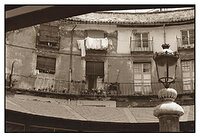
Valencia

A
Valencia

  • 1
  • 1
  • 55
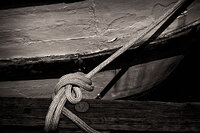
Tied to the dock

D
Tied to the dock

  • 4
  • 0
  • 94

Recent Classifieds

Forum statistics

Threads
203,094
Messages
2,849,747
Members
101,661
Latest member
Rosiemst
Recent bookmarks
0
All negatives, 35 and 120, go in the the usual sleeves and then in binders. At the moment I have Hama 8 binders, which fill a full shelve in my bookcase.
Some 10 years ago I scanned all negatives on a low resolution (1200dpi) into Lightroom and devided them into subjects and periods. Every film is numbered in Lightroom and on the sleeve. So when I’m looking for a certain negative for printing, I check Lightroom for the number, and find the negative within 1 or 2 minutes. New films are scanned immediately after developing.
It took me a few months to scan 40 years of negatives, but using batch scanning and the fully automatic position of the scanner made it an easy job. The archive is backed up every day so not much chance of loosing it.
In general my life is not very organized, so If I had not done this, I would never be able to find back any negative.
Regards,
Frank
 
Your friend has a remarkable amount of discipline.

I think that her philosophy is that she would rather have a managable set of tidy albums to browse or to find and show any particular pics to family and friends, and, as she says, when she's no longer around, her kids might like to have an interesting family record, rather than shoeboxes of unsorted prints and negs in their original packets, all of which wsould go straight into the skip !

Having also just been shown another friends pictures of a once-in-a-lifetime hol in the Galapogos Islands, I can see that point as regards digital........whizzing through about 300 pictures in about 3 minutes on the screen of a smartphone isn't like the "old days", when such a holiday would have produced a fascinating evening with a few friends, of slides projected on a screen (usually Kodachrome,.but other films were available :wink: ), with lots of chat, and perhaps a drink and a few snacks .
 
Once developed, they hang to dry and stay that way until I do everything I’m going to do with them, then after that, I put them in printfile sleeves and put that in an archival binder.

I predominately scan, so whenever I’ve improved my process, I’ll pull a couple recent prized negatives and re-scan them with the improved process. I twin check all my film and reference the twin check in the scanned image metadata, so it’s a pretty simple matter of checking which twincheck the image is and pulling that sleeve from the binders. I keep notes in a notebook about how that film was exposed and developed also referenced by the twin check so when I go to rescan it, I have a good idea of what the contrast will be.

When I start doing prints, I’ll also keep notes in the same notebook for what I did to print, again referenced by twin check and frame number.
 
I predominately scan, so whenever I’ve improved my process, I’ll pull a couple recent prized negatives and re-scan them with the improved process. I twin check all my film and reference the twin check in the scanned image metadata, so it’s a pretty simple matter of checking which twincheck the image is and pulling that sleeve from the binders. I keep notes in a notebook about how that film was exposed and developed also referenced by the twin check so when I go to rescan it, I have a good idea of what the contrast will be.
What is "twin check"?
 
All negatives, 35 and 120, go in the the usual sleeves and then in binders. At the moment I have Hama 8 binders, which fill a full shelve in my bookcase.
Some 10 years ago I scanned all negatives on a low resolution (1200dpi) into Lightroom and devided them into subjects and periods. Every film is numbered in Lightroom and on the sleeve. So when I’m looking for a certain negative for printing, I check Lightroom for the number, and find the negative within 1 or 2 minutes. New films are scanned immediately after developing.
It took me a few months to scan 40 years of negatives, but using batch scanning and the fully automatic position of the scanner made it an easy job. The archive is backed up every day so not much chance of loosing it.
In general my life is not very organized, so If I had not done this, I would never be able to find back any negative.
Regards,
Frank

My Lightroom catalog is my “digital proof”. Everything I shoot gets scanned and put into Lightroom with metadata. From there I edit out the junk, then make digital prints from the keepers, though I’ll soon be doing analog prints of my more prized negatives, though my scans are pretty high quality, so the analog prints will be more for what I want to sell, or if family stuff, for display.
 
What is "twin check"?

A twin check is a set of numbered stickers that labs put on your film to keep track of which film goes with what order. One sticker goes on the film, the other sticker goes on your order form. This way they can match your roll up with your order.

I use them to keep track of my own film. I put a twincheck on my film, and the matching sticker in my notebook and write down pertinent details in the notebook. When scanning the film, I refer to my notes for that twin check and put the twin check in the image meta data, then when I file it, I put the sliver of film with the sticker on it in the head of the printfile sleeve and put it in the archival binder in twin check order. I keep the notebook with the archival binders when not using it.

It makes keeping your negatives organized very simple and is a super easy way to reference things.
 
After printing, I put the negatives in Negafiles, put them with the "proper proofs" and put them in a room, next to the darkroom in such a good safe place that I can never find them again when looking for them. Then when I am looking for something else, they fall into my hands. The answer? Drop what you were doing, mix chemicals and print. If you don't, you'll never find them again.......Regards!
 
In addition to archiving my negatives, I also add a brief description as to time, place, and subjects.

I have hundreds of family photos (prints) made in Hungary, but usually nothing written on the back. Everyone must've thought, "yeah, we know who that is."
 
In addition to archiving my negatives, I also add a brief description as to time, place, and subjects.

I have hundreds of family photos (prints) made in Hungary, but usually nothing written on the back. Everyone must've thought, "yeah, we know who that is."
I sometimes have the same problem but with the dates of my family photos, lately I have been trying to organize them in a time sequence and have to ask my wife if the date is right or name, she has a remarkable memory for family things like that.
 
As I posted before I use PrintFile pages and keep them in a box [perferred] or a binder. Need a binder? Try boiled rice or Kaopectate. :whistling:
 
Photrio.com contains affiliate links to products. We may receive a commission for purchases made through these links.
To read our full affiliate disclosure statement please click Here.

PHOTRIO PARTNERS EQUALLY FUNDING OUR COMMUNITY:


Ilford ADOX Freestyle Photographic Stearman Press Weldon Color Lab Blue Moon Camera & Machine
Top Bottom
