• Welcome to Photrio!
    Registration is fast and free. Join today to unlock search, see fewer ads, and access all forum features.
    Click here to sign up

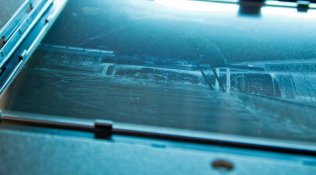
What could cause these markings?

twisted wheels

A
twisted wheels

  • 0
  • 0
  • 11
Chose vue

A
Chose vue

  • 0
  • 1
  • 23

Recent Classifieds

Forum statistics

Threads
202,072
Messages
2,834,618
Members
101,099
Latest member
pavloskatsonis
Recent bookmarks
0

Usagi

Member
Allowing Ads
Joined
Apr 17, 2007
Messages
362
Location
Turku, Finla
Format
Multi Format
I have a lot of Ilford sheet films (4x5), Fp4+ and Hp5+ which has similar cracking pattern on the surface of base side. I haven't never seen these with other films, including Efke films.

The cracks forms kinda circular pattern and this happens only with Ilford sheet films (not every single sheet though). I have got these with various processing methods. Traditional tray developing, sloshers, rotary, dip'n'dunk.

As these usually aren't visible in the print (or scan), I haven't investigated this much. At the beginning, I thought that perhaps it's just a bad batch of film (it was a bit expired batch that I got with cheap price).
Later I saw these in fresh film too, so it's something else.


The only sure thing is that these are not scratches.
There is no difference whether I use acidic stop bath, only water stop bath, neutral fixer or acidic fixer.

The process itself is always quite similar: pre-wetting couple of minutes, D-76 1+1, then stop or water rinse and fix and wetting agent.
The temperature of all baths is same within 1°C.
I use some different developers, but so rarely that I cannot say does this occur with them also (without browsing through my negative piles).


Could the other temperature changes cause this? The sheets itself are stored in the freezer. I never load them right after freezer.
Ofcourse, when it's winter, the film sheets may be subject of fast temperature change. For example from bag to -15°C.


This is one big mystery that needs to resolve.. So far I am using tmx, tmy and fuji acros, but Ilford may return to my use soon...
 

Attachments

  • P1195739 ilford cracks web.jpg
    P1195739 ilford cracks web.jpg
    150.6 KB · Views: 200
  • P1195746 ilford cracks web.jpg
    P1195746 ilford cracks web.jpg
    154.7 KB · Views: 174
  • P1195749 ilford cracks web.jpg
    P1195749 ilford cracks web.jpg
    148.3 KB · Views: 157

Simon R Galley

Member
Allowing Ads
Joined
Nov 2, 2005
Messages
2,034
Location
Cheshire UK
Format
Medium Format
Dear Usagi,

I cannot tell at all from your images what it is.....I would have to physically inspect them, if they really are 'cracks' or splits in the back coating then the film has suffered a type of 'reticulation' that is normally related to sudden or extreme changes of temperature, or extremely high or low temperatures during processing. You mention that they have rapid changes in temperature when being exposed, that would not normally cause reticulation and the film should be able to withstand very high and very low temperatures of the levels you mention. Circular or non linear marks on film nearly always ( but not exclusively ) cause us to look at the processing regime, you mention a pre-soak, as I have mentioned many times ILFORD do not recommend pre-soaking of any of our films, but again that would not harm the film in anyway unless the pre-soak was in very cold water and then you went to dev at 20c even then I cannot believe the back coat would 'split'.

As always, you have bought ILFORD film, even though out of date ( within reason, when was its expirery date? ) you are very welcome to return it to us at the factory at Mobberley, the address is on our website, and if you mark it for my attention I will make sure it goes into our QC system. Then at least you will know what the cause actually is.

Simon ILFORD Photo / HARMAN technology Limited :
 
Joined
Sep 10, 2002
Messages
3,676
Location
Eugene, Oregon
Format
4x5 Format
Are you sure these are cracks? They kind of look like hard-water deposits to me. I also got similar marks from the salt in traditional water softeners. Are you giving a final 2-minute rinse in wetting agent mixed in distilled water? If not, try that (one-shot and with plenty of solution) and see if it helps.

Best,

Doremus

www.DoremusScudder.com
 
Joined
Jan 21, 2003
Messages
15,715
Location
Switzerland
Format
Multi Format
I have a lot of Ilford sheet films (4x5), Fp4+ and Hp5+ which has similar cracking pattern on the surface of base side. I haven't never seen these with other films, including Efke films.

The cracks forms kinda circular pattern and this happens only with Ilford sheet films (not every single sheet though). I have got these with various processing methods. Traditional tray developing, sloshers, rotary, dip'n'dunk.

As these usually aren't visible in the print (or scan), I haven't investigated this much. At the beginning, I thought that perhaps it's just a bad batch of film (it was a bit expired batch that I got with cheap price).
Later I saw these in fresh film too, so it's something else.


The only sure thing is that these are not scratches.
There is no difference whether I use acidic stop bath, only water stop bath, neutral fixer or acidic fixer.

The process itself is always quite similar: pre-wetting couple of minutes, D-76 1+1, then stop or water rinse and fix and wetting agent.
The temperature of all baths is same within 1°C.
I use some different developers, but so rarely that I cannot say does this occur with them also (without browsing through my negative piles).


Could the other temperature changes cause this? The sheets itself are stored in the freezer. I never load them right after freezer.
Ofcourse, when it's winter, the film sheets may be subject of fast temperature change. For example from bag to -15°C.


This is one big mystery that needs to resolve.. So far I am using tmx, tmy and fuji acros, but Ilford may return to my use soon...

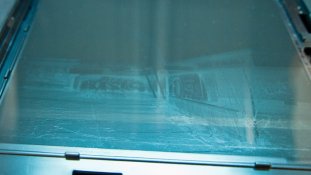
Can you pull an unexposed and unprocessed sheet, to see if the markings are there before it enters any step of your process?
I have a couple of rolls of Delta 400 in 120 that have a really weird pattern on the base side also, but I'm so happy with the pictures that I won't part with the negs to have them examined. Whatever it is, it doesn't show in my prints.
 
Joined
Jan 21, 2003
Messages
15,715
Location
Switzerland
Format
Multi Format
Are you sure these are cracks? They kind of look like hard-water deposits to me. I also got similar marks from the salt in traditional water softeners. Are you giving a final 2-minute rinse in wetting agent mixed in distilled water? If not, try that (one-shot and with plenty of solution) and see if it helps.

Best,

Doremus

www.DoremusScudder.com

I have the same marks at the OP on my 120 Delta 400, even after the film was squeegeed. No deposits possible.
 

vpwphoto

Member
Allowing Ads
Joined
Feb 21, 2011
Messages
1,202
Location
Indiana
Format
Multi Format
Can you "feel" it? If so..
My guess it is a combination of non-hardening fixer, over-washing, over photo-floing, and or too hot drying.
Looks like the emulsion lifting which can be caused by one or more of the above in various combinations.
 

vpwphoto

Member
Allowing Ads
Joined
Feb 21, 2011
Messages
1,202
Location
Indiana
Format
Multi Format
PE mentions from time to time the pitfalls of "deep freezing" film. Dries out the emulsion.
 
Joined
Jan 21, 2003
Messages
15,715
Location
Switzerland
Format
Multi Format
Can you "feel" it? If so..
My guess it is a combination of non-hardening fixer, over-washing, over photo-floing, and or too hot drying.
Looks like the emulsion lifting which can be caused by one or more of the above in various combinations.

I'm not the OP, but here's my experience. I shot the Delta 400 on a trip to Michigan last year. The store where I bought my film didn't have enough TMY-2 so I decided to try some D400.

I shot about 40 rolls of film, five out which were the Delta 400. Only the Delta 400 shows these marks.

It's on the base side, so has nothing to do with the emulsion. I use Ilford Hypam fixer, which is non-hardening, and then I wash for 20 minutes in running water, and air dry the film in a 50 degree basement after wetting agent, and wiping off all liquid water on the film.

All films fine, except the Delta 400.
 

Aron

Member
Allowing Ads
Joined
Aug 27, 2009
Messages
256
Location
Hungary
Format
Multi Format
I store all my film (Delta 100 and HP5+) in the freezer, usually for many months, which is occasionally set as low as -40C, but usually -24C, according to my trusty thermometer. Never had this problem.
 
Joined
Jan 21, 2003
Messages
15,715
Location
Switzerland
Format
Multi Format
I store all my film (Delta 100 and HP5+) in the freezer, usually for many months, which is occasionally set as low as -40C, but usually -24C, according to my trusty thermometer. Never had this problem.

I buy my film so fresh that it doesn't have to be stored in the freezer. For what it's worth, the film I used never saw a freezer.
 

Worker 11811

Member
Allowing Ads
Joined
Jan 18, 2010
Messages
1,719
Location
Pennsylvania
Format
Multi Format
My first guess would be reticulation but OP says he keeps his process temps regulated to ±1ºC. That shouldn't be a problem.
Maybe it's the freezer. I don't know. I've never heard of that happening unless you take the film directly from the freezer and put it into a hot room.

Are you sure it's a defect IN the emulsion and not merely on the surface? (e.g. Some kind of surface contamination?)
Are you sure it's actually on the emulsion side and not on the base?

If I was in your position, I'd take a sheet, expose it, process it and examine the result, sacrificing one sheet for the sake of science.

On the other hand, Simon offered to look into it for you. If there is one guy on the planet who can get to the bottom of this problem, it is he.
Send him a sheet of film that's got this problem. While you are at it, send him a sheet of unexposed, unprocessed film from the same batch. Put it inside a plastic sandwich bag and seal it between two sheets of cardboard. Seal it, all four sides, with gaffer's tape. Just for good measure, look on the original package, get the batch number and write it on the cardboard.

The price of a couple-few postage stamps and an envelope is good insurance to see that your pictures are as good as they can be. Isn't it? :wink:
 
Joined
Jan 21, 2003
Messages
15,715
Location
Switzerland
Format
Multi Format
Are you sure it's a defect IN the emulsion and not merely on the surface? (e.g. Some kind of surface contamination?)
Are you sure it's actually on the emulsion side and not on the base?

If I was in your position, I'd take a sheet, expose it, process it and examine the result, sacrificing one sheet for the sake of science.

OP clearly states that it's on the base side of the film. I very much doubt it's process related. Examining an unexposed and undeveloped sheet would tell a lot. Just yank one from the box, and fix it out.
 
OP
OP
Usagi

Usagi

Member
Allowing Ads
Joined
Apr 17, 2007
Messages
362
Location
Turku, Finla
Format
Multi Format
Thank You Simon.

I have good notes of each sheet that I have developed. I can check my negative archive, if I found something...
Then I can send sample to Ilford Photo.


Like Bertilsson has wrote, these markings aren't contamination marks or drying marks. But as they does not show in the printed images, I haven't investigated yet much time for this.
 
Photrio.com contains affiliate links to products. We may receive a commission for purchases made through these links.
To read our full affiliate disclosure statement please click Here.

PHOTRIO PARTNERS EQUALLY FUNDING OUR COMMUNITY:


Ilford ADOX Freestyle Photographic Stearman Press Weldon Color Lab Blue Moon Camera & Machine
Top Bottom