I've tried some of the other methods, and totally agree with this --v
I use empty wine bags that can be refilled.
I buy the 3L variants, last time they cost $12 for 6. They hold more like a gallon.
Prior to this, I tried:
* reusing PET bottles (they need to be clean, you need to be careful with your technique on squeezing the air out, and be very, very obvious about labeling)
* using regular photo chem bottles (you can't squeeze the air out)
* using the brown accordion photo chem bottles (they get the air out, but only last a few refillings because they are impossible to clean properly)
* using photo chem bottles and displacing air with inert gas spray (the gas is expensive and doesn't fully displace unless you build yourself a tent, see posts by PE).
[ Of special note to labeling, I once stored stabilizer in distilled water jug, hurriedly noting one side. A month later, I had allergies and went to use a neti pot, and guess what. Trip to the doctor, MSDS says Tetenal stabilizer is Formaldehyde. ]
So when it comes to processing slides in E6, for me it's all about longevity of those chemicals, and repeatability of the process over a long time. To have your chemicals fail when processing film, that's a bitter pill to swallow. I mix the Tetenal kits using distilled water, process everything one-shot, and recently switched from hand processing to using a jobo and 1500 tanks for roll films (I plan to do sheets that way too using the non-expert tanks, just haven't gotten to it). Wine bags are a great solution to getting *all* of the air *completely* out: fill them, put the spout on, and holding it by the spout, let air out until you see the solution dribble out. Then I label them with permanent markers with the mix date and store the bags in small plastic rubbermaid storage boxes with the instructions.
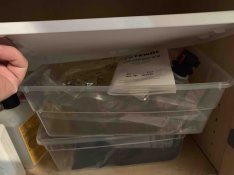
Some pitfalls I've learned:
* If you are planning on reusing solutions, you have to pour them in and out every time. if you handle the bags a lot, the marker can rub off. Also getting the spouts on and off is a lot more annoying than good old caps one any other solution. So I just don't use them for anything I replenish.
* Out of 25 bags or so, I once had the spout on a bag with dektol leak. It was in a plastic storage box, but made a bit of a mess. Now, I store wine bags with spouts up instead of down.
* I wash, dry upside down, and reuse them a few times for Tetenal E6 color developer, blix replenishers, and use fresh bags each time for the first developer, because that's the super critical one you've really gotta nail. Perhaps I should for the CD as well, but the bags seem clean. I toss bags that look nasty, for example if they've had fix that has yellow sulfur precipitate. You could argue that's harder on the environment than photo chem bottles, but while the chem bottles might last 2-3 times as long (and still be clean), they require 2-3 times more plastic than these thin bags, so it's a wash if you ask me.
I don't store working solutions to replenish in them, like fixer and Kodak flexicolor bleach because air is good for bleach and fixer is cheap. Developer chemicals I absolutely use one-shot. Tetenal kits come with all solutions in a kit. The kit is about $70 for a 2.5L which is fairly pricey, so I want it to last. I was pretty pleased with how much the process cost while I was hand processing, but now with my last jobo run, I did 6 rolls of 120 in just 570ml, and the results were stunning.
A final note on durability, Tetenal manual says (for FD), freshly applied solution should last 8 weeks, 50% used 2 weeks, and opened concentrates 24 weeks. I was about to say I used chemicals way older than that successfully but after checking my notes, I can't back it up with hard data on Tetenal E6 kits. I remember being under pressure to shoot and process all the E6 at a shot in 2 weeks, and I'm happier not being under pressure to finish all of the chemicals that fast.