• Welcome to Photrio!
    Registration is fast and free. Join today to unlock search, see fewer ads, and access all forum features.
    Click here to sign up

weigh the volumes

Recent Classifieds

Forum statistics

Threads
201,769
Messages
2,829,852
Members
100,936
Latest member
rdbirt
Recent bookmarks
0

AgX

Member
Allowing Ads
Joined
Apr 5, 2007
Messages
29,972
Location
Germany
Format
Multi Format
even if it were an unseemly thing, can you explain what Umut? :blink:
I do not know what it means... sorry:sad:

Umut is a fellow member who often has very distinct opinions. As many others too. And he does not refrain from uttering them.
 

sveamarcus

Member
Allowing Ads
Joined
Oct 18, 2011
Messages
31
Format
Medium Format
Your method looks great schyter, I hadn't realised the SG data was so readily available from the manufacturer. You have definitely won me over. I will standardise my dev process around your method. I also like your idea of using any old plastic water bottle, cutting off the neck and using it as a throw away mixing vessel.

Great information in any case and thanks for the eBay link.
 

sveamarcus

Member
Allowing Ads
Joined
Oct 18, 2011
Messages
31
Format
Medium Format
Also, even if density changes with temperature, for dilute developers like ID-11 the density of distilled water should also change. Meaning that the ratio should stay somewhat the same, whereas the total developer volume may vary very slightly with temperature. Most development processes (i.e. non-exhausting) have ample developer capacity and is thrown away, so a small total volume difference should be insignificant. Ratios are more important for the development density/time-curve.
 
OP
OP
schyter

schyter

Member
Joined
Jun 11, 2013
Messages
164
Location
Lodi - Italy
Format
Pinhole
Your method looks great schyter, I hadn't realised the SG data was so readily available from the manufacturer. You have definitely won me over. I will standardise my dev process around your method. I also like your idea of using any old plastic water bottle, cutting off the neck and using it as a throw away mixing vessel.

Great information in any case and thanks for the eBay link.


welcome to "The Heretics club" :laugh:

seriously ... >>>
Another aspect that might be interesting, is that, occasionally monitoring the specific gravity of the developer (even diluted) could reasonably assess if the chemical is exhausted or still active. Ilford fact shows the specific weight even for dilutions. I think it is an aspect not to be underestimated. (IMHO):smile:

example (pag, 2) >> http://www.ilfordphoto.com/Webfiles/2011427133131459.pdf
 

sveamarcus

Member
Allowing Ads
Joined
Oct 18, 2011
Messages
31
Format
Medium Format
Another aspect that might be interesting, is that, occasionally monitoring the specific gravity of the developer (even diluted) could reasonably assess if the chemical is exhausted or still active. Ilford fact shows the specific weight even for dilutions. I think it is an aspect not to be underestimated.

How would it change - increase or decrease the GN (oxidation being the major culprit)? Wouldn't it require a precise volume measurement as well?
 

AgX

Member
Allowing Ads
Joined
Apr 5, 2007
Messages
29,972
Location
Germany
Format
Multi Format
Specific density is used in industrial photographic processind. But as indicated above one must know what conclusions to make.
 

Rick A

Subscriber
Allowing Ads
Joined
Mar 31, 2009
Messages
10,031
Location
Laurel Highlands
Format
8x10 Format
I also like your idea of using any old plastic water bottle, cutting off the neck and using it as a throw away mixing vessel.

Oh great, just what our land fills need, more plastic that takes eons to deteriorate.
I'll opt for cleaning out my glass and recycling everything else.
 

Rick A

Subscriber
Allowing Ads
Joined
Mar 31, 2009
Messages
10,031
Location
Laurel Highlands
Format
8x10 Format
many thanks to all ! ;/)

Paul > if you use a plastic bottle for water, you can just throw it in the waste basket. I want to clarify that it is a proposed method to a guy who develops the first time, with a few budget.


Post #7 from the OP. Hmm.... looks like you are promoting waste to me.
 
OP
OP
schyter

schyter

Member
Joined
Jun 11, 2013
Messages
164
Location
Lodi - Italy
Format
Pinhole
I thought that this method could be exposed to criticism (sincerely hoping just a few), and so I proposed to balance the precision of 0.1 grams.
In fact, if the amount of developer is considerable (ex. 1 +1 1 +2 1 +3) becomes easy to see that also a balance of normal use by housewives (1 gram) works perfectly.
Let's say that the kit becomes extremely cheap. Who does not possess in the home a digital scale from 1 gram??
With what you weigh the flour, yeast, etc etc when preparing the dough for the pizza? :smile:
 

BrianShaw

Member
Allowing Ads
Joined
Nov 30, 2005
Messages
16,981
Location
La-la-land
Format
Multi Format
...
Let's say that the kit becomes extremely cheap. Who does not possess in the home a digital scale from 1 gram??

With what you weigh the flour, yeast, etc etc when preparing the dough for the pizza? :smile:

Here in New World America scales for home baking have only recently become popular. Most baking recipes have been volumetric. More and more we are seeing recipes with both vulumetric and weight measures.

Decent digital kitchen scales are easily available at very reasonable prices.
 
OP
OP
schyter

schyter

Member
Joined
Jun 11, 2013
Messages
164
Location
Lodi - Italy
Format
Pinhole
Here in New World America scales for home baking have only recently become popular. Most baking recipes have been volumetric. More and more we are seeing recipes with both vulumetric and weight measures.

Decent digital kitchen scales are easily available at very reasonable prices.

:wink::wink::wink: after that we discovered you (Christopher Columbus 1.492), now we convey you even scales for food !!! :laugh:
 
OP
OP
schyter

schyter

Member
Joined
Jun 11, 2013
Messages
164
Location
Lodi - Italy
Format
Pinhole
:D Is amusing to note that my AP tank requires 600ml developing for one 120 roll.using Rodinal/APH09/Fomadon R09 (all with SG 1.36!!) in a dilution of 1 + 50
--->> 600 / 51 = 11,76470588
--->> 11,76470588 x 1.36 = 16gr precise-precise !! :eek: very easy to weigh ;/)

the same thing for the 135 !!!! Tank AP 375ml

--->> 375 / 51 = 7,35294117 x 1.36 = 10gr precise-precise !

sometimes the numbers with many decimal return surprises... I get the impression that the builders tank AP knew the system.

optimal coupled tank AP & R09 !! :wink:
 

Sirius Glass

Subscriber
Joined
Jan 18, 2007
Messages
50,814
Location
Southern California
Format
Multi Format
I use graduated cylinders most of the time. I have scales that I rarely use.
 

Chan Tran

Subscriber
Allowing Ads
Joined
May 10, 2006
Messages
7,147
Location
Sachse, TX
Format
35mm
Good morning everyone, (sorry for my english...)

in an Italian forum I have been ridiculed by many users, because I proposed to a guy who was starting for the first time to develop black and white, not to buy jugs, syringes and graduated cylinders.
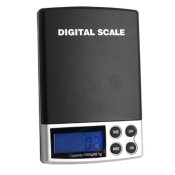
Could replace this with a simple precision balance (0,1gr ebay 10$); the advantage of this solution, are in my opinion, in order of importance :

>> economic savings >> no annoying washing, with the risk of breakage >> repeatability accuracy and higher precision.

The important thing is to know the specific gravity of the chemical, but practically all the manufacturers on the report in datasheets or MSD.

Here's an example .

APH09 Adox (Rodinal) 1 +50 (specific gravity 1.36 )
Tank AP 590ml necessary for one 120 roll

590ml / 1 +50 = 11.57 ml X 1.36 (SG) = 15.7grams APH09
11.57ml X 50 = 578,5ml === 578.5grams of distilled water

15.7gr APH09 + 578.5gr of distilled water = 594.2grams of developer!

How to >> put an empty bottle on the balance and tare to zero.
Put 15.7 grams of APH09 and tare to zero.
Put 578.5 grams of distilled water

Things become even more important when you are using multiple solutions (A+B+C)... How many cylinders, jugs, and syringes avoid washing?

1> I think I have a good precision .
2> I think I have a good repeatability.
3> I do not have to wash superfluous.
4> I saved money without compromising accuracy.

because this system has created a cruel irony and derision ???
I've made mistakes ???

Many thanks at all !! Luigi ;/)

Which scale do you use? I need to see for myself how accurate that scale is. I go for complexity all the math and stuff but I think your method isn't very accurate due to ability of getting a good scale.
Your scale has a resolution of 0.1 g but I doubt that it's even accurate to a few grams. Precision scales are not cheap. The analytical balance you mentioned in the lab would cost many thousands of dollars.
 
Last edited by a moderator:
OP
OP
schyter

schyter

Member
Joined
Jun 11, 2013
Messages
164
Location
Lodi - Italy
Format
Pinhole
Which scale do you use? I need to see for myself how accurate that scale is. I go for complexity all the math and stuff but I think your method isn't very accurate due to ability of getting a good scale.
Your scale has a resolution of 0.1 g but I doubt that it's even accurate to a few grams. Precision scales are not cheap. The analytical balance you mentioned in the lab would cost many thousands of dollars.

here > http://www.ebay.it/itm/BILANCINO-BI...29?pt=Attrezzature_per_DJ&hash=item4168afe6f5
 

Attachments

  • $T2eC16F,!)UE9s3wBm5!BR4JRhe+9w~~60_12.JPG
    $T2eC16F,!)UE9s3wBm5!BR4JRhe+9w~~60_12.JPG
    18.2 KB · Views: 95
OP
OP
schyter

schyter

Member
Joined
Jun 11, 2013
Messages
164
Location
Lodi - Italy
Format
Pinhole
If we wanted to carry out the measures to be more precise that more accurate at each temperature, my suggestion is to start thinking in terms of weight (ahem ... of "mass"), instead of volume. This is for two different reasons, both equally valid: the first is of a scientific nature and is related to invariance of weight in relation to temperature: if we take a flacone10 g of a developer to be diluted and we put them in a glass, these will increasingly 10 g regardless of the temperature and even by the pressure to which they will be exposed (obviously, unless a part of the product to evaporate). The second reason is of a practical nature: as much as in the laboratory and especially at home, are much more reliable instruments able to measure the weight (scales) rather than those capable of measuring the volume (graduated containers, pipettes, droppers, flasks, pumps, electronic meters of various nature, etc.).
The problem is that, unlike water, other liquids usually have a density other than 1 and usually not known a priori. How can we transform the dose of liquid required by volume in the corresponding dose by weight, vary with temperature?


Nothing easier: we take the container that we have just graduated and misuriamone the tare of a sling sensitive kitchen, one of those capable of measuring the individual grams, even better if the tenths of a gram. Then fill it up to a certain notch with the liquid to evaluate, for example up to the mark that marks the 25 ml. We measure the weight on the balance of these net 25 ml of liquid (eg. 30 g).
Dividing the weight (in grams) by the volume (in ml or cc) we obtain the density, expressed in g / ml or if preferred in g / cc, referring to that specific liquid and at the temperature of the measurement, possibly that of the environment (about 20 ° C).


Density = weight [g] / volume [ml] = 30 g / 25 ml = 1.2 g / ml


I imagine that the person who completed the instructions and rates of application of a liquid product, if not commented otherwise, intended to refer to measurable volumetric conditions at room temperature.
To obtain the weight in grams corresponding to the quantity in the volume indicated by the manufacturer (eg. 80 ml), multiplies the required volume for the density just calculated for the given liquid:


Weight [g]: volume [ml] x density [g / ml] = 80 ml x 1.2 g / ml = 96 g


Then 96 g of the liquid in question, so much in a cold winter day than on a hot summer, will be equivalent to the amount of product which is at room temperature, will correspond to a volume of 80 ml (or 80 cc) of the same liquid.


:wink:
 

Sirius Glass

Subscriber
Joined
Jan 18, 2007
Messages
50,814
Location
Southern California
Format
Multi Format
One problem of weighing for the volume is that the volume of chemicals containing water varies with the temperature and the ionization constant.
 
OP
OP
schyter

schyter

Member
Joined
Jun 11, 2013
Messages
164
Location
Lodi - Italy
Format
Pinhole
One problem of weighing for the volume is that the volume of chemicals containing water varies with the temperature and the ionization constant.
I think it is irrelevant in this case, or rather, negligible, compared with an erratic reading of the graduated cylinder and influenced by the ambient temperature. (imho)
 

Sirius Glass

Subscriber
Joined
Jan 18, 2007
Messages
50,814
Location
Southern California
Format
Multi Format
Just one more factor.
 

Vaughn

Subscriber
Allowing Ads
Joined
Dec 13, 2006
Messages
10,275
Location
Humboldt Co.
Format
Large Format
If at all possible, I prefer teaspoons and table spoons.
 
Photrio.com contains affiliate links to products. We may receive a commission for purchases made through these links.
To read our full affiliate disclosure statement please click Here.

PHOTRIO PARTNERS EQUALLY FUNDING OUR COMMUNITY:


Ilford ADOX Freestyle Photographic Stearman Press Weldon Color Lab Blue Moon Camera & Machine
Top Bottom