

• Welcome to Photrio!
    Registration is fast and free. Join today to unlock search, see fewer ads, and access all forum features.
    Click here to sign up

Weak Hasselblad metered winding knob.

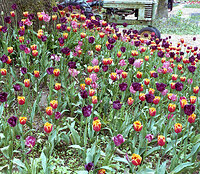
Tractor & Tulips

A
Tractor & Tulips

  • 1
  • 1
  • 30
Tree with Big Shadows

Tree with Big Shadows

  • 3
  • 0
  • 81

Forum statistics

Threads
203,457
Messages
2,855,065
Members
101,853
Latest member
DJFOX
Recent bookmarks
0

Marco Gilardetti

Member
Allowing Ads
Joined
Jun 7, 2005
Messages
801
Location
Torino, Italy
Format
Large Format
I recently bought a Hasselblad metered winding knob, in excellent conditions. However, just as I figured, when tested with care the cell shown to be weak, possibly partly exhausted as it often (always?) happens with selenium cells.

I borught it back to the shop and asked if it was possible to have it recalibrated, but after a positive answer, some weeks later the seller called back saying that there seem to be no calibration points and the meter will stay as is.

Is it true? I can hardly figure a meter with no calibration points at all. What did others do in this case? Any repairman that can replace the cells perhaps? Anyone ever devised a "retrofit" CdS (or whatever) circuitry that would fit the knob?

Ken Rockwell's site (from which the image is borrowed) says that this knob was made until 1994, which is nearly unbelievable. Isn't it amazing that by 1994 this knob was still in production with no updates concerning the cells? At least in my mind, selenium meters were way way way obsolete by 1994.



810_6515-diffuser[1].jpg
 
"In my mind" selenium meters have their place even today. How many batterie-less meters do you have that aren't powered by a selenium cell? My meter knob for my old 500C still is right on the money and the nice thing is that it's always with the camera and ready to go. That said, I do have several modern light meters, but will always keep the knob meter on the old 500C.
 
If it has issues with calibration, then the selenium cell is probably oxidizing and failing. Replacements cells are pretty hard to come by.

Selenium cells are solid state sensors, and have a stable long life. However, selenium will oxidize with exposure to air, so all cells are coated with a layer of lacquer to seal the surface. Once this lacquer layer leaks, the cell will oxidize and fail. You will see a lot of Gossen selenium meters still working today because the used a very high quality lacquer, as did Sekonic. But if anyone has disassembled it, or tried to de-solder the cell, it will probably have lacquer damage and be dead.

Replacement cells have not been made for a very long time, and if NOS was not stored properly, they are probably not working any more.

Hasselblad meter knobs were made by Gossen.
 
I've had luck replacing failed the Se cell in a Fed-5 with a modern amorphous silicon solar cell. I found a one-man outfit that would cut them to size. A standard cell from Digikey might fit well enough. I had to play with a pair of resistors that scaled the cell output. It was good enough for a Fed, whether you could get it to work to 'Blad/Gossen standards is, well, up to you.
 
I've had luck replacing failed the Se cell in a Fed-5 with a modern amorphous silicon solar cell. I found a one-man outfit that would cut them to size. A standard cell from Digikey might fit well enough. I had to play with a pair of resistors that scaled the cell output. It was good enough for a Fed, whether you could get it to work to 'Blad/Gossen standards is, well, up to you.

Any idea how he cut the cell? Have attempted to cut them like glass by first scoring with a carbide-tipped glass cutter, but I wind up with irregular shards, which are still usable, though not as tidy as I'd like, as amorphous polycrystalline cells have randomized "grain" and don't cleave neatly.
 
Last edited:
I've had luck replacing failed the Se cell in a Fed-5 with a modern amorphous silicon solar cell. I found a one-man outfit that would cut them to size. A standard cell from Digikey might fit well enough. I had to play with a pair of resistors that scaled the cell output. It was good enough for a Fed, whether you could get it to work to 'Blad/Gossen standards is, well, up to you.

I've use amorphous silicon solar cells from old calculators (new ones ordered from China for $1!), they have a much larger output than selenium, so you can use a smaller cell that fits inside the same spot. But silicon cells are quite IR-red sensitive, so you really need a blue filter on them to read the same spectrum as film. Otherwise you will get discrepant exposures when the light scene is more blue than red.
 
How the cells were cut, I have no idea. I tried to cut one for another application and all I got were bits and pieces.

As to spectral matching to film, I didn't bother - this was a Fed-5, after all. A 'silicon-blue' filter or a bit of cold-mirror would be needed for any precise work, of course.
 
Photrio.com contains affiliate links to products. We may receive a commission for purchases made through these links.
To read our full affiliate disclosure statement please click Here.

PHOTRIO PARTNERS EQUALLY FUNDING OUR COMMUNITY:


Ilford ADOX Freestyle Photographic Stearman Press Weldon Color Lab Blue Moon Camera & Machine
Top Bottom