• Welcome to Photrio!
    Registration is fast and free. Join today to unlock search, see fewer ads, and access all forum features.
    Click here to sign up

WD2H+ Stand Development Surprise!

Sacred

A
Sacred

  • 1
  • 0
  • 50
San Miguel Arcangel

H
San Miguel Arcangel

  • 0
  • 0
  • 43

Recent Classifieds

Forum statistics

Threads
201,964
Messages
2,832,778
Members
101,032
Latest member
Hazel2025
Recent bookmarks
0

tim_bessell

Member
Allowing Ads
Joined
Nov 13, 2007
Messages
186
Format
4x5 Format
Hi Guys & Girls,

I've been using WD2H+ for several months now and I'm starting to get pretty good results with it on FP4+ 4x5 film. I'm doing some studio shots with a single 100 watt tungsten bulb in an AlienBee 320ws flash unit. I always thought this flash would be way underpowered for 4x5 format, so that is why I'm using the modeling light.

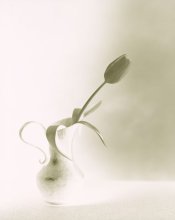
The last setup I did I decided to make two exposures using flash along with the two exposed just with the hot light. Developed one of each in a tray using my normal procedure. As expected, the flash exposure lacked shadow detail. Several days later I was thinking about stand development and decided I would soup the flash exposure with some other undeveloped film laying around. Wasn't expecting much, but thought it would be fun!

Using a Combi-Plan tank, I mixed a slightly dilute WD2H+ (16:10:1000) solution. Agitated for the first one minute, then stand for one hour.

The results? Where did all this detail in the shadows come from?:confused: Your comments would be welcome, cuz I'm not sure if I should experiment further with this.

Here are scans of the negs.
 

Attachments

  • tray_dev.jpg
    tray_dev.jpg
    19.2 KB · Views: 234
  • stand_dev.jpg
    stand_dev.jpg
    25.4 KB · Views: 257

gone

Member
Allowing Ads
Joined
Jun 14, 2009
Messages
5,504
Location
gone
Format
Medium Format
You're out of my depth here, but I'll tell you one thing, that second image is just beautiful.
 
Joined
Jan 21, 2003
Messages
15,715
Location
Switzerland
Format
Multi Format
Shadow detail normally comes from exposure.

When you develop film, there is a fairly linear relationship between exposure and how negative density develops during the processing cycle. The more exposure, the denser the area.
Those dense areas require more developer activity, and the shadows require less, because less silver halide has to develop to silver.

Now enter standing development, a method where the film is in the developer so long that the chemicals exhaust their capacity in the highlights due to the higher exposure levels. But in the shadows, where exposure was low, the developer does not exhaust, so the film continues to build density in those areas. That's where the shadow detail comes from.
 
OP
OP

tim_bessell

Member
Allowing Ads
Joined
Nov 13, 2007
Messages
186
Format
4x5 Format
Thank you momus.
I didn't try printing it yet, so can't say if it's a keeper or not.

Thomas,
Of course, but I think of stand development being used to keep highlights under control. I this case it was used to control shadow density. A side effect of stand development, you could say. There are some defects along the edges and base fog is up, but I think I could do some things to solve that problem.
 

Rudeofus

Member
Joined
Aug 13, 2009
Messages
5,119
Location
EU
Format
Medium Format
What this tells me is that WD2H+ used normally doesn't give you full emulsion speed, whereas your stand development process did. Have you compared shadow detail with a negative developed e.g. in Xtol?
 

Lee L

Member
Joined
Nov 17, 2004
Messages
3,287
Format
Multi Format
With insufficient flash power, if you can darken the room sufficiently, you can build exposure by leaving the shutter open and manually firing the flash as many times as you need. This is done routinely in some studios. Make sure the flash recycles 100% between firings.

Lee
 
Joined
Jan 21, 2003
Messages
15,715
Location
Switzerland
Format
Multi Format
Thank you momus.
I didn't try printing it yet, so can't say if it's a keeper or not.

Thomas,
Of course, but I think of stand development being used to keep highlights under control. I this case it was used to control shadow density. A side effect of stand development, you could say. There are some defects along the edges and base fog is up, but I think I could do some things to solve that problem.

Standing development affects both highlights and shadows. Always. It changes the whole tone curve and compresses highlights and lifts shadows. There isn't much you can do to change that.
Agitation is a tool, and there is a lot in between standing development, and normal 'every 30s agitaiton'. I routinely agitate every 5 minutes, every 3 minutes, etc. to fine tune my negatives. You get much of the effect of standing development, but with much less risk of uneven development.
 

markbarendt

Member
Allowing Ads
Joined
May 18, 2008
Messages
9,422
Location
Beaverton, OR
Format
Multi Format
I always thought this flash would be way underpowered for 4x5 format, so that is why I'm using the modeling light.

I don't get why you think the size of the film matters.

For flash exposure Aperture and Film Rating are really the only real controls. If you set your flash meter for say EI 400 and the meter says use f16, that's it. Doesn't matter whether it's half frame, 8x10, or anything in-between or something bigger.

Shutter speed doesn't effect flash exposure as long as the shutter synchs properly, it only effects ambient exposure.
 
OP
OP

tim_bessell

Member
Allowing Ads
Joined
Nov 13, 2007
Messages
186
Format
4x5 Format
Lee,
thanks for the tip, I had forgotten about that.
If I where filthy rich, I would buy some of those very expensive HMI lights!
 
OP
OP

tim_bessell

Member
Allowing Ads
Joined
Nov 13, 2007
Messages
186
Format
4x5 Format
Mark,
Everything I have read indicates that size does matter. I haven't tried to prove or disprove that statement.
 

markbarendt

Member
Allowing Ads
Joined
May 18, 2008
Messages
9,422
Location
Beaverton, OR
Format
Multi Format
Mark,
Everything I have read indicates that size does matter. I haven't tried to prove or disprove that statement.

The only reason it maters is that larger format cameras normally don't have f/2 aperture lenses like smaller cameras.
 
OP
OP

tim_bessell

Member
Allowing Ads
Joined
Nov 13, 2007
Messages
186
Format
4x5 Format
Thomas,

I'm sure there are better ways to do this and maybe it's not worth the effort with WD2H+.

The main problem here is oxidation of the developer. So WD2H+ isn't a very good candidate to begin with. I did several test by mixing different proportions of pyro:carbonate in a beaker to see how long before oxidation became visible on the surface. 4x as much pyro to carbonate kept it at bay for close to an hour. Not that this proves anything at all, just an empirical test.

I'm sure the process of reducing halides to silver causes much oxidation as well.
 
OP
OP

tim_bessell

Member
Allowing Ads
Joined
Nov 13, 2007
Messages
186
Format
4x5 Format
In the studio shooting still life, film speed doesn't seem to matter much. A bigger concern, I think, is long exposures, reciprocity, and the inconvenience of all the calculation for a good exposure.
 
OP
OP

tim_bessell

Member
Allowing Ads
Joined
Nov 13, 2007
Messages
186
Format
4x5 Format
The only reason it maters is that larger format cameras normally don't have f/2 aperture lenses like smaller cameras.

Mark,
I thought I read that the distance between lens and film in a LF camera is a big factor. That distance is small comparatively in a 35mm camera.
 
Joined
Jan 21, 2003
Messages
15,715
Location
Switzerland
Format
Multi Format
Mark,
I thought I read that the distance between lens and film in a LF camera is a big factor. That distance is small comparatively in a 35mm camera.

Yes, with enough bellows extension you have to start compensating by adding time. The formula for doing so is buried in the APUG vaults somewhere, but has been discussed many times.
 
Joined
Jan 21, 2003
Messages
15,715
Location
Switzerland
Format
Multi Format
Thomas,

I'm sure there are better ways to do this and maybe it's not worth the effort with WD2H+.

The main problem here is oxidation of the developer. So WD2H+ isn't a very good candidate to begin with. I did several test by mixing different proportions of pyro:carbonate in a beaker to see how long before oxidation became visible on the surface. 4x as much pyro to carbonate kept it at bay for close to an hour. Not that this proves anything at all, just an empirical test.

I'm sure the process of reducing halides to silver causes much oxidation as well.

WD2H+ I think oxidizes quickly. As does PMK Pyro. I know Bob Carnie uses PMK, and processing negs he has to half way through the cycle pour out the developer and pour in fresh, for what is effectively two developing cycles. That is due to oxidation.

A developer that holds up better with standing development is Pyrocat. It gives a different color stain, but it develops and develops, almost to infinity. Very sharp, very fine grain. That is if you want Pyro type developers.
 
OP
OP

tim_bessell

Member
Allowing Ads
Joined
Nov 13, 2007
Messages
186
Format
4x5 Format
Thomas,

exposure adjustment factor = square of bellows extension / square of lens focal length :D
 
OP
OP

tim_bessell

Member
Allowing Ads
Joined
Nov 13, 2007
Messages
186
Format
4x5 Format
Not to change the topic, but I have four surface mount light bulb sockets I'm going to mount in the reflector of my AB light. I'm using it with an umbrella and that may give enough light to keep exposure times reasonable.
 
Last edited by a moderator:
OP
OP

tim_bessell

Member
Allowing Ads
Joined
Nov 13, 2007
Messages
186
Format
4x5 Format
WD2H+ I think oxidizes quickly. As does PMK Pyro. I know Bob Carnie uses PMK, and processing negs he has to half way through the cycle pour out the developer and pour in fresh, for what is effectively two developing cycles. That is due to oxidation.

A developer that holds up better with standing development is Pyrocat. It gives a different color stain, but it develops and develops, almost to infinity. Very sharp, very fine grain. That is if you want Pyro type developers.

I may try that someday, Thomas. I'm kind of on a one film / one developer kick right now. I want to exploit all I can get out of this combo and then move on.
 

markbarendt

Member
Allowing Ads
Joined
May 18, 2008
Messages
9,422
Location
Beaverton, OR
Format
Multi Format
Mark,
I thought I read that the distance between lens and film in a LF camera is a big factor. That distance is small comparatively in a 35mm camera.

True, if you are using for example a 150mm (6") f/5.6 lens and you extend the bellows to move from 6" to 9" (225ish) your effective aperture changes to about f/8, extend to 12" (300ish) and you'll be at about f/11.

Very roughly:
150/26.8=f/5.6
225/26.8=f/8
300/26.8=f/11

26.8 is the physical measurement of the aperture in this example
 
OP
OP

tim_bessell

Member
Allowing Ads
Joined
Nov 13, 2007
Messages
186
Format
4x5 Format
Yes, effective aperture! Thanks for pointing that out, Mark.
 

markbarendt

Member
Allowing Ads
Joined
May 18, 2008
Messages
9,422
Location
Beaverton, OR
Format
Multi Format
Yes, effective aperture! Thanks for pointing that out, Mark.

Back on a machine with a key board.

Actually I should have said real aperture rather than effective aperture. If you do the math like I laid out, then you don't use bellows draw factor.

Like Thomas said though you have to go out a ways before it matters a lot. Unless you are taking photos of vitamin bottles or something that size you won't be racking a 150mm lens out to 300mm from the film. At that point subjects in the scene are projected at life size on the film.

Most of your work will probably be done well inside 1.5xf (the 225 in my example) so with most negative films you can probably adjust by 1-stop. If you set your lens to the f11 hash mark, you could just consider that as being f16.

I actually have the same Alien Bees as you do and I'd be truly surprised if I couldn't get the flash to light a still life, especially one where bellows draw became an issue unless you are using a really small aperture. In fact I'd expect to have to limit the power of the flash.

Do you have a flash meter? If so it should tell you exactly what you are going to get.
 
OP
OP

tim_bessell

Member
Allowing Ads
Joined
Nov 13, 2007
Messages
186
Format
4x5 Format
Mark,

How did you get this value for the aperture measurement?

I'm using a 210mm lens, that's all I have right now. Usually, the bellows is out to 10" - 12".

For this shot I just did a quick incident reading. Should have used the spot to get a better idea of the SBR I think. Well, I guess it's time to get out the dig***l and do some pre-visualization. My Nikon will crop in camera to a 4:5 format and I know the lens that gives a pretty close angle of view. The problem is the modeling light isn't very representative of the light of the flash. I have a Sekonic L-758.

Thanks for the info.
 

markbarendt

Member
Allowing Ads
Joined
May 18, 2008
Messages
9,422
Location
Beaverton, OR
Format
Multi Format
It's simple Tim,

f=the focal length of the lens so in your case 210. 210 is the design length focussed at infinity, infinity focus is the only point where the apertures marked on the lens are theoretically correct. It is where manufactures do the math.

If you adjust your lens to the hash mark labeled f/16 that means you can use this formula "f/16" or "210mm/16" to find the true aperture size. That means 13.125mm is the physical size of the aperture when set at f/16. Substitute any f number in your lens's range to find the real aperture at that setting.

To find the real aperture when focussed measure your camera when focused at infinity and mark 2 points that are 210mm apart. Focus at your still life and measure using the same two points.

For example's sake lets say it measures 255mm.

255/13.125=19.428 so f/19.428 is the real f-stop when focused at that point.

So you would want the flash meter to indicate about f/16 & 1/2 when you are done setting your strobe.

Side note on your 210mm lens racking it out to 420mm gets you to focus at life size on film.
 
Photrio.com contains affiliate links to products. We may receive a commission for purchases made through these links.
To read our full affiliate disclosure statement please click Here.

PHOTRIO PARTNERS EQUALLY FUNDING OUR COMMUNITY:


Ilford ADOX Freestyle Photographic Stearman Press Weldon Color Lab Blue Moon Camera & Machine
Top Bottom