
-
Welcome to Photrio!Registration is fast and free. Join today to unlock search, see fewer ads, and access all forum features.Click here to sign up
- Home
- Forums
- Analog Workflow Forums (100% Analog/Traditional)
- Analog Equipment
- Miscellaneous Equipment
You are using an out of date browser. It may not display this or other websites correctly.
You should upgrade or use an alternative browser.
You should upgrade or use an alternative browser.
"Warming" Polarizers - Any Recommendations...? Experience With Them...?
-
A
- Thread starter DF
- Start date
Recent Classifieds
-
For Sale LINHOF SUPER TECHNIKA III VERSION 5 with Raptar 135, film holders and FP4
- Started by Simon Benton
-
For Sale LINHOF TECHNIKA III ver 5 LENSBOARDS
- Started by Simon Benton
-
Sold KODAK COLOR THERMOMETER F
- Started by Jon Shiu
-
Want to Buy Sinar P2 8x10 Bellows (Need the frames)
- Started by Jessxi
-
Want to Buy Jobo ATL-1000 or ATL-1500
- Started by Rolfe Tessem
Forum statistics

Why use a warming polarizer instead of using a regular polarizer plus a warming filter?

Why use a warming polarizer instead of a regular warming filter without a polarizer?
I ask not intended as a smart-aleck question but to learn why one might use a polarizer in any situation except annoying reflection.
I use Tiffen 812 warming filter even tho some expert here declared them overkill, excessive, and the cause I’d unnatural cooled pictures. But rarely a polarizer even tho I have many in various sizes.
I ask not intended as a smart-aleck question but to learn why one might use a polarizer in any situation except annoying reflection.
I use Tiffen 812 warming filter even tho some expert here declared them overkill, excessive, and the cause I’d unnatural cooled pictures. But rarely a polarizer even tho I have many in various sizes.
I assume that DF already has the correct polarizer for "his" camera, so adding an appropriate strength warming filter (there are many) would be the way to go. Most lenses, even wide angle lenses, can handle two filters without vignetting. If not, it might be cheaper to buy a step-up ring.
Polarizers are pretty cheap, as are warming filters. Keeping them separate allows you to use the filters separately or together --and warming polarizers are more expensive.
Polarizers are pretty cheap, as are warming filters. Keeping them separate allows you to use the filters separately or together --and warming polarizers are more expensive.
why one might use a polarizer in any situation
I found I got richer colors from autumn leaves as one example. It can also reduce haze and increase contrast in distant objects like mountains and clouds. Walk around with some polarized sunglasses on and occasionally lift them above your eyes and you can get a pretty good idea of what it does. In fact, when I am out photographing with a polarizer, I usually wear sunglasses too as a pre-visualization method.
Thank you. For me the ND hit has always caused a reluctance to use one. I’ve been fixated on slower ISO speed film for a long time. Maybe I should start using faster film and try a polarizer in more situations!
- Joined
- Nov 10, 2012
- Messages
- 628
Why use a warming polarizer instead of using a regular polarizer plus a warming filter?
Convenience maybe, I mean, isn't it enough to go with just one filter, as I do with my regular polarizer? Stacking two filters seems like too much, then there must be some image degradation.
I've never tried ND or 812 filters by themselves. Perhaps it's time.
Last edited:

Taylor K Nankervis
Member
If you are shooting E6 film in the shadows with bright sun, then naturally you will come away with a heavy blue cast, irrespective of polarisation and generally too, the strength of the warming component. If the blue cast of likely, in judgement, to be light, the effect of correction may be acceptable. Otherwise, just shoot in conditions the film was designed for – diffuse, overcast and hazy light, not bright sun.
Only one filter should be in place on wide angle lenses, among then the Pentax 67 45mm f4; this lens can vignette with any filter with a thick profile – B+W's slim profile POL filters are best for this and many other similar lenses. Stacking several filters also can potentially degrade the image by introducing flare and ghosting.
Only one filter should be in place on wide angle lenses, among then the Pentax 67 45mm f4; this lens can vignette with any filter with a thick profile – B+W's slim profile POL filters are best for this and many other similar lenses. Stacking several filters also can potentially degrade the image by introducing flare and ghosting.
Last edited:
Polarizing filters...
People either love them or hate them.

People either love them or hate them.
Taylor K Nankervis
Member
Polarizing filters...
People either love them or hate them.
I'm the one who loves 'em!


gbroadbridge
Subscriber
Polarizing filters...
People either love them or hate them.
It's a polarising topic.
Taylor K Nankervis
Member

Last edited:
gbroadbridge
Subscriber
People buy anything when they're bored, or blaming their existing tools.
Taylor K Nankervis
Member
Polarizers are pretty cheap
Are they now?

A B+W Kaesemann HT polariser (for asph/apo lenses) is close to $300 here in Australia; there are a few costing up to $700.... I have broken/lost a few in mishaps/fumbling fingers...
'Curious to see how my Ektachromes would look as opposed to my usual use of regular polarizers...
What 'regular polarisers'??
I think your shortfall is in understanding palette differences, not polarisation effects.
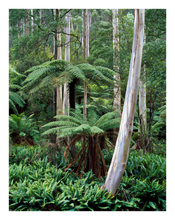
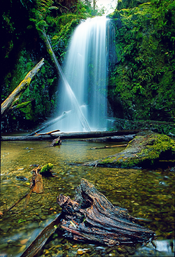
I can tell you that E100 with a polariser — any polariser — does not look half as speccy as for example Velvia 50 or 100 (or even Provia 100F). The reason is that E100 has a subdued, natural palette and a pale, almost insipid green channel, not really given to being modulated up or down (saturated or de-saturated) with a polariser. E100 is not my first choice for rainforest photography as I know the result, both in the raw transparency on the light table and in the resulting print, will fall short of what the Velvias have excelled in for so long, and accordingly, will not have the same appeal as a print produced from a Velvia transparency.
______________________________________________________________________________________
• Pic 1: (Mixed riverside forest) E100, full polarised in late afternoon diffuse light.
• Pic 2: (Marriners Falls): RVP50, full polarised in hazy morning light
Attachments
Last edited:
gbroadbridge
Subscriber
My filters are all 55mm or 77mm, and I've never spent more that $20 for a polarizer -- linear or circular.
Depends upon the quality of the glass and surrounding mount.
And of course, the name brand tax.
Typically you get what you pay for.
Taylor K Nankervis
Member
My filters are all 55mm or 77mm, and I've never spent more that $20 for a polarizer -- linear or circular.
There was a time, a very long time ago (c. 1977, when I started in photography) that my aunty said I should buy a filter to put on the 50mm lens of the Minolta SRT 101b that she had gifted me for my birthday — just to afford it a bit of protection. As a secondary student back then, $4.00 for a 49mm filter was pricey, but I did as I was told!

If you buy along a scale of economy, well and good. But professionals with experience (actual long experience, not theory) don't necessarily follow suit. As a maxim worth respecting, one doesn't slap a literal $5.00 bottle-top filter on a $8,000 highly corrected lens (but you can put any old filter on an old, simple, uncoated lens!). People can scoff at this strong recommendation if they wish; but it makes no sense splashing thousands of dollars on a firecracker lens, only to hobble its optical forté with cheap filters (or worse, no filter, and casually wiping the front element with a snot rag that has never seen the inside of a washing machine...). Case example: if you buy a Zeiss OTUS 28mm f1.4 ZE lens, are you going to put on a $20 filter on that?
The thing to keep in mind is to match the filter's glass quality and characteristics to the lens in use (particularly what is at the front of that lens). Any filter on any lens introduces the risk of ghosting and flare, but modern filter coatings and manufacturing precision have dramatically reduced — but not entirely eliminated it.
@gbroadbridge in post #19 is correct, mind you we are all paying a lot more in tax and inflation than a few years ago! All filters are not created one and same, and some names are made by well-known marques e.g. Hoya filters made by Tokina; B+W, made by Schneider Kreuznach, etc. Schott planar glass used extensively in SK/B+W (and a few HT digital Tokina/HOYA filters) are the standard go-to for corrected apo/asph lenses. Filter mounts today are brass, not aluminium. Spring-steel retaining rings in cheap filters are an old method of holding the glass within the frame; today many filters secure the glass by screwing it down — less opportunity for the ingress of moisture and dirt. All this before you even consider the quality (transmission characteristic) of the polarising material sandwiched in the filter!

Depends upon the quality of the glass and surrounding mount.
And of course, the name brand tax.
Typically you get what you pay for.
I've bought excellent condition used ones for a fraction of the price of a new one .
So I'd agree most cheap new ones aren't satisfactory to me , you can get lucky buying used .
I've got very expensive lenses/filters & cameras that I bought used , likewise I've some expensive gear I paid a lot for new .
Depends on your budget and how long your prepared to wait for one to come up in your price range .
I'm about to call around to the post office to pick up a parcel that's got a lens in I've waited 25 years to own .
I've had the Minolta 80-200mm f/2.8 APO G for a good number of years , but in 2000 Minolta brought out the 70-200mm f/2.8 SSM G lens and was later rebadged when Sony bought out the imaging department.
Ones just come up for £400 so I've snapped it up .
The Moose Peterson polariser the OP asks about , I picked a 72mm one up last year for less than £20 .
A lot of the lenses I use are 62mm or 72mm , I have plenty of regular polarisers , but to have a warming effect without stacking filters is desirable.
If I'm going to stack filters , I'll use my Cokin and Hi-Tech slot in filters .
Typically I only use them with ND grads or larger format cameras where there's quite a difference in lens size .
Mist if those I bought used as well , apart from some of the Z-Pro size and the infrared filters for both sizes .
They weren't cheap at £150 , but they never come up used .
You pays your money and you takes your choice .
I've bought excellent condition used ones for a fraction of the price of a new one .
All my lenses have Hoya HMC UV filters on them -- but I've never paid more that $20 for any of the filters, even 95mm. Lots of people spend a ton of money on new expensive filters needlessly. If it costs ten times as much, it must be better, right?
And I carry my gear in KIWI bags, not GUCCI.
- Joined
- Nov 10, 2012
- Messages
- 628
If you are shooting E6 film in the shadows with bright sun, then naturally you will come away with a heavy blue cast, irrespective of polarisation and generally too, the strength of the warming component. If the blue cast of likely, in judgement, to be light, the effect of correction may be acceptable. Otherwise, just shoot in conditions the film was designed for – diffuse, overcast and hazy light, not bright sun.
Only one filter should be in place on wide angle lenses, among then the Pentax 67 45mm f4; this lens can vignette with any filter with a thick profile – B+W's slim profile POL filters are best for this and many other similar lenses. Stacking several filters also can potentially degrade the image by introducing flare and ghosting.
I always shoot scenes that are evenly illuminated - any scenes with shadows or shaded areas I drop or come back to at a different time of day.
Now of course this isn't the best course for every photographer, but for me, I want to get the best out of, make the most of Ektachrome (or Velvia if it was around).
- Joined
- Nov 10, 2012
- Messages
- 628
There was a time, a very long time ago (c. 1977, when I started in photography) that my aunty said I should buy a filter to put on the 50mm lens of the Minolta SRT 101b that she had gifted me for my birthday — just to afford it a bit of protection. As a secondary student back then, $4.00 for a 49mm filter was pricey, but I did as I was told!
If you buy along a scale of economy, well and good. But professionals with experience (actual long experience, not theory) don't necessarily follow suit. As a maxim worth respecting, one doesn't slap a literal $5.00 bottle-top filter on a $8,000 highly corrected lens (but you can put any old filter on an old, simple, uncoated lens!). People can scoff at this strong recommendation if they wish; but it makes no sense splashing thousands of dollars on a firecracker lens, only to hobble its optical forté with cheap filters (or worse, no filter, and casually wiping the front element with a snot rag that has never seen the inside of a washing machine...). Case example: if you buy a Zeiss OTUS 28mm f1.4 ZE lens, are you going to put on a $20 filter on that?
The thing to keep in mind is to match the filter's glass quality and characteristics to the lens in use (particularly what is at the front of that lens). Any filter on any lens introduces the risk of ghosting and flare, but modern filter coatings and manufacturing precision have dramatically reduced — but not entirely eliminated it.
@gbroadbridge in post #19 is correct, mind you we are all paying a lot more in tax and inflation than a few years ago! All filters are not created one and same, and some names are made by well-known marques e.g. Hoya filters made by Tokina; B+W, made by Schneider Kreuznach, etc. Schott planar glass used extensively in SK/B+W (and a few HT digital Tokina/HOYA filters) are the standard go-to for corrected apo/asph lenses. Filter mounts today are brass, not aluminium. Spring-steel retaining rings in cheap filters are an old method of holding the glass within the frame; today many filters secure the glass by screwing it down — less opportunity for the ingress of moisture and dirt. All this before you even consider the quality (transmission characteristic) of the polarising material sandwiched in the filter!
I also shoot with a Minolta SRT 101 W/58mm Rokkor MC - this is one GREAT lens !!. 'Giant light gatherer.
- Joined
- Nov 10, 2012
- Messages
- 628
I've bought excellent condition used ones for a fraction of the price of a new one .
So I'd agree most cheap new ones aren't satisfactory to me , you can get lucky buying used .
I've got very expensive lenses/filters & cameras that I bought used , likewise I've some expensive gear I paid a lot for new .
Depends on your budget and how long your prepared to wait for one to come up in your price range .
I'm about to call around to the post office to pick up a parcel that's got a lens in I've waited 25 years to own .
I've had the Minolta 80-200mm f/2.8 APO G for a good number of years , but in 2000 Minolta brought out the 70-200mm f/2.8 SSM G lens and was later rebadged when Sony bought out the imaging department.
Ones just come up for £400 so I've snapped it up .
The Moose Peterson polariser the OP asks about , I picked a 72mm one up last year for less than £20 .
A lot of the lenses I use are 62mm or 72mm , I have plenty of regular polarisers , but to have a warming effect without stacking filters is desirable.
If I'm going to stack filters , I'll use my Cokin and Hi-Tech slot in filters .
Typically I only use them with ND grads or larger format cameras where there's quite a difference in lens size .
Mist if those I bought used as well , apart from some of the Z-Pro size and the infrared filters for both sizes .
They weren't cheap at £150 , but they never come up used .
You pays your money and you takes your choice .
Do you like the results you get with the Moose Petereson?
| Photrio.com contains affiliate links to products. We may receive a commission for purchases made through these links. To read our full affiliate disclosure statement please click Here. |
PHOTRIO PARTNERS EQUALLY FUNDING OUR COMMUNITY:  |