
• Welcome to Photrio!
    Registration is fast and free. Join today to unlock search, see fewer ads, and access all forum features.
    Click here to sign up

Walk 30 steps and take a photograph ...

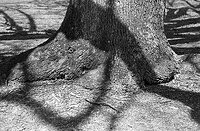
Tree with Big Shadows

Tree with Big Shadows

  • 2
  • 0
  • 43
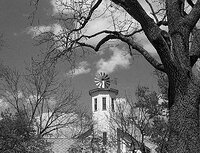
Everal Barn

A
Everal Barn

  • 0
  • 0
  • 41

Forum statistics

Threads
203,454
Messages
2,854,944
Members
101,851
Latest member
Si_Voltage
Recent bookmarks
1

Fintan

Member
Allowing Ads
Joined
Jan 29, 2004
Messages
1,795
Location
Ireland
Format
Multi Format
How does that tutoring go, I know the 30 steps bit but is there more to it?

Has anyone given or undertaking a workshop that does this 30 steps thing? Did you have any further guidelines or instructions on composition etc?
 
Last edited by a moderator:
I've heard of "The Twelve Steps":tongue:

When I'm tutoring a very new photographer, I'll often go out to a park or something and stop every couple of minutes and tell them to take a photograph. The purpose is to get the student to 'see photographically'. The basis is that everyone looks - but few people see. Doing this forces the student to look, really look, to find something that's worth photographing.

My experience has been that you'd better have a few rolls of extra film with you because once they get it, they're firing away like things possessed!:tongue::tongue:

Bob
 
Last edited by a moderator:

I thought the 12 steps was for AA, but I guess you burn lots more film that way :D
 
"take a photograph"

I tell my students to "see a photograph", not take.

This way they don't need a camera, just their receptiveness.

I attempt to teach that we don't "take" anything, but instead open our minds and hearts to receive.

Photographs are everywhere, but if we are closed to them, we'll never see them. We must be receptive to these gifts.

So walk 12 or 30 or 100 steps, stop, look around (up, down, behind, to the side, or in front of you) and attempt to see the photographs that are there.

Hope that helps.
 
Yup! I've been clean, (well my highlights have) for two years now!!

Bob
 
I've never heard this but I like it. Gonna burn a roll tomorrow. Cool.
 
My grandfather was an avid hunter & fisherman.An all-round outdoorsman who didn't know one end of a camera from the other.He taught me a lesson that I've never forgotten and now apply to my photography."The lazy hunter gets the game". Walk a bit,stop & look around you.Waite a while if the situation looks promising.Just keep doing that.
That credo served me well when I carried a shotgun and has given me many great photo opportunities now that I carry a camera.
 
The theory is simple - just walk a given number of steps, then stop and find a photography. Using a camera gives you the ability to print and judge your efforts. It's generally a seeing exercise, not a method to build a portfolio, although in skilled hands, I guess it could be.
juan
 
I'd also add... take your designated steps, whatever, 12, 20, 30, stop... find and make your photograph. Then turn around 180 degrees, and make an exposure. Don't think about it too much. then take another few steps, whatever you've decided... stop... find and make your photograph. Then turn around and quickly make that exposure, etc. until you've burned through, say two rolls of film. This exercise can yield interesting results. Good luck.
 
How does that tutoring go, I know the 30 steps bit but is there more to it?

Has anyone given or undertaking a workshop that does this 30 steps thing? Did you have any further guidelines or instructions on composition etc?


The object of the steps thing is simply to encourage you to LOOK and SEE. I teach it on some of my workshops and have had very positive feedback from those attending despite the fact that many are reluctant to start it on the basis that it is a waste of time. I believe that there are photographs to be seen and made just about anywhere that you look, this excersise makes you expose the film. I also limit my students to a fixed focal length lens.
 
"Hi, I'm Jake, and I'm a photoholic":tongue:...seriously,this is an excellent idea and I've used it many times [the light in the room I'm in right now is lovely early morning/late afternoon ....I've made many a good picture here].
 
One more version that I heard at an Ian Adams lecture and have adopted. If you have an image in mind or you see one while out discovering, make the picture while you have the light. Then as much as possible walk all around the subject to see if there is a better angle or light. If I think the light might be better at another angle I carry a compass to help me estimate when the sun will be where I want it, so I can plan my return. That works for east, south and west, but in North America I have had absolutely no luck getting the sun to go to the north side of the subject without mirrors.

John Powers
 
Freeman Patterson says take a hoop of some sort, wing it as far as you can then find a photo inside the hoop or from inside the hoop. I tried it, not easy but fun.
 
Reminds me of "May I" - Baby Steps or Giant Steps?

I think the real exercise is to learn to look sideways (90 deg) and backwards (180 deg) - as well as what's there in front of you!

Some of my best shot come AFTER first shooting the "face forward" pic and then doing a slow 360 just to see what's around me (oh, and don't forget to look up and down too!).
 
I've been doing this a bit on the way into work these mornings. After years with a medium format kit, I have a 'new' 35mm rangefinder and 50mm lens and its quite liberating to be able to take it everywhere. Its new to me to be able to hang it around my neck and left ready to quickly focus and squeeze the shutter.

I've enjoyed reading the responses, if theres anymore please post away here, you might inspire me or anyone here a little more.
 
A slight variant which my daughter and I have enjoyed walking around Oslo: choose a fixed point then make (say) 8 exposures from within 5 paces of that point. Then you move on and do it again ... Take plenty of film!
I find that the problem is stopping: there is so much to photograph. :smile:
 
OK, let me see if I have it now:

Step 1. Walk around some, the number of steps is irrelevant.

Step 2. Make one (or more) exposures.

Step 3. See what develops (so to speak).

Step 4. Repeat as needed.

Yes, I think that could work for me. Thanks a lot!

Paul
 
When I was in school, we had ourselves a photography class and the instructor, who was also a fine oil painter, once took some string and some stakes (plenty of both) to a local nature area and gridded off a 100' x 100' section into 5' x 5' blocks. Our assignment was to take one photograph in each grid. I am still amazed by the variety of photos that came out of each grid. There were maybe 30-35 of us in that class, and not a one of use took the same photograph in any one of those grids. Was a real interesting affair as we went over our images.
 
Photrio.com contains affiliate links to products. We may receive a commission for purchases made through these links.
To read our full affiliate disclosure statement please click Here.

PHOTRIO PARTNERS EQUALLY FUNDING OUR COMMUNITY:


Ilford ADOX Freestyle Photographic Stearman Press Weldon Color Lab Blue Moon Camera & Machine
Top Bottom