• Welcome to Photrio!
    Registration is fast and free. Join today to unlock search, see fewer ads, and access all forum features.
    Click here to sign up

Vivitar Series 1 28mm f/1.9

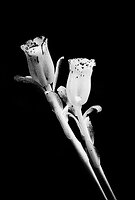
Indian ghost pipe plant.

H
Indian ghost pipe plant.

  • 3
  • 1
  • 28
2026-01-136.jpg

A
2026-01-136.jpg

  • 0
  • 0
  • 33

Forum statistics

Threads
202,940
Messages
2,847,824
Members
101,548
Latest member
mdlewingt
Recent bookmarks
0
Friend of mine had one in Nikon Ai mount, but he trashed it. He's really hard on his gear, and this poor thing took a real beating before it gave up. Not a bad lens if you ask me, but not a great one either. One of the better ones I've seen is the 28 f/2.8 Ai Nikkor. That one's really sharp. But the Vivtar is worth a try if this is your first foray into wide angle. It's a very handy focal length to have on 35 mm. full frame.
 
The Vivitar f1.9 28mm lens is an outstanding performer, very hard to find now but at the time of manufacture it was reckoned to be on a par with or better than the top 5 manufacturers equivalents. It was one of the best of the Vivitar Series One lenses.

Ian
 
I've got one in Nikon F mount, but unfortunately it has some fungus between elements, which means I can't really speak to how sharp it might be in clean condition. My other Series 1 lens are very nice -- 35-85 zoom, 200 f/3 both in Nikon mount.
 
Vivitar 28/1.9 Series 1

I have two of these. One is in M42 mount and the other in Minolta MC. Both are in good condition. While my 28/2 Kiron was out being serviced I started to use the 28/1.9 again. I would say that sharpness is about the same when cmparing the Kiron and the Vivitar but the Vivitar is better built and is quite good in the close range. The 28/1.9 is one of my favorite 28s.
 
Great lens

well designed and quite good optics, better than some name-brand lenses of the day from canon/nikon/etc. Floating element design for close-focus correction. Nice multicoating. Fast f/1.9 = great bokeh wide open. Very close focusing too.

I have 2, both converted to EOS mount. (feel free to email if you are interested in buying one).

Indeed these came from the first and best series of Series-1 lenses, which were the only ones worth having. (Later ones were mostly ho-hum vs. the original series of lenses).

-Ed
 
Ed, is one Pentax screw if so I'd be interested :D I already have K mount & EOS adaptors.

I'm rebuilding a Spotmatic outfit but would prefer a 28mm f1.9 S1 as my wide angle.

Ian
 
well designed and quite good optics, better than some name-brand lenses of the day from canon/nikon/etc. Floating element design for close-focus correction. Nice multicoating. Fast f/1.9 = great bokeh wide open. Very close focusing too.

I have 2, both converted to EOS mount. (feel free to email if you are interested in buying one).

Indeed these came from the first and best series of Series-1 lenses, which were the only ones worth having. (Later ones were mostly ho-hum vs. the original series of lenses).

-Ed

Is it true that the original and more desirable Series 1 lenses can be recognized by the unusual f numbers in the speed designations?
 
Is it true that the original and more desirable Series 1 lenses can be recognized by the unusual f numbers in the speed designations?

Not really. The better Vivitar Series 1 lenses were made by Kiron (Kino Precision Industries) serial # 22xxxx, Tokina serial #37xxxx and Komine serial # 28xxxx.

Kiron Kid
 

Attachments

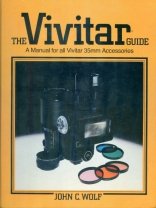
  • Vivitar Guide-Wolfe.jpg
    Vivitar Guide-Wolfe.jpg
    27.2 KB · Views: 290
Tamron's 28 mm f 2.5 Adaptall II Lens.

Tamron had a good 28 mm f 2.5 lens. Since it uses Adaptall II interchangeable mounts, it can fit anything, including Canon EF & Konica - Minolta / Sony, ( if you can find them ).

You must remember, that lenses made during that time period, weren't aspheric.
This limited their sharpness, compared to modern standards.
 
Tamron isn't f1.9

Tamron had a good 28 mm f 2.5 lens. Since it uses Adaptall II interchangeable mounts, it can fit anything, including Canon EF & Konica - Minolta / Sony, ( if you can find them ).

You must remember, that lenses made during that time period, weren't aspheric.
This limited their sharpness, compared to modern standards.

I have the Tamron 28mm f2.5 and they can be good lenses, my current version is not as good as a previous one that was stolen. But in comparison the Vivitar S1 28mm f1.9 is an exceptionally good lens.

Ian
 
The first group of Vivitar Series I lenses which were designed in the USA used computer aided design techniques and some of them were unique for the time. Vivitar sourced the manufacture with varioius firms. I remember they had a solid catadioptric telephoto that was made in Canada.
 
Phototone is correct, basically the first series is the only series worth talking about. That including 28/1.9, 135/2.3, 200/3, the 3 SolidCats, and some others.

Sorry, my extra 28/1.9 is sold (and it was already converted to EOS, not an M42 screwmount)

-Ed
 
I just recently did a resolution test on a Viv Ser1 28mm ƒ1.9 and compared it to some other odds and ends that I had here. It was roughly the equal to the mid-range Konica Hexanon 28mm ƒ3.5, better than the cheapy Hexar 28 and Tokina 28 ƒ2.8. I had a 28mm ƒ1.8 Hexanon (actually 2 over the years) and parted with the last one when offered what seemed double its worth. I never checked the Vivitar directly against it but I'm quite certain that the ƒ1.8 Hexanon was a notch better and quite good for its day.

I seem to never use 28mm and when needing wide in 35mm, tend to grab my 24mm Hexanon which is especially sharp and seems to fit the situations for wide angle better in my situations.
 
Phototone is correct, basically the first series is the only series worth talking about. That including 28/1.9, 135/2.3, 200/3, the 3 SolidCats, and some others.

Sorry, my extra 28/1.9 is sold (and it was already converted to EOS, not an M42 screwmount)

-Ed

There was a One-Touch zoom that was also quite good. I believe Vivitar was the first to use the "one-touch" system, where the focus and zoom ring were one and the same. You pushed in or out on the ring to zoom, and rotated to focus. But it wasn't just that feature that made it a good lens, the actual performance was superior to many zoom lenses of the period.
 
Photrio.com contains affiliate links to products. We may receive a commission for purchases made through these links.
To read our full affiliate disclosure statement please click Here.

PHOTRIO PARTNERS EQUALLY FUNDING OUR COMMUNITY:



Ilford ADOX Freestyle Photographic Stearman Press Weldon Color Lab Blue Moon Camera & Machine
Top Bottom