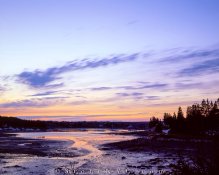
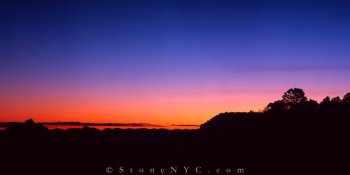
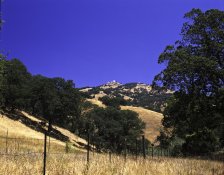
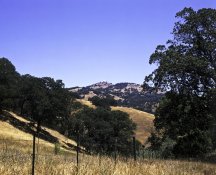
What you are doing is taking advantage of color reproduction errors in the film for creative purposes, which is fine. But what if you needed to
correct those very errors instead, for a more realistic effect? That's what I'm talking about. But no, I never carry a color temp meter into the
field. I leave it in the studio. And other than UV filters at high altitude, I rarely ever used filters for chrome shooting at all. I did find them very
important once I switched mainly to color neg, because the same kinds of color temp errors which might come across as pleasant in a chrome
might look abominable in a color neg, which is an entirely different animal. And no, you can't correct just anything in Fauxtoshop afterwards.
(I print color in a darkroom anyway). But what has become the almost universal color language of chrome scenics is often not very true to
life at all. And what separates the men from the boys is not the ability to capture vivid saturated colors, but how to modulate subtle ones.
Of course, I shoot saturated scenes as well as nuanced ones, depending on the subject matter. And I previously chose Velvia not for its
saturation, but for the fact it could actually differentiate certain subtle shades of green better than any other film, given a really superb apo
lens, of course.


 )
)