
• Welcome to Photrio!
    Registration is fast and free. Join today to unlock search, see fewer ads, and access all forum features.
    Click here to sign up

Variable iso With Stand Development

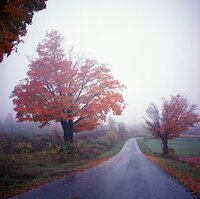
Coburg Street

A
Coburg Street

  • 0
  • 0
  • 12
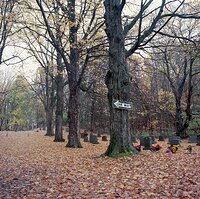
Jesus

A
Jesus

  • 0
  • 0
  • 20

Recent Classifieds

Forum statistics

Threads
201,729
Messages
2,829,232
Members
100,916
Latest member
mikenickmann99
Recent bookmarks
1

RMD

Member
Allowing Ads
Joined
Dec 10, 2005
Messages
87
Format
35mm
Trying out stand development for the first time,I exposed 9 frames of Fuji Neopan 1600 - 3 frames at 400 iso,3 frames at 800 iso,and 3 frames at 1600 iso. I then developed using Rodinal diluted 100:1 for 1 hour using the stand method - 30secs initial agitation,then leave alone for 1 hour.

To MY surprise,all frames were very similar(standard test subjects),as if I had exposed them all at the same iso.

Is this to be expected - use any iso you like with stand development ?

Apologies if this has already been answered,but I couldn't find anything through my searches.
 

luxikon

Member
Allowing Ads
Joined
Feb 13, 2008
Messages
138
Location
Germany
Format
Multi Format
I have got no answer but would like to know whether the frames were well developed and printable.
 
Joined
Jan 21, 2003
Messages
15,715
Location
Switzerland
Format
Multi Format
What stand development does is that it exhausts the developer adjacent to the areas of your negative that are highlights. So the frames that received less 'energy' in the highlights will exhaust the developer in those areas slower. So it does even out differences between frames like that.
Shoot at whatever speed gives you enough shadow detail, and let the developer do the rest. This is especially useful if you have frames with varying brightness range and contrast. You can even out the differences between those frames.

- Thomas
 

gainer

Subscriber
Allowing Ads
Joined
Sep 20, 2002
Messages
3,699
Contact print the three strips side by side on the same piece of paper. The print will have higher contrast than the negatives. This extra contrast will emphasize the differences between the film strips. Unless you had a very wide range scene, you may not have stretched the shadow limits of the 1600 speed trial.
 

df cardwell

Member
Allowing Ads
Joined
Jul 16, 2005
Messages
3,358
Location
KY USA
Format
Multi Format
The general result of minimal agitation
(which is a much sounder way to describe the process)
is to give fuller shadows and lower highlight density.

This assumes box speed, and enough development to reach a target highlight density.

The less agitation, the longer the development time, and the lower the CI.
 

ic-racer

Member
Joined
Feb 25, 2007
Messages
16,719
Location
USA
Format
Multi Format
Gainer makes a good point about examining negatives.

To do this test you really should expose a Zone I frame at those ISOs. Then read the densities on a densitometer (or send it off to someone on the forum here to read them for you).
 

Alan Johnson

Subscriber
Allowing Ads
Joined
Nov 16, 2004
Messages
3,374
In some tests I photographed the same subject lit by off-camera flash,giving -1,0 and +1 stops vs the calculated exposure and stand developed various films in various developers.I just had a look at some of the negatives, in all cases the +1 stop is the most dense and the -1 stop the least dense, easily visible by holding the negatives up to the light.
IMO what you found is not generally to be expected.
I can only suggest that 60 min stand in Rodinal 1:100 may be rather long and that may be the cause of your findings.
 
OP
OP

RMD

Member
Allowing Ads
Joined
Dec 10, 2005
Messages
87
Format
35mm
All frames were well developed and certainly printable. I no longer have a wet darkroom set up,so I scan all my negatives,and all frames scanned well. As is to be expected,the highlights were showing a tendency to blow out at 400 iso,and the best of the scans was at the 1600 iso box speed,but I could certainly see myself getting good prints from all negatives,with a little bit of levels work in photoshop elements on some of them. I was also pleasantly surprised by the low grain levels for this speed of film in Rodinal.
My test was to a certain extent dictated by the fact that I had about 11 frames left on a roll of Fuji 1600 that was lying around unused. I plan to repeat the test in the future with a slower speed film - 200 perhaps - 'going the other way' say from box speed up to iso 3200.

A very good way to spend a wet morning in the U.K.
 

df cardwell

Member
Allowing Ads
Joined
Jul 16, 2005
Messages
3,358
Location
KY USA
Format
Multi Format
As is to be expected,the highlights were showing a tendency to blow out at 400 iso

What do you mean ?
 
OP
OP

RMD

Member
Allowing Ads
Joined
Dec 10, 2005
Messages
87
Format
35mm
With iso 1600 film,exposing at iso 400 would result in a certain level of overexposure. This happened here,but mainly in the highlights,much less noticeable in the shadow areas - nothing major - certainly correctable in photoshop elements,and,from memory, in a wet darkroom.
 

df cardwell

Member
Allowing Ads
Joined
Jul 16, 2005
Messages
3,358
Location
KY USA
Format
Multi Format
Not to belabor the point, but did the highlights fall on the shoulder of the curve, so that added exposure did not produce greater density ?

Or did the highlights simply become more dense ?

This is worth considering: the nature of Neopan 1600 is to have a long shoulder
while it is the character of Rodinal to build a high density. I would expect that, given no agitation,
you might have reached a point on the curve where increased exposure would not build more density.

With a film like TriX, or Delta 3200, this wouldn't happen. Nor would it, I'm sure, if you had agitated at 5 or 10 minute intervals.

The term 'block' unfortunately has come to be used to describe the two opposite conditions: gross overexposure,
or having the tone fall to far up the shoulder . It would be interesting to which was the case, did the Neopan 1600 shoulder win out, or did Rodinal's classic highlight ? Or was it a draw ?
 
Photrio.com contains affiliate links to products. We may receive a commission for purchases made through these links.
To read our full affiliate disclosure statement please click Here.

PHOTRIO PARTNERS EQUALLY FUNDING OUR COMMUNITY:


Ilford ADOX Freestyle Photographic Stearman Press Weldon Color Lab Blue Moon Camera & Machine
Top Bottom
