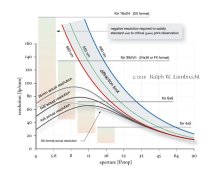
The rule of thumb is that best resolution is two stops down from wide open. Consider, however, that on an f/1.4 50mm lens on a 35mm camera, your sharpest aperture would be f/2.8. If you go by the rule of thumb, you have a whole lot of stops left over that would give poorer quality images. Hogwash. Use the aperture you need to get the depth-of-field and exposure you need. Just be aware that f/16 or f/22 may give you the depth of focus you need at the expense of some sharpness in some circumstances.
I've really noticed diffraction effects only on extreme close-up photographs. A photographer in a studio I used to work in was having trouble getting a good, sharp image of an ornate ring. He was using an RZ67 with a macro lens stopped down as far as it would go, bellows racked way out. I suggested he open the aperture a stop or so to reduce diffraction and that did the trick. Use what you need to get what you want. Also, the more you enlarge an image, the more any defects, including diffraction effects, will show.
Peter Gomena






 (unless you use a Minox, in which case Walter Zapp specifies the aperture for you
  )
)