Using a non-hardening fixer (e.g. TF-5) with CHS ii?

Recent Classifieds

Forum statistics

Threads
200,512
Messages
2,809,142
Members
100,288
Latest member
sean-ad-testing
Recent bookmarks
0

m00dawg

Member
Joined
Feb 21, 2018
Messages
192
Location
Earth
Format
4x5 Format
Hi Adox (or anyone that might know answer to my question below)!

It wasn't on the datasheet but I found a mention on the website this makes me think I can use a non-hardening fixer with CHS ii? I normally use TF-5. From the website (http://www.adox.de/Photo/adox-films-2/adox-chs-100-type-ii/):

"* Certain tips which we have published in combination with the older type I film like using only ion-exchanged water or prewatering the film before the development are still a good thing to do but because of the more modern coating and hardening of the emulsion not required anymore."

The "hardening of the emulsion" is the key point that made me think TF-5 would be ok? The last time I shot CHS ii I did do a pre-wash have gotten out the habit in general with all films since I noticed some of the other brands' sheet films would seem to exhibit really bad scratching on the non-emulsion side when I would pre-wash (no clue why).

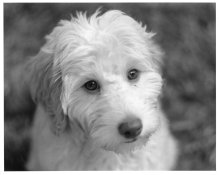
Of note, I'm using Xtol Replenishment (XTOL-R) - not sure if that might impact whether or not to use a hardening fixer or not (I use 9:30 for sheets and 11:00 for 35mm). I haven't had it in sheets for a while (though will shoot some this weekend) but I've been loving the 35mm version! I included a print a made from a roll of 35mm. Beautiful film!

conor003-small.jpg
 

Team ADOX

Partner
Joined
Mar 11, 2019
Messages
318
Location
Germany
Format
Multi Format
Hi Adox (or anyone that might know answer to my question below)!
It wasn't on the datasheet but I found a mention on the website this makes me think I can use a non-hardening fixer with CHS ii?

Yes, you can of course use a non-hardening fixer with ADOX CHS 100 II.
Non-hardening fixers are the standard for many years now, and CHS 100 II is designed to be used with that standard as well.

ADOX - Innovation in Analog Photography.
 
OP
OP

m00dawg

Member
Joined
Feb 21, 2018
Messages
192
Location
Earth
Format
4x5 Format
Heya Team ADOX!

What about the pre-wash/pre-soak? I noticed sheets a developed today had some streaking to them. One looks like it was maybe the developer splashing around while I was putting it on my rotary (is my guess) based on the streaking. I've been reading and it sounds like a pre-soak may help this? If I opt to pre-soak, do you have a recommended time to add to development (I've read about a minute)?

I also tend not to use a stop bath, opting for a water stop instead. I haven't had any issues with this previously so am thinking it may have been skipping the pre-soak. But on that note, would you all recommend a stop bath instead of water?
 

Team ADOX

Partner
Joined
Mar 11, 2019
Messages
318
Location
Germany
Format
Multi Format
Heya Team ADOX!

What about the pre-wash/pre-soak? I noticed sheets a developed today had some streaking to them. One looks like it was maybe the developer splashing around while I was putting it on my rotary (is my guess) based on the streaking. I've been reading and it sounds like a pre-soak may help this? If I opt to pre-soak, do you have a recommended time to add to development (I've read about a minute)?

I also tend not to use a stop bath, opting for a water stop instead. I haven't had any issues with this previously so am thinking it may have been skipping the pre-soak. But on that note, would you all recommend a stop bath instead of water?

Streaking is in most cases caused by mistakes in agitation. Which method and tank system are you using for your large format sheet films?
If you want to use a pre-soak, you can do it for 1-2 minutes.
And yes, adding one minute to developing time would be a good starting point for your tests of your individual optimal developing time.

ADOX - Innovation in Analog Photography.
 
OP
OP

m00dawg

Member
Joined
Feb 21, 2018
Messages
192
Location
Earth
Format
4x5 Format
Thanks, good to know! I spent some time doing H&D curves and things but this was all without a pre-soak so suppose I should do those again ideally.

As for my process, I use Xtol replenished at 20C in a rotary process with a development time of 10 minutes for CHS ii sheets. I use a JOBO 2500 tank and 4x5 reel but built my own rotary to spin the tank using some 3D printed parts and an Arduino (ATTINY85 specifically) to spin a simple DC motor. I spin the tank in one direction for 10 seconds, then change directions. It spins at around 45 RPM or so. So the film is being constantly agitated except at the very beginning when I'm pouring in chemicals. It's here that I think I may have caused some of the streaks.

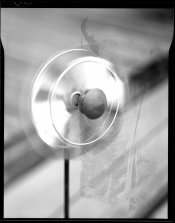
Here's an example:

streaks004.jpg

To me it looks like the developer splashed around and makes me think it was me doing that during the fill process. In the 2500 I only use 400-500ml of chemicals typically since it's constantly spinning.

The above process gives me a gamma of 0.71 but a CI of 0.62. For 35mm I've been using a dev time of 11 minutes using the same process where I get a gamma of 0.62 and a CI of 0.61. I've only just started doing H&D curves and these measurements were made from graph paper so not sure how accurate they are, though the negatives look good in both cases and 10 minutes was my "by-eye" before I did all the film tests (though for many of those I WAS using a pre-wash).

My thoughts to remedy this are to use the pre-wash as mentioned. This seems like the easiest thing to do but I wanted to be sure it was a recommended solution. Ilford, for example, doesn't recommend a pre-wash. I noticed with a pre-wash their films seem to have what look like scratch marks on the non-emulsion side and I have yet to figure out why. I don't have that problem with any other sheet films (Adox included). It's why I stopped the practice as I was trying to be consistent across all films, though when I was pre-washing my CHS ii, I never had any streaking using the same process as the above.

My other thought is to pour in the chemicals while it's spinning. I can do this with a small tube and a funnel, but will only be able to use up to around 400ml of chemicals as I need to keep the top off the tank to do so and will also have to pour in the chemicals more slowly. I was getting some streaking with C-41 recently as well and it makes me think it's also during the pouring process so thinking this is something to try for all developers.
 
OP
OP

m00dawg

Member
Joined
Feb 21, 2018
Messages
192
Location
Earth
Format
4x5 Format
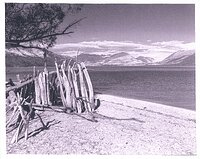
Update! I shot two test sheets today using some of the things from the above. Namely I did use a pre-wash and use a tube and funnel to fill the drum with developer while it was spinning. This took a little longer to get all the developer in the tank but otherwise I think worked well. The rest of the steps were using my normal process. The negatives look MUCH better - I can't see any streaks by eye or in the scans. These didn't have a huge amount of sky or super dense areas though so I may need to test a brighter scene to know for sure. But so far so good! I would guess it was the pre-wash that made the biggest difference (since I used to use a pre-wash with CHS ii sheets and didn't have any issues before).

birdhouse-test-lf-002.jpg
 

Team ADOX

Partner
Joined
Mar 11, 2019
Messages
318
Location
Germany
Format
Multi Format
Thanks, good to know! I spent some time doing H&D curves and things but this was all without a pre-soak so suppose I should do those again ideally.

As for my process, I use Xtol replenished at 20C in a rotary process with a development time of 10 minutes for CHS ii sheets. I use a JOBO 2500 tank and 4x5 reel but built my own rotary to spin the tank using some 3D printed parts and an Arduino (ATTINY85 specifically) to spin a simple DC motor.

JOBO generally recommends a pre-soak when rotation processing is used with their tanks. They say using this method the most even and precise development results are achieved.
We know from our customers that lots are very happy with their results without pre-soak, and lots are using pre-soak in rotation and get perfect results.

Update! I shot two test sheets today using some of the things from the above. Namely I did use a pre-wash and use a tube and funnel to fill the drum with developer while it was spinning. This took a little longer to get all the developer in the tank but otherwise I think worked well. The rest of the steps were using my normal process. The negatives look MUCH better - I can't see any streaks by eye or in the scans.

Good to hear! So for your individual workflow a pre-soak is probably best, combined with spinning during the fill-in phase.
We wish you lots of fun and very nice pictures with your future photo projects.

ADOX - Innovation in Analog Photography.
 
Photrio.com contains affiliate links to products. We may receive a commission for purchases made through these links.
To read our full affiliate disclosure statement please click Here.

PHOTRIO PARTNERS EQUALLY FUNDING OUR COMMUNITY:


Ilford ADOX Freestyle Photographic Stearman Press Weldon Color Lab Blue Moon Camera & Machine
Top Bottom