• Welcome to Photrio!
    Registration is fast and free. Join today to unlock search, see fewer ads, and access all forum features.
    Click here to sign up

Using a lens sans shutter, tips required.

Forum statistics

Threads
202,513
Messages
2,841,720
Members
101,357
Latest member
Kenscanners
Recent bookmarks
0

wiseowl

Member
Allowing Ads
Joined
Sep 14, 2003
Messages
423
Location
S Wales
Format
4x5 Format
I have a componon 300mm f5.6 (I know it's an enlarging lens.) which I intend to use on a 5X4. As it doesn't have a shutter I'm curious as to any tips on using it without one.

The big concern I have is how to avoid camera shake when removing the cap for the exposure. (I suppose I could save up for a top hat!)

If this doesn't pan out too well I'm not going to lose any sleep over it, I paid the princely sum of £2.70 for it off a certain auction site.

TIA

Martin
 
Well, if you shoot ISO 100 or faster film you'll certainly need short timed exposures.

So use slower film, ideally ISO 25, shoot well stopped down, and used the darkslide in front of the lens trick. If you must use ISO 100 film, use negative film since it is very tolerant of exposure errors.

Or front-mount the thing on a #1 or larger. I know it seems strange, but vignetting won't be a problem if you shoot straight ahead.
 
Personally, I think it would be the epitome of cool to use the hat, and then wear it when it's not serving as a 'shutter', but couldn't you make a loose 'cap' to slip over the entire lens, perhaps lined with black fabric? It might allow you to cover the lens long enough to put the dark slide back...

- Randy
 
There is an excellent thread done awhile back including examples in the gallery of what can be done with a sock shutter. I can't remember who posted it, perhaps "Flotsam" but am not sure. It tells how to make and use it,
and what results you can expect from it. The dark slide, hat and even plain hand can work, but the sock makes the most sense to me.


Sorry I cannot recall who's post this was because it was a dandy to my way of thinking.

Charlie.................................
 
I've used a piece of thick cardboard covered with black velvet. I place this over the lens, remove the darkslide, pull the card away from the lens a few mm & let the vibration settle. I then pull the card away completely, count, quickly cover the lens with the card, and replace the darkslide.

This looks like it would work pretty good for shorter exposures: (there was a url link here which no longer exists)
 
There is a discussion of what Charlie is talking about here

(there was a url link here which no longer exists)

and here

(there was a url link here which no longer exists)

- Randy
 
My Apology Tom H, I just could not remember who authored the post and my computer skills are so poor I did not know how to find it, just that it was a good post!

Charlie.............................
 
This is a great discussion! I think the sock idea may be just the ticket for me. Here is some more discussion....(there was a url link here which no longer exists)
 
Thanks, plenty of food for thought there. Both Jim Gallis, "wrist flick shutter" and the idea of a sock shutter have plenty of promise.

Cheers

Martin
 
matt miller said:
I've used a piece of thick cardboard covered with black velvet. I place this over the lens, remove the darkslide, pull the card away from the lens a few mm & let the vibration settle. I then pull the card away completely, count, quickly cover the lens with the card, and replace the darkslide.

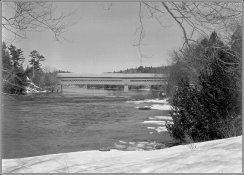
This is pretty much what I do. I cover the lens, pull the dark slide, try to estimate the exposure as closely as I can and then cover the lens before reinserting the dark slide. I'm pretty sure that's how I did this one attached (I'd check my log, but it's in the truck)

cheers
 

Attachments

  • WakefieldBridge.jpg
    WakefieldBridge.jpg
    118.5 KB · Views: 137
Charles Webb said:
My Apology Tom H, I just could not remember who authored the post and my computer skills are so poor I did not know how to find it, just that it was a good post!

Charlie.............................

No problem Charlie - and thanks for the kind words!

BTW, if you put in a drawstring, the lens sock makes a good lens case, as well.
 
I made a drop shutter for a Cokin P filter holder. Works like a charm.

G
 
argus said:
I made a drop shutter for a Cokin P filter holder. Works like a charm.

G

I take it that once you have a mechanism in place then you have some control over shutter speed by altering the slit width, like a focal plane shutter?

Cheers

Martin
 
wiseowl said:
I take it that once you have a mechanism in place then you have some control over shutter speed by altering the slit width, like a focal plane shutter?

Cheers

Martin

Not at all. Shutter speeds are only accurate from 1 second an up.

The big advantage is that you can use filters in front of the lens. That's impossible with the sock shutter idea.

G
 
argus said:
...
The big advantage is that you can use filters in front of the lens. That's impossible with the sock shutter idea.

G

Not really impossible.

The quoted statement MAY be correct if one is using Gel or plastic filters mounted in front of the lens.

Obviously, it is not a correct statement if one uses screw-in glass filters.

Also it is not a correct statement if one has Apo Nikkor and Apo Ronar lenses or other process lenses (like I do) which incorporate a filter insert slot in the lens barrel at the center of the lens and filter inserts (slips).
 
Might checkthis link out. A bit slow to load (real slow if dial up) but really a good to see how the process works...he uses a sock for a shutter.
 
Jim's "wrist flick" shutter works great.

I have used it outdoors with up to 400 speed film with little trouble. It does take a little practice to get started, but no extra equipment is needed - just two dark slides.
 
I like to shoot really slow and I rarely bring anything to use as a shutter other than the dark cloth. I just wad it up and cover the lens, then pull the slide and slowly slide the cloth away from the lens. You can hold it an inch or 2 in front of the lens and you won't get any exposuse. Then remove and expose for your desired time. Its very easy to get down to 1 sec exposures but I like to shoot very slow, somewhere in the 10 sec range and up into the minutes. I enjoy having trees blowing in the wind to soften an image that would otherwise be fully sharp. I shoot alot in overcast but also in the sun with 25 speed film I am frequently using a red filter or a dark neutral density to slow down the film. Om the other hand with the huge camera (30x40cm) my film is iso 3 and I dont have to do anything to slow it down.
 
Photrio.com contains affiliate links to products. We may receive a commission for purchases made through these links.
To read our full affiliate disclosure statement please click Here.

PHOTRIO PARTNERS EQUALLY FUNDING OUR COMMUNITY:


Ilford ADOX Freestyle Photographic Stearman Press Weldon Color Lab Blue Moon Camera & Machine
Top Bottom