

• Welcome to Photrio!
    Registration is fast and free. Join today to unlock search, see fewer ads, and access all forum features.
    Click here to sign up

Two bath developer - weird instructions

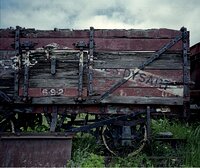
A coal wagon

A
A coal wagon

  • 2
  • 1
  • 32
Morning Birdie

D
Morning Birdie

  • 1
  • 2
  • 36

Forum statistics

Threads
203,142
Messages
2,850,478
Members
101,692
Latest member
eviosl
Recent bookmarks
0

Usagi

Member
Allowing Ads
Joined
Apr 17, 2007
Messages
362
Location
Turku, Finla
Format
Multi Format
I decided to test Thornton's Dixactol Ultra as an two bath developer.
It seems to be working fine (perhaps as fine as single bath, but good enough).

But the instructions has really weird statement. In the instructions, it is told that after dilution B (second bath), keep used dilution and after fix wash film quickly and then put it again back to bath B, then perform complete final wash.

What :confused:

Is there any sense in that? To me it sounds almost like mystifying whole thing. But as Dixactol is staining and tanning (cathechin based) developer, could the second cycle in bath B be relation with tan and stain?
 
It's supposed to help the staining effects, but as it's likely to add a base stain to all the negative it's a little wacky.

It's not necessary and the practice has been dropped by most photographers using staining developers.

Ian
 
Best way to know is to make a film with the same pictures, develop it . Once developed, cut it in two parts. One will go in the B bath after fix and the other will not.
Wash, dry and print both negatives. You will know if it makes a difference for you.
 
The specs on the website say its a tanning/staining developer. Most pyro or catechol based developers call for a post-fix bath in the used developer to set the stain. As Ian said, it can add base fog depending on the formulation... I don't know anything about Dixactol's formulation so its hard to say if there is any kind of restrainer in it to prevent additional base fog.

Regards,

Paul
 
It usually only makes a difference if both fixer and wash water are acidic. If your wash water is that acidic, you will have an entirely different set of problems!
 
For both pyro and catechol developers I use a plain water stop (1 min. constant flow with agitation) and TF-4 which is pretty alkaline. So far I haven't had any problems but I think I may be lucky because the tap water in our area is 7.2 with a low dissolved solids level. An acid wash water will affect the stain but to what degree I'm not sure.

Paul
 
So it can really have some theory behind the reusing second bath after fix.

Best way to know is to make a film with the same pictures, develop it . Once developed, cut it in two parts. One will go in the B bath after fix and the other will not.
Wash, dry and print both negatives. You will know if it makes a difference for you.

Yes, that seems to be best solution.

Better to test with both, alcaline and acidic fixer. If the bath after fixing is for adding some tan/stain when acid fixer and/or stop is used, then there should not be any differences with film parts when using water stop and alcaline fixer.
My guess is that at least with alcaline fixer it probably does not have any effect - if it ever have :wink:


I will definitely post results here when I have done some testing.
 
Last edited by a moderator:
I think an acid fixer actually hardens the emulsion somewhat (even without a hardener added) and will prevent the stain from developing. An ammonium thiosulfate based alkaline fixer without a hardener additive will most likely give you the best stain in the after bath.
 
Sandy King (Pyrocat HD) thinks that there is no difference i stain between using an alkali fixer and the very mildly acid fixers like Hypam or Ilford Rapid Fixer. It's the specifically "Acid" fixers with a much lower pH that cause degradation of any staining, a hardening fixer needs a low pH for the Alum to harden the emulsion.

My own experience with Pyrocat HD & Hypam supports this.

Ian
 
I've never used Hypam or Ilford Rapid fixer with either pyro or catechol based developers or even with more conventional developers. I've always been a little cautious about trying an acid fixer with pyro since Hutchings advises against it. It won't ruin your negatives, but he asserts that you just won't get the level of staining you'd get with an alkaline fixer. Both Hypam and Ilford Rapid readily available around here so I think I'll give them a try and see what difference if any there is.

Paul
 
Gordon Hutchings used to prescribe this return to the used developer after fixing, but no longer does. It is said to cause an overall stain, not proportional to the developed silver density, which is not desirable.
 
It usually only makes a difference if both fixer and
wash water are acidic.

I'm quite sure I've seen a plain sodium thiosulfate fix
recommended. See the thread Extending Fix Times, now
current reading. I'm not spending any more time covering
the plain fix subject other than to say, though slow due to
dilution it is a very convenient fresh one-shot; ph, very
nearly neutral. Dan
 
Welllllll, I use WD2D+ (inversion tank) and Pyrocat HD (rotating tank), neither with a post fix, both fixed with TF-4, plain water stop. And my negatives are beautiful.

YMMV,
tim in san jose
 
Ilford give pH's for both fixers of 5 - 5.5 (without a hardener) which is barely acidic, acetic acid used as a stop-bath in comparison has a pH of around 2.4. Fixers with a pH of 5.2 are often called neutral fixers to distinguish them from Acid fixers.

Traditional "Acid Fixers" like Kodak F1, F5, F6, F7, F9, F16 etc contain Acetic acid, some Sulphuric acid, and can have a pH as low as 3, it's the fixers with a very low pH which will potentially cause detrimental effects on stained negatives.

Ian
 
Photrio.com contains affiliate links to products. We may receive a commission for purchases made through these links.
To read our full affiliate disclosure statement please click Here.

PHOTRIO PARTNERS EQUALLY FUNDING OUR COMMUNITY:


Ilford ADOX Freestyle Photographic Stearman Press Weldon Color Lab Blue Moon Camera & Machine
Top Bottom
