• Welcome to Photrio!
    Registration is fast and free. Join today to unlock search, see fewer ads, and access all forum features.
    Click here to sign up

Trying Time With Tri-X

Surprise

A
Surprise

  • 3
  • 0
  • 50
102391040027-2.jpg

A
102391040027-2.jpg

  • 7
  • 5
  • 144

Recent Classifieds

Forum statistics

Threads
201,783
Messages
2,830,129
Members
100,946
Latest member
李添翼
Recent bookmarks
0

Snapshot

Member
Allowing Ads
Joined
Jan 10, 2007
Messages
913
Location
Toronto, Ont
Format
Multi Format
Hi All,

I was recently using Tri-X at EI 1600 while photographing a hockey game. I attempted to account for the white ice by compensating 1 1/3 stops but this ultimately proved to be insufficient. The shots were still underexposed after I developed them with Diafine. I don't think Diafine gives Tri-X a 2 stop boost. I'm wondering if pushing with some other developer wouldn't have been a better option.

After processing the Tri-X in Diafine and making some prints, it became evident that I would be getting gray-blacks. A Kodak 4 polymax filter helped but the pictures are not right as they still seem a little flat. I could intensify the negative but that won't bring out the detail that isn't there.

Anyone have any ideas how I can salvage them?
 
Last edited by a moderator:

gainer

Subscriber
Allowing Ads
Joined
Sep 20, 2002
Messages
3,699
Diafine gave a push in the days before ISO, when Tri X was rated 200 on the box and Plus X was 50. The film did not change, but the cushion on the bottom got smaller. Diafine still touted the push.
When you have tried all else, including scanning, bleaching with the bleach used for sepia toning and redeveloping with a staining developer such as Pyrocat or PMK will restore the silver and add to it a proportional stain which will appear as more silver to graded paper or to VC paper with a #4 filter or lots of magenta dialed in.

Scanning is very useful for negatives that are thin due to underdevelopment. Often it will show densities that you can only see from the emulsion side by reflected light.
 

David A. Goldfarb

Moderator
Moderator
Allowing Ads
Joined
Sep 7, 2002
Messages
20,020
Location
Honolulu, HI
Format
Large Format
Try intensifying the negs. Kodak Rapid Selenium Toner, 1:3, about 8 min. should get you a one stop expansion of contrast.

A real two-stop boost with good shadows and normal contrast and grain you could tolerate in 35mm is an iffy proposition, in my opinion. 1-1.5 stops is more realistic with speed-increasing developers. I've gotten two stops with XR-1, but low contrast, so it would be good for night photography, but not normal indoor lighting. I've gotten around two stops in daylight (not quite as much in tungsten) with Tri-X sheet film in RAF pyro-metol, but it's really grainy--okay for contact prints, but not really for smaller formats.

I haven't tried things like hypering with ammonia fumes and such, but these methods are another alternative.
 

gainer

Subscriber
Allowing Ads
Joined
Sep 20, 2002
Messages
3,699
P.S.
Next time, take a reading from a shadow like Zone IV and lock it in. Forget autoexposure. It is not much use for these situations. I used to play in a symphony orchestra and was privileged to take photos during rehearsals from my chair as principal oboist. I had the same problem with music stands in the foreground with mostly white music on them. I used 1/60 at f/2.8 no matter where i was aiming with Tri X. The thumbnail is of pianist Alicia Delarocha discussing a point with conductor Russell Stanger of the Norfolk Symphony, with violinists in the background.
 

Attachments

  • delarocha small.jpg
    delarocha small.jpg
    10.4 KB · Views: 249
OP
OP
Snapshot

Snapshot

Member
Allowing Ads
Joined
Jan 10, 2007
Messages
913
Location
Toronto, Ont
Format
Multi Format
I spot metered of the ice but I should have compensated for about 2 stops instead of the 1 1/3. Also, I should consider Diafine capable of giving about a single stop of extra speed. Next time, I'll set the EI to about 1000.

It seems the rapid selenium toner is a good option and I'll consider this a learning experience for future reference.
 

htmlguru4242

Member
Allowing Ads
Joined
Aug 9, 2005
Messages
1,012
Location
Eastern NC, USA
Format
Multi Format
As far as salvaging them, I can't really give any input there, but I can say Tri-X can definetely give fantastic results at EI 1600. I've developed it with D-76 (ID-11 should work the same), HC-110, Microphen and TMax RS. Just follow the times on the massive dev chart. IMO, D-76 gives the best results. They're generally a bit contrasty, but more than easy enough to work with.
 
OP
OP
Snapshot

Snapshot

Member
Allowing Ads
Joined
Jan 10, 2007
Messages
913
Location
Toronto, Ont
Format
Multi Format
As far as salvaging them, I can't really give any input there, but I can say Tri-X can definetely give fantastic results at EI 1600. I've developed it with D-76 (ID-11 should work the same), HC-110, Microphen and TMax RS. Just follow the times on the massive dev chart. IMO, D-76 gives the best results. They're generally a bit contrasty, but more than easy enough to work with.
It seems my problem is two-fold:

1) Unexposure by 2/3 of a stop
2) Diafine not giving a full 2 stop boost

I'll experiment by trying pushing it to EI 1600 and use D-76 to develop it. I also heard XTOL is good for pushing. Additionally, I wonder if FX-37 useful in this regard? I have a nearly full bottle of it.
 

jim appleyard

Subscriber
Allowing Ads
Joined
Nov 21, 2004
Messages
2,421
Location
glens falls, ny USA
Format
Multi Format
Don't meter the ice! Negative film is based on shadow detail, not highlights. I would try either spot metering a shadow area or use the incident (sp?) reading point back to where you will be sitting.

I like to use homebrew "Acufine" for pushing. I can push TX to 6400? (it's been awhile) with ok results; remember you're giving up some image quality to get the shot. I'll try to dig out the recipe and times for you.
 

Tom Hoskinson

Member
Allowing Ads
Joined
Mar 7, 2004
Messages
3,867
Location
Southern Cal
Format
Multi Format
Try intensifying the negs. Kodak Rapid Selenium Toner, 1:3, about 8 min. should get you a one stop expansion of contrast.

A real two-stop boost with good shadows and normal contrast and grain you could tolerate in 35mm is an iffy proposition, in my opinion. 1-1.5 stops is more realistic with speed-increasing developers. I've gotten two stops with XR-1, but low contrast, so it would be good for night photography, but not normal indoor lighting. I've gotten around two stops in daylight (not quite as much in tungsten) with Tri-X sheet film in RAF pyro-metol, but it's really grainy--okay for contact prints, but not really for smaller formats.

I haven't tried things like hypering with ammonia fumes and such, but these methods are another alternative.

In my experience you can get a real film speed increase by hypering the film in a vacuum chamber by pulling a modest vacuum, backfilling the chamber with metallurgical forming gas and then heating the film. This only works if you do it Prior to exposure and development.

Pre-Exposure - try exposing (flashing) the film to the equivalent of a grey card or open sky.

Post Exposure - developing in a Hydrogen Peroxide atmosphere can help a little - but not much - and is very messy and fiddly.
 

Michael W

Member
Allowing Ads
Joined
Feb 11, 2005
Messages
1,594
Location
Sydney
Format
Multi Format
I agree that Tri-X does not work well at 1600 when dev'd in Diafine. Neopan 1600 is spot on. Also Diafine is somewhat of a contrast reducing dev so that might also have played a part in your whites turning out grey.
 
OP
OP
Snapshot

Snapshot

Member
Allowing Ads
Joined
Jan 10, 2007
Messages
913
Location
Toronto, Ont
Format
Multi Format
Don't meter the ice! Negative film is based on shadow detail, not highlights. I would try either spot metering a shadow area or use the incident (sp?) reading point back to where you will be sitting.

I like to use homebrew "Acufine" for pushing. I can push TX to 6400? (it's been awhile) with ok results; remember you're giving up some image quality to get the shot. I'll try to dig out the recipe and times for you.
Yes, spot metering black would have been better but the only black in the arena was on parts of the uniform of one of the teams and the puck! Upon, reflection, there was plenty of mid-tones I could have used. D'oh.

Home brew 'Acufine' sound's interesting. Anything that you can post will be appreciated.
 

jim appleyard

Subscriber
Allowing Ads
Joined
Nov 21, 2004
Messages
2,421
Location
glens falls, ny USA
Format
Multi Format
OK, homebrew "Acufine" (this is the teaspoon formula; hopefully you have the same size teaspoons, et al, that we have in the US; I'm told that they're not all the same.

H2O...2.5 cups
Phenidone...1/8 tsp
Sod. Sulfite...2 tblspns + 1 tsp
Hydroquinone...1.5 tsp
Borax...0.5 tsp
Sod. carbonate...3/8 tsp
Pot. Bromide...1/8

This was courtesy of Paul farber who wrote for Peterson's Photographic.

I've pushed TX to 3200 (sorry, not 6400 like I said) and devved for 21 min with "Acufine" 1+1. 20C.

But I have done TMZ to 6400 in "Acufine" 1+0, 7.5 min. 21C.

I strongly advise test rolls. Your definition of quality may be different than mine.
 

gainer

Subscriber
Allowing Ads
Joined
Sep 20, 2002
Messages
3,699
OK, homebrew "Acufine" (this is the teaspoon formula; hopefully you have the same size teaspoons, et al, that we have in the US; I'm told that they're not all the same.

H2O...2.5 cups
Phenidone...1/8 tsp
Sod. Sulfite...2 tblspns + 1 tsp
Hydroquinone...1.5 tsp
Borax...0.5 tsp
Sod. carbonate...3/8 tsp
Pot. Bromide...1/8

This was courtesy of Paul farber who wrote for Peterson's Photographic.

I've pushed TX to 3200 (sorry, not 6400 like I said) and devved for 21 min with "Acufine" 1+1. 20C.

But I have done TMZ to 6400 in "Acufine" 1+0, 7.5 min. 21C.

I strongly advise test rolls. Your definition of quality may be different than mine.

The standard US teaspoon is 5 ml. Go figure! The tablespoon is 15 ml. We still can't accept metric machine screws.
 

gainer

Subscriber
Allowing Ads
Joined
Sep 20, 2002
Messages
3,699
Incidentally, I wrote the article "Kitchen Tested Soups" for Petersens before that.
 
OP
OP
Snapshot

Snapshot

Member
Allowing Ads
Joined
Jan 10, 2007
Messages
913
Location
Toronto, Ont
Format
Multi Format
The standard US teaspoon is 5 ml. Go figure! The tablespoon is 15 ml. We still can't accept metric machine screws.
Thanks, this is good to know. We're metric up here in Canada.
 

Mark Fisher

Member
Allowing Ads
Joined
Dec 13, 2003
Messages
1,691
Location
Chicago
Format
Medium Format
I've used tri-x pushed in Xtol for theater performances and it was reasonable, but if I do it again, I'll probably go straight to a Tmax 3200 or something similar. I've found that xtol is a pretty reasonable push developer, but the shadows are still pretty thin.
 

Roger Pellegrini

Member
Allowing Ads
Joined
Dec 12, 2006
Messages
93
Location
New York
Format
35mm RF
I've developed it with D-76 (ID-11 should work the same), HC-110, Microphen and TMax RS. Just follow the times on the massive dev chart. IMO, D-76 gives the best results.

I am curious to know which of these developers gives you the sharpest grain using Tr-X?

Roger Pellegrini
Sparkill, NY
 

gainer

Subscriber
Allowing Ads
Joined
Sep 20, 2002
Messages
3,699
Interesting! Do you have and can you post the recipes? They would be fun to look at. Or, would that violate copyright/Petersens policy?

Petersens paid for 1 time use. They never concerned themselves with giving me any credit for subsequent use of the idea of teaspoon recipes. If I can find the recipes, I will post them.
 
Joined
Jan 21, 2003
Messages
15,715
Location
Switzerland
Format
Multi Format
There is always black somewhere, like the palm of your hand, meter into it to get a decent shadow value. Or under your shoe or whatever. Either that or do the incident metering aiming at where you're sitting/standing.
No matter what you do after that, you will never get it right with any developer if you mess up your metering. Push processing film will always make for lost shadow detail.
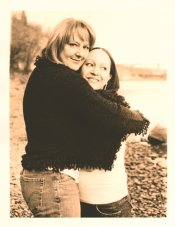
In my experience, shoot Tri-X at an exposure index of 1000 if you use Diafine. Has worked like a charm for me in the past. See attached photograph. Metered on the back side of the mother's top garment. From 35mm neg.

- Thomas

Yes, spot metering black would have been better but the only black in the arena was on parts of the uniform of one of the teams and the puck! Upon, reflection, there was plenty of mid-tones I could have used. D'oh.

Home brew 'Acufine' sound's interesting. Anything that you can post will be appreciated.
 

Attachments

  • TA Lith 01.jpg
    TA Lith 01.jpg
    76.9 KB · Views: 121

msage

Member
Allowing Ads
Joined
Mar 22, 2003
Messages
437
Location
Washington State
Format
Large Format
Hi
For nine years I was the team photographer for the Hockey Teams in Tacoma, Washington. The teams were Jr. team ( Rockets) and minor league ( Sabercats). I shot mostly color negitives and BxW. The BxW was Tmax 3200 rated at 1600 and dev. for the contrast that looked best to me. I shot 7 or 8 rolls the first game, processed one roll and adjusted processing time for the rest of the rolls. The grain was good and sold many prints. I did try Tri-x once or twice and didn't like the grain or "look". Tri-x is my favorite filn in sheet sizes, but didn't work for me in this situation.
Michael

Hi All,

I was recently using Tri-X at EI 1600 while photographing a hockey game. I attempted to account for the white ice by compensating 1 1/3 stops but this ultimately proved to be insufficient. The shots were still underexposed after I developed them with Diafine. I don't think Diafine gives Tri-X a 2 stop boost. I'm wondering if pushing with some other developer wouldn't have been a better option.

After processing the Tri-X in Diafine and making some prints, it became evident that I would be getting gray-blacks. A Kodak 4 polymax filter helped but the pictures are not right as they still seem a little flat. I could intensify the negative but that won't bring out the detail that isn't there.

Anyone have any ideas how I can salvage them?
 
Photrio.com contains affiliate links to products. We may receive a commission for purchases made through these links.
To read our full affiliate disclosure statement please click Here.

PHOTRIO PARTNERS EQUALLY FUNDING OUR COMMUNITY:


Ilford ADOX Freestyle Photographic Stearman Press Weldon Color Lab Blue Moon Camera & Machine
Top Bottom