
• Welcome to Photrio!
    Registration is fast and free. Join today to unlock search, see fewer ads, and access all forum features.
    Click here to sign up

True solarization and pyro

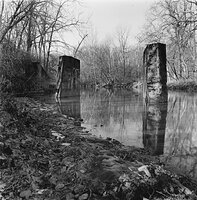
Coburg Street

A
Coburg Street

  • 0
  • 1
  • 55
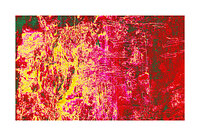
Jesus

A
Jesus

  • 0
  • 1
  • 51

Recent Classifieds

Forum statistics

Threads
201,735
Messages
2,829,350
Members
100,922
Latest member
Midrat69
Recent bookmarks
0

David A. Goldfarb

Moderator
Moderator
Allowing Ads
Joined
Sep 7, 2002
Messages
20,020
Location
Honolulu, HI
Format
Large Format
Over on Mike Johnston's blog the subject of Ansel Adams' famous "Black Sun, Tungsten Hills, California" came up today--

http://theonlinephotographer.typepa...11/why-no-expose-t.html?cid=88379252#comments

This is an example of true solarization--where the extreme overexposure of the sun on film causes a decrease in density on the negative rather than an increase in density. In an interview I found on the web, Adams is quoted as saying that one Isopan neg he processed from this scene in D-23 did not show this solarization effect, while the negative that prints as "The Black Sun," was processed in a compensating pyrocatechin formula, which I would take to be Windisch's Extreme Compensating developer.

I noticed that the only image I have that shows this effect was shot on TXT and processed in ABC pyro--

(there was a url link here which no longer exists)

So now I'm wondering, is the propensity for solarization a pyro effect? Anyone want to hazard a guess as to why that might or might not be? Anyone have any other examples of solarization like this, caused by overexposure of the sun in the frame, with developer information?
 

Photo Engineer

Subscriber
Allowing Ads
Joined
Apr 19, 2005
Messages
29,018
Location
Rochester, NY
Format
Multi Format
David;

Any film-developer combination can, in theory, show true solarization. The effect is one we called re-reversal in some cases and gave rise to a 'fried egg' effect in prints where the center was darker and the edges were lighter.

If you expose a film to high intensity light with a long scale stepwedge, you can see both a negative and a positive scale.

Modern films have been optimized to eliminate solarization as much as possible.

The picture you reference does not appear quite like the solarization that I have seen. I can't be sure though.

PE
 

Will S

Member
Allowing Ads
Joined
Nov 30, 2004
Messages
716
Location
Madison, Wis
Format
8x10 Format
I've often wondered if Man Ray's process for solarization of the neg was ever revealed by any of his former assistants. Or, are you making a distinction between solarization as the result of trying to solarize the negative by changing the processing vs. solarization that occurs with normal processing as a result of overexposure alone?

Thanks,

Will
 
OP
OP
David A. Goldfarb

David A. Goldfarb

Moderator
Moderator
Allowing Ads
Joined
Sep 7, 2002
Messages
20,020
Location
Honolulu, HI
Format
Large Format
I'm interested in solarization from overexposure alone, which seems much less common than solarization by flashing the print or negative or by using a solarizing developer like Solarol.

It never occurred to me that it might be affected by the developer choice, but I thought it was interesting that Adams found that one developer caused the reversal and the other didn't. I'll have to try some tests next time we have good sun.
 

Jim Noel

Member
Allowing Ads
Joined
Mar 6, 2005
Messages
2,261
Format
Large Format
I strongly suspect that the books which say the "Black Sun" was photographed on Tri-X are incorrect. According to "Ansel Adams the Making of 40 Photographs" it was Super XX. This was in his own description of the image.

Tri-X was not made in 1939, the year of the negative, IIRC.
 
OP
OP
David A. Goldfarb

David A. Goldfarb

Moderator
Moderator
Allowing Ads
Joined
Sep 7, 2002
Messages
20,020
Location
Honolulu, HI
Format
Large Format
"Black Sun" was photographed on Agfa Isopan, if the source I read is correct. My photograph was on Tri-X.
 
OP
OP
David A. Goldfarb

David A. Goldfarb

Moderator
Moderator
Allowing Ads
Joined
Sep 7, 2002
Messages
20,020
Location
Honolulu, HI
Format
Large Format
So upon further consideration, I'm thinking that Adams probably used more exposure for the Windisch neg than he did for the D-23 neg, and with ABC I'm rating TXT at EI 160, so pyro per se might be a red herring, and it could just be a matter of developers that give a lower speed, thus requiring more exposure, are more likely to produce solarization. I'll still run some tests, but I like this theory better than my original pyro theory.
 

MarkS

Member
Allowing Ads
Joined
Mar 12, 2004
Messages
542
David, Adams says he used Super-XX in "Examples". to quote; "With the thick-emulsion film I was using, this reversal could be revealed by the use of a compensating developer, such as the Windisch Pyrocatechin formula."
and "My first negative was planned for development in Kodak D-23. The film was Kodak Super-XX, a fine material of the "thick-emulsion" type." and "The second exposure was identical to the first, but compensating developmennt was planned for the desired reversal effect." So based on that, if I was trying to achieve this effect, I'd try the Windisch developer and see what happens. Might be worth scaring up some old Super-XX as well- perhaps Michael A. Smith will let you have some. I did see the photograph in question in the recent Adams retrospective at the GEH (currently the show is at the Corcoran in Washington) and it's a very powrful image in real life. It would be worth tracking down a print in NYC to see the real thing.
 
OP
OP
David A. Goldfarb

David A. Goldfarb

Moderator
Moderator
Allowing Ads
Joined
Sep 7, 2002
Messages
20,020
Location
Honolulu, HI
Format
Large Format
Thanks, Mark. I don't own a copy of _Examples_, and my other source was a little dubious, though he did use Agfa Isopan in some of his earlier work. So much for the longer exposure theory. I think I've seen the print at some point, though I don't recall where. Maybe MOMA has one in its general collection, or had one on loan at some point.

I have some Super-XX, so I could try, though it is probably not the same Super-XX that Adams would have used in 1939.
 

mcfactor

Member
Allowing Ads
Joined
Oct 16, 2006
Messages
183
Location
Brooklyn, NY
Format
Med. Format RF
I know this thread is long dead, but I got a solarized sun similar to the one in Adam's image by pointing the camera directly at the sun and giving a (relatively) short exposure of around 1/30th using Pan-F developed in Rodinal. I dont believe the film or (certainly) not the developer have anything to do with it. its a function of the intensity of the light. I dont have a scanner, so you'll have to trust me.^^
 

mcfactor

Member
Allowing Ads
Joined
Oct 16, 2006
Messages
183
Location
Brooklyn, NY
Format
Med. Format RF
nope, shutter appears to be okay, it was a mamiya 7, so i dont think there's much danger of that. when i get access to a scanner, ill post it. i was really excited to see it because i had just read about it in Adam's book a few days before it happened, purely by accident.
 
Photrio.com contains affiliate links to products. We may receive a commission for purchases made through these links.
To read our full affiliate disclosure statement please click Here.

PHOTRIO PARTNERS EQUALLY FUNDING OUR COMMUNITY:


Ilford ADOX Freestyle Photographic Stearman Press Weldon Color Lab Blue Moon Camera & Machine
Top Bottom
