
• Welcome to Photrio!
    Registration is fast and free. Join today to unlock search, see fewer ads, and access all forum features.
    Click here to sign up

Tri-X vs. Neopan 400

Recent Classifieds

Forum statistics

Threads
201,744
Messages
2,829,480
Members
100,924
Latest member
hilly
Recent bookmarks
1

BetterSense

Member
Allowing Ads
Joined
Aug 16, 2008
Messages
3,151
Location
North Caroli
Format
35mm
I've always really liked Tri-X. It just looks right, and I know I can dunk it in Diafine for an easy 'push' without having a lot of experience with pushing. For cost reasons, I gave some Neopan 400 a go in medium format. I had no real complaints. After using it for a good while and switching back to Tri-X, it really hit me how grainy the Tri-X is. I have made some 16x16 prints from the Neopan negatives that ended up with almost imperceptible grain. This is impressive for a traditional-grain film. Yet 11x14 prints from Tri-X show enough grain to be called grainy.

I'm wondering if this difference is in my head, my processing, exposure, or in the films. Now, grain isn't everything, but if I want grain I can use a smaller format, with all its other advantages. I'm all about minimizing grain, because I can get it whenever I want it by cropping/using a smaller format. I find the Neopan about the same speed, less grainy, nice clear, flat base, and has those nice Fuji spools. It seems to work in Diafine ok for a bit of a speed boost. So I think I'm shooting the green boxes from now on.

I think I will try it in 35mm too. I shoot lots of Arista Premium, but there's always 35mm LegacyPro.
 

2F/2F

Member
Allowing Ads
Joined
Apr 29, 2008
Messages
8,031
Location
Los Angeles,
Format
Multi Format
They are totally different animals. What you noticed is not odd at all.

I would not be "all about minimizing grain". To focus more on tonality and contrast would be my suggestions. If those things look good, nobody cares if there is grain, and if they do, fuggem. The tonality and contrast of these two films are significantly different. I'd look at that first and foremost.

Personally speaking, there is no way in hell I would ever give up Tri-X for Neopan 400 just because of grain.
 
Last edited by a moderator:
OP
OP
BetterSense

BetterSense

Member
Allowing Ads
Joined
Aug 16, 2008
Messages
3,151
Location
North Caroli
Format
35mm
How do you find that they are different? I don't have a densitometer or do curves or anything like that. I really do seat-of-the-pants. A lot of times I switch films and I'm like woah, that looks different, but I don't really know what it is that is causing the difference.

I understand how to change exposure and development to alter contrast, but when it comes to why different films look different I don't know why. When I switch films I expect to have to alter development and exposure to bring the contrast back so that it prints with a grade 2 filter with adequate shadow detail, but then it will still look *different* at that point. I suppose it's the shape of the characteristic curve, and spectral response.
 

2F/2F

Member
Allowing Ads
Joined
Apr 29, 2008
Messages
8,031
Location
Los Angeles,
Format
Multi Format
Mainly, different films make tones fall at subtly different densities, even with the same amount of overall exposure and the same overall contrast. If one film and another get the same amount of light, and are developed to the same contrast index, the densities at which the lows, mids, and highs end up will be different. This leads to different tonal values and tonal relationships between the two films, even with the same exposure and development to the same contrast index.

This is just a more detailed way of saying, "Different films have different curves."

Basically, what it means is that the "speed" of film is not constant across the entire tonal range; that film's response to light is not linear. Doubling exposure does not necessarily mean an exact increase by 0.3 in density; a doubling of brightness (like it does with digital). Film is less "perfect", and that is why it looks totally different than digital. IMO, the "imperfection" actually gives it qualities that make it a more malleable, versatile, and generally aesthetically pleasing artistic tool. Same reason a '57 Cadillac is just plain better than a 2007 Cadillac: OPINION. :wink: .....that is, unless you are in an accident.

The first sentence of the preceding paragraph is the root of the reason why you hear a bunch of different people claiming different speeds for the same film. We all have different criteria for what defines a film's "speed". Personally, though I know how to use the zone system if I want to, I generally prefer the approach of using box speed and an incident meter, testing and adjusting my process so that the midtones fall where I want them, and altering exposure and development from the norm if the amount of detail that I want captured at the extremes of the tonal range exceeds what I know my film and normal process can capture. Others will use the EI that lets them place a certain shadow tone reliably and consistently. When you underexpose and push, you are basically saying that you want to use the high mids and high tones as your "speed" determinant, and forget about the lower tones.

The other reason, of course, is all the variables. Developers, agitation, etc.
 
Last edited by a moderator:

Russ - SVP

Member
Allowing Ads
Joined
Mar 26, 2005
Messages
755
Location
Washington
Format
35mm
I learned on and love Tri-X. But years ago, after discovering Neopan 400, I abandoned Tri-X and HP-5. Neopan 400 has the wonderful tonality of Tri-X but finer grain. It's also forgiving in exposure and development.

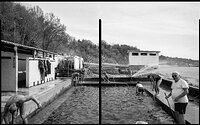
349854192_2793e03157.jpg


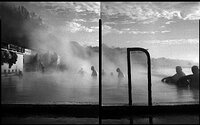
3177289238_1fc3ca3617.jpg


Kiron Kid
 
OP
OP
BetterSense

BetterSense

Member
Allowing Ads
Joined
Aug 16, 2008
Messages
3,151
Location
North Caroli
Format
35mm
I would not be "all about minimizing grain". To focus more on tonality and contrast would be my suggestions.

Of course focusing on them first is a good suggestion. But my stand on grain is that it should be as fine as possible. If it's fine, then you can use a smaller format. Smaller formats have many advantages. If I want grain, I can get it simply by installing a wider lens and cropping. My film should have fine grain because I can always get the grain back if I want to. Then again, if I really want to minimize grain I will change to a larger format, rather than spool up a film with slightly finer grain. What's more important to me is the quality of the grain. I like Neopan's grain, because it is subtle and unnoticeable in the highlights yet has a nice fuzzy bite in the shadows, almost the opposite of some grain.
 

Tom Stanworth

Member
Allowing Ads
Joined
Sep 4, 2003
Messages
2,021
Format
Multi Format
Neo 400 has a somewhat more modern look than TriX and is my film of choice at 400. It has significantly finer grain and higher resolution and to my eyes a look that I like; however, I like the TriX look no less. Using 120 I am not too bothered which I use (but still like the Neo more) but in 35mm it makes a much bigger difference and find the Neopan 400 much more detailed, which I like.

Neopan gives about the same speed as TriX too, so no loss there. Reacts quite well to rodinal or rodinal/xtol mixed and also very smooth in Xtol 1+1 in 120 if thats your bag; however, it is cleaner looking and will not deliver the gruff 'n gritty look of TriX when you do want that. I keep TriX on hand for that with Neopan 1600 (at 640) and D3200 also available.
 

brian steinberger

Subscriber
Allowing Ads
Joined
Jan 5, 2007
Messages
3,045
Location
Pennsylvania
Format
Med. Format RF
I too prefer Neopan 400. It is my main film. I use it in 120 in my MF rangefinders and develop in either Xtol 1:1 or Rodinal 1:50. Wonderful tonality! I too find it less grainy than Tri-X and like you said, it's less expensive!
 

Russ - SVP

Member
Allowing Ads
Joined
Mar 26, 2005
Messages
755
Location
Washington
Format
35mm
A few years ago, in "Black & White Photography," they tested the seven 400 speed B/W films. Neopan 400 came out on top, with Delta 400 as second...
 

mablo

Member
Allowing Ads
Joined
Mar 2, 2009
Messages
385
Format
Multi Format
Neopan 400 is great film. If only it would coil nicely into my Hewes reels... my fail rate is almost 100%.
 

Tom Stanworth

Member
Allowing Ads
Joined
Sep 4, 2003
Messages
2,021
Format
Multi Format
Neopan 400 is great film. If only it would coil nicely into my Hewes reels... my fail rate is almost 100%.

What a pig! Works nicely with paterson reels in 35mm and 120. Only issue is it is harder to stick the leader to the tape when doing two 120s on one reel (than ilford or kodak, with their sticky paper rather than the ultra tacky plastic tape of the neopan). I find the fuji tape can stick to the inside of the grooves if every bit is not stuck down to the leader of the following film. If I dont stick them, overlapping is an issue, but I largely have it fixed now through practice.
 

Keith Tapscott.

Member
Allowing Ads
Joined
Jun 11, 2005
Messages
1,842
Location
Plymouth. UK
Format
Multi Format
All of the ISO 400 speed films made by the main film manufacturers are capable of excellent image quality, so try a few and decide which you personally prefer.
My own favourite is HP5 Plus because I love the `LOOK` of the tones. Chris Chapman also uses 35mm HP5 Plus and enlarges onto Ilford MG-WT FB for his exhibition prints and they`re excellent.
 

sanking

Member
Allowing Ads
Joined
Mar 26, 2003
Messages
5,437
Location
Greenville,
Format
Large Format
A few years ago, in "Black & White Photography," they tested the seven 400 speed B/W films. Neopan 400 came out on top, with Delta 400 as second...

I suspect that if they did the test again TMY-2 would come out on top.

However, for the finest grain with ASA 400 film you might want to consider a C41 B&W film like Ilford XP2, or the Kodak equivalent. These films compare very favorably in terms of grain with ASA 100 films like Acros and Tmax-100. But perhaps not quite as sharp.


Sandy King
 

Keith Tapscott.

Member
Allowing Ads
Joined
Jun 11, 2005
Messages
1,842
Location
Plymouth. UK
Format
Multi Format
A few years ago, in "Black & White Photography," they tested the seven 400 speed B/W films. Neopan 400 came out on top, with Delta 400 as second...
How were the test made and is absolute sharpness and resolution really the be all and end all when choosing a film?
 

sanking

Member
Allowing Ads
Joined
Mar 26, 2003
Messages
5,437
Location
Greenville,
Format
Large Format
. . . is absolute sharpness and resolution really the be all and end all when choosing a film?


Bear in mind that people don't all work the same way. The importance that photographers place on grain, sharpness and resolution is personal choice that is hopefully based on their vision and the kind of work they want to do. My background is mostly in LF and ULF work and there is a kind of creamy tonality in prints made from large negatives that I would like to keep in my MF printing, when possible, with the practical advantage of portability of MF. For that reason grain and sharpness are indeed the be all and end all for me in choosing a film, most of the time. And I try to exploit the characteristics of these films by using the camera on a tripod, selecting the optimum aperture for the scene, and developing to maximize image quality.

I don't expect everyone to work that way. Many times I have seen people ask how to get more grain from a given film, and while that is the last thing I want for my own work I respect their aesthetic choice. And I rarely see anyone else question why they would want to do this. But it seems that whenever a thread is started about how to get fine grain or high sharpness there is inevitably someone who questions why that is important. What gives with this?

Sandy King
 

Andrew Moxom

Member
Allowing Ads
Joined
Feb 2, 2007
Messages
4,888
Location
Keeping the
Format
Multi Format
I agree that Tri-X is grainier than Neopan-400. Sharpness/Acutance wise, they are comparable though. I've found that Neopan does require additional exposure in the shadows more than Tri-X. Both are great emulsions though. In the long run, they are pretty close in performance with Tri-X having a bit more speed and hence a bit more grain as a result. I like the cost of Neopan and it appears to be the best value out there when comparing the 'big 3' companies of Ilford, Kodak, and Fuji. When you consider it's nearly a third cheaper than it's peers, that soon adds up.
Neopan really sings in Xtol developer and the minor shortcoming of a slight lack of shadow detail can be overcome with a little overexposure and development in Xtol either stock or 1:1 one shot. This combination really does allow the lower and midtones to seperate out nicely. Neopan also works well with Pyrocat developers and following advice I got from Sandy King some years back for extreme minimal processing, is my standard brew for the most part. I use other emulsions periodically, but Neopan and pyrocat is what I nearly always go back to for images that I deem truly important.
 

removed account4

Subscriber
Allowing Ads
Joined
Jun 21, 2003
Messages
29,832
Format
Hybrid
of all the films i dunk in my coffee neopan works the best ...
i wish i was rich, i would buy a ton of it!
 

Keith Tapscott.

Member
Allowing Ads
Joined
Jun 11, 2005
Messages
1,842
Location
Plymouth. UK
Format
Multi Format
Bear in mind that people don't all work the same way. The importance that photographers place on grain, sharpness and resolution is personal choice that is hopefully based on their vision and the kind of work they want to do.

My background is mostly in LF and ULF work and there is a kind of creamy tonality in prints made from large negatives that I would like to keep in my MF printing, when possible, with the practical advantage of portability of MF. For that reason grain and sharpness are indeed the be all and end all for me in choosing a film, most of the time. And I try to exploit the characteristics of these films by using the camera on a tripod, selecting the optimum aperture for the scene, and developing to maximize image quality.

I don't expect everyone to work that way.

Many times I have seen people ask how to get more grain from a given film, and while that is the last thing I want for my own work I respect their aesthetic choice. And I rarely see anyone else question why they would want to do this.

But it seems that whenever a thread is started about how to get fine grain or high sharpness there is inevitably someone who questions why that is important. What gives with this?

Sandy King
The point I was trying to make, is that obtaining maximum sharpness and resolution along with minimum graininess, is not everyone's main goal and objective, although it is for some people here.
In absolute terms of fine grain and resolution, Fuji 100 Acros and Kodak T-Max 400 (TMY-2) are probably the class leaders in their respective ISO speed groups, although other people might find another film in those ISO groups will provide results that they find more aesthetically pleasing.
One of the films that I lament the passing of is Kodak HIE infra-red and I like the images made by photographers such as Kathy Harcom and Sir Simon Marsden taken with that film.
Kodak HIE is a lousy choice though if you want fine-grain and high resolution. There aren`t many films that could beat Kodak Technical-Pan for sharpness and resolution, yet it wasn`t really all that popular.
If you look at the APUG gallery, you will see many images there taken with pin-hole Cameras and Holga`s, so sharpness and resolution can not be every one`s main concern.
BTW, I have nothing against threads about obtaining maximum sharpness and resolution, so you shouldn`t take umbrage to my earlier post. Some folks want technical quality while others are pictorialist.
 

brian steinberger

Subscriber
Allowing Ads
Joined
Jan 5, 2007
Messages
3,045
Location
Pennsylvania
Format
Med. Format RF
Andrew, I actually get more than box speed out of Xtol 1:1 one-shot and Neopan 400. My personal EI is 500. Of course everyone has their own amount of shadow detail that they find acceptable, and of course throw in all the other crazy variables, meters, agitation.. etc. :smile:

Also, another plus for Neopan that hasn't been mentioned yet is how wonderfully flat it is when dry.
 

sanking

Member
Allowing Ads
Joined
Mar 26, 2003
Messages
5,437
Location
Greenville,
Format
Large Format
If you look at the APUG gallery, you will see many images there taken with pin-hole Cameras and Holga`s, so sharpness and resolution can not be every one`s main concern.
BTW, I have nothing against threads about obtaining maximum sharpness and resolution, so you shouldn`t take umbrage to my earlier post. Some folks want technical quality while others are pictorialist.

And I have absolutely nothing against techniques that involve maximizing the appearance of grain, IR, pin-hole photography, Holgas and Dianas, or zone plate. In fact, I have done a fair amount of both IR and zone plate. But no one ever bothers to jump into these threads and question why these folks are fooling around with techniques that don't result in sharp, high resolution prints with minimal grain.

Yet time after time on this forum in the midst of a discussion about how to maximize sharpness and grain you will see someone jump in and proclaim that sharpness and fine grain is not everything, or that what really matters is the vision, not technique. Sure, technique by itself is nothing, but without vision none of these other methods amount to anything either.

Sandy King
 

john_s

Member
Allowing Ads
Joined
Nov 19, 2002
Messages
2,204
Location
Melbourne, A
Format
Medium Format
I've been using Neopan 400 for years and I'm very happy with it.

I'm wondering, though, if Tri-X would be better when I'm looking for max speed for available light photography, using something like Microphen to get a fraction more speed. A few years ago there was an article by Geoffrey Crawley comparing the 400 films and he came to the conclusion then that the Tri-X was the fastest. I wonder if the same conclusion would be reached now that Tri-X has been changed (different production facility and much heralded finer grain).
 

2F/2F

Member
Allowing Ads
Joined
Apr 29, 2008
Messages
8,031
Location
Los Angeles,
Format
Multi Format
I've been using Neopan 400 for years and I'm very happy with it.

I'm wondering, though, if Tri-X would be better when I'm looking for max speed for available light photography, using something like Microphen to get a fraction more speed. A few years ago there was an article by Geoffrey Crawley comparing the 400 films and he came to the conclusion then that the Tri-X was the fastest. I wonder if the same conclusion would be reached now that Tri-X has been changed (different production facility and much heralded finer grain).

Depends on what is meant by "fastest".

If you mean the film that will end up with the greatest low-toned densities at a given composition and exposure, then it certainly is not Tri-X (320 or 400). It is probably one of the slowest in this respect. I would say that T-Max 400, Neopan 400, or Delta 400 would be the fastest in this respect.
 
OP
OP
BetterSense

BetterSense

Member
Allowing Ads
Joined
Aug 16, 2008
Messages
3,151
Location
North Caroli
Format
35mm
no one ever bothers to jump into these [maximizing grain] threads and question why these folks are fooling around with techniques that don't result in sharp, high resolution prints with minimal grain.

Yet time after time on this forum in the midst of a discussion about how to maximize sharpness and grain you will see someone jump in and proclaim that sharpness and fine grain is not everything

I've noticed this myself, in fact I started a thread once about minimizing grain while pushing 35mm films and I had tons of people posting just to insist that I was having impure thoughts in trying to control this aspect of my process.
 

2F/2F

Member
Allowing Ads
Joined
Apr 29, 2008
Messages
8,031
Location
Los Angeles,
Format
Multi Format
The OP is really just a stimulus for a discussion, not much of a question, aside from the "is it in my head that Neopan is less grainy" part of it. (The answer to that is simple: No, it is not in your head. Neopan is not as grainy.) As such, I think all sorts of comments and branches of the discussion would be expected and welcome.

The OP did not ask something like "How do I get the finest grain from a 400 film", and then get jumped on for wanting what he wants. He just said (paraphrasing), "I tried Neopan, I like its look solely because it is less grainy, and I might switch. What do you think?" This is an opening asking for all sorts of commentary, IMO.

I felt it necessary to point out that grain is far from the only difference between the two films, and that the other differences should not blindly be outweighed just because Neopan is less grainy. Put the two films up against each other and choose the one you want based on what you want in your pictures. If grain is really the most important determinant, then have at it. It is not that grain is not an important consideration, however, for me, tonality simply comes first. That is everything in photography (especially b/w), IMO. I can't see making a film selection based solely on graininess.
 
Last edited by a moderator:
Photrio.com contains affiliate links to products. We may receive a commission for purchases made through these links.
To read our full affiliate disclosure statement please click Here.

PHOTRIO PARTNERS EQUALLY FUNDING OUR COMMUNITY:


Ilford ADOX Freestyle Photographic Stearman Press Weldon Color Lab Blue Moon Camera & Machine
Top Bottom