• Welcome to Photrio!
    Registration is fast and free. Join today to unlock search, see fewer ads, and access all forum features.
    Click here to sign up

Tri-x vs Hp5: The exhumation

Do Not Come Here

A
Do Not Come Here

  • 9
  • 3
  • 84
Heavy

H
Heavy

  • 13
  • 5
  • 129

Recent Classifieds

Forum statistics

Threads
201,929
Messages
2,832,173
Members
101,019
Latest member
ferbert72
Recent bookmarks
0

Nikanon

Member
Allowing Ads
Joined
Jul 11, 2009
Messages
433
Location
Chugwater, Wyoming
Format
35mm RF
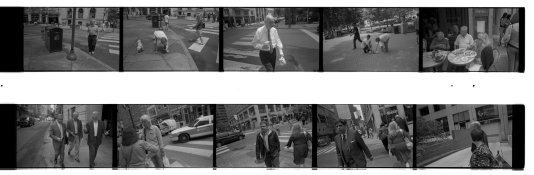
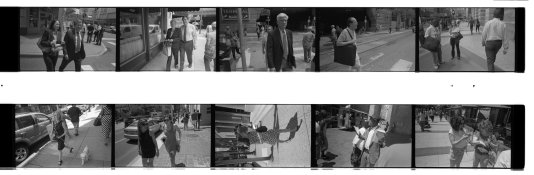
I apologize in advance to any of those that are tired of this very dead discussion. With the recent increase (and later fall) of the price of Tri-x 400, I took it on myself to test Hp5 since they had cost about the same. With a trial run of 30 rolls to use for my daily shooting for about a week or so, I began by developing the first two along with the last roll of Tri-x 400 I have just shot. Conditions are the same as they are on the same day, both loaded into the same camera (Leica M4 with 28mm f2.8 V4 Elmarit), and developed in D76 together for 12 minutes using normal agitation (initial 30 seconds including pouring and 5 seconds of inversion for ever 30 seconds thereafter with two firm raps). The dilution is 1 to 1.166 (300ml developer to 350ml water) at 68F. Posted along with this are the two films scanned at the same time in an Epson V750 scanner. The shots are not exactly the same, but you can infer how the films perform under the same conditions and processing. Both films were shot at EI 800. Any levels adjustments or effects of the scanner were applied to both negative strips at the same time during the same scan, so that has been eliminated, the comparisons here are therefore relative to each other and not necessarily indicative of the comparison to films. For bonus fun, the films are not labeled which strip is which! Which do you think is which film?

Physical observations:

Hp5 lies very flat upon drying, it is very easy to scan while Tri-x in most cases tends to curl more. The film base is roughly the same density for each. Tri-x feels to be a thicker substrate than Hp5.
 

Attachments

  • Tri-x vs Hp5 in D76001.jpg
    Tri-x vs Hp5 in D76001.jpg
    342.9 KB · Views: 664

chriscrawfordphoto

Member
Allowing Ads
Joined
Mar 12, 2007
Messages
1,893
Location
Fort Wayne, Indiana, USA
Format
Medium Format
Those scans are too flat to really show any tonal differences. I have used both extensively. They're different, but both are very good films. I can get equally great photos from either. A lot depends on developing, too. I think Tri-X is best in D-76 1+1, while HP5 is best in PMK. Both are great in Rodinal.

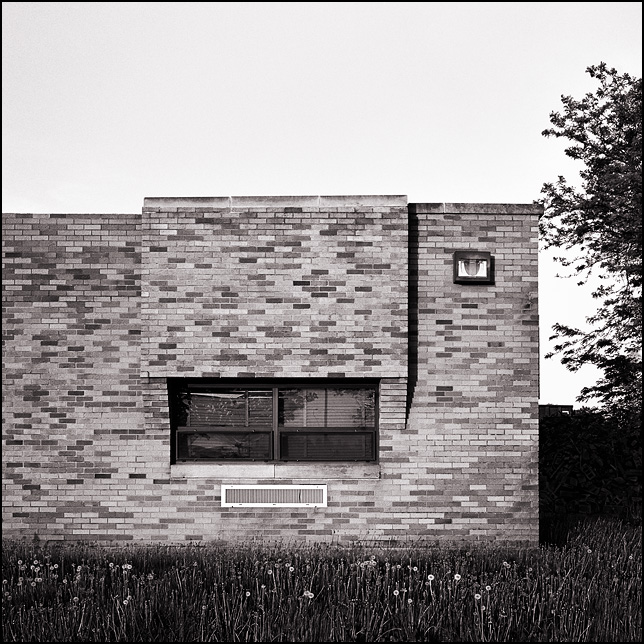
pleasant-center-school-1.jpg

HP5, 120 size, in PMK. This has become my favorite film/dev combo over the last year.
 

Jaf-Photo

Member
Allowing Ads
Joined
Feb 12, 2014
Messages
495
Format
Medium Format
I don't know. The first film looks like it was shot under some clouds or haze, while the second one has more direct sunlight. Even the same film would look different if that were the case.

But if I would have to guess I'd say (1) HP5 and (2) Tri-X.
 
Last edited by a moderator:
OP
OP
Nikanon

Nikanon

Member
Allowing Ads
Joined
Jul 11, 2009
Messages
433
Location
Chugwater, Wyoming
Format
35mm RF
I don't know. The first film looks like it was shot under clouds, while the second one has direct sunlight. Even the same film will look different under those conditions.

I believe you are correct, the exposures were actually the same because of the brightness of the overcast, but it lifted the same day, I'll look for another strip with the shadows
 

horacekenneth

Member
Allowing Ads
Joined
Aug 10, 2012
Messages
515
Location
MD
Format
Multi Format
Those scans are too flat to really show any tonal differences. I have used both extensively. They're different, but both are very good films. I can get equally great photos from either. A lot depends on developing, too. I think Tri-X is best in D-76 1+1, while HP5 is best in PMK. Both are great in Rodinal.

pleasant-center-school-1.jpg

HP5, 120 size, in PMK. This has become my favorite film/dev combo over the last year.

Chris, I love this shot. Is this just a straight scan from the negative? I'm really impressed with the contrast of the grass in the foreground and the building bricks.
 
OP
OP
Nikanon

Nikanon

Member
Allowing Ads
Joined
Jul 11, 2009
Messages
433
Location
Chugwater, Wyoming
Format
35mm RF
I have found two strips closer to when I switched the film that seem to have the exact same light conditions. Overcast with strong light, the shadows are there but slightly diffuse. Its interesting
 

Attachments

  • Tri-x vs Hp5 in D76003.jpg
    Tri-x vs Hp5 in D76003.jpg
    346.2 KB · Views: 813

Jaf-Photo

Member
Allowing Ads
Joined
Feb 12, 2014
Messages
495
Format
Medium Format
Chris, I love this shot. Is this just a straight scan from the negative? I'm really impressed with the contrast of the grass in the foreground and the building bricks.

Yeah, it's nice. It looks like it was shot fairly late in the afternoon?
 

Jaf-Photo

Member
Allowing Ads
Joined
Feb 12, 2014
Messages
495
Format
Medium Format
I have found two strips closer to when I switched the film that seem to have the exact same light conditions. Overcast with strong light, the shadows are there but slightly diffuse. Its interesting

Alright new one: top=Tri-X and bottom=HP5?
 

Jaf-Photo

Member
Allowing Ads
Joined
Feb 12, 2014
Messages
495
Format
Medium Format
Since I've posted a new comparison below, I'll answer the one above, which you have correctly guessed is Hp5 on top Tri-x on bottom.

Thanks, I'm glad I wasn't wrong on that one :smile: They looked fairly similar to the results I get.
 
OP
OP
Nikanon

Nikanon

Member
Allowing Ads
Joined
Jul 11, 2009
Messages
433
Location
Chugwater, Wyoming
Format
35mm RF
Whats great about what i've found definitely for myself, and what I mostly hope to share to anyone unfamiliar with the two films is that they can be treated the same and give the same results, generally.
 

ntenny

Subscriber
Allowing Ads
Joined
Mar 5, 2008
Messages
2,520
Location
Portland, OR, USA
Format
Multi Format
I agree, they definitely look more similar than different. I'm actually surprised that the TX sample doesn't have hotter highlights; one of the reasons I've preferred HP5 to TX at 800 is that I feel like it has a smoother shoulder, but I've never tested carefully to confirm that, and your samples don't really show it---so maybe I've been laboring under an unjustified prejudice.

-NT
 
OP
OP
Nikanon

Nikanon

Member
Allowing Ads
Joined
Jul 11, 2009
Messages
433
Location
Chugwater, Wyoming
Format
35mm RF
I think without revealing which is which, that from looking at the negatives and multiple scans (I am also about to start printing the two on the same grade of paper one after the other for further comparison), that Tri-x has better midtone contrast while Hp5 as slightly better low value retention. These differences aren't enough to be remarkable, but that is my conclusion.
 
OP
OP
Nikanon

Nikanon

Member
Allowing Ads
Joined
Jul 11, 2009
Messages
433
Location
Chugwater, Wyoming
Format
35mm RF
Update:

Printing with Adox Nuance Grade #2 in Dektol mixed 1:2 gives too high contrast a result with both films. It is possible to just barely bring in the whites and the blacks are almost totally lost. A grade #1 paper or filter on multigrade would likely do it, or possibly another developer. At a 8x12 image size, the films are basically indistinguishable.
 

chriscrawfordphoto

Member
Allowing Ads
Joined
Mar 12, 2007
Messages
1,893
Location
Fort Wayne, Indiana, USA
Format
Medium Format
Chris, I love this shot. Is this just a straight scan from the negative? I'm really impressed with the contrast of the grass in the foreground and the building bricks.

Straight scans from negatives are unusable; they're always very flat and muddy because film scanners are made for the very high density range of a color transparency. I have a tutorial on my website showing why that is.

I adjust the contrast to look normal and on most photos I do a little dodging and burning. This one was pretty easy, it didn't require anything beyond setting the overall contrast. I had to stop printing in the darkroom because of serious health issues several years ago. Unfortunately, things haven't gotten better. I had a stroke in November, and it left me unable to stand for long periods. A lot of people here hate on those of us who scan our film, but without that, I'd have to stop doing photography. I can't afford people to print my work; I'm barely surviving as it is. I don't do anymore to the scans than what one would do in the darkroom: Adjust contrast, dodge and burn, toning, minor retouching to remove dust. The darkroom for the unhealthy!

I'm still shooting 100% film for my black and white work, so I love talking about films and developers here at APUG. There is little interest in film, even if it is scanned, at most photo forums.
 

Brian Legge

Member
Allowing Ads
Joined
Jan 7, 2010
Messages
544
Location
Bothell, WA
Format
35mm RF
Chris, I absolutely respect you and your experience, but isn't comparing straight negative scans - in the same way you would on a light table - be informative? It could give an informal sense of the curves and dynamic range captured by the negatives. Obviously the print is what matters and information can be pulled out of any negative, but can you get a relative sense of the information captured in the negatives this way?
 

Xmas

Member
Allowing Ads
Joined
Sep 4, 2006
Messages
6,398
Location
UK
Format
35mm RF
Hi Guys

Don't understand this

If you cant get Trix or want to consider alternatives why pick one for a comparison.

doublex (5222) should still be available from cine suppliers

Delta400
Tmax400
APX400
Formapan400
Kentmere400
etc.

are in my brick shops

buy one of each shoot one keep records, stock up on any you can use

The clever people say selection will be reduced availability more difficult, you either deny this, or plan for it.

An acquaintance is still bemoaning plusx going

Note lots of people say Forma crap film but I've used thousands of feet of 35 mm and 120 without a problem. The data sheet for Formapan 400 says

250 ISO in d76
320 ISO in Microphen

and I

temper to 1C
water stop

the last two I've done for 55 years - necessary for some film YMMV.

If that is all your shop has on shelf you hang up camera or use it. My problem is I like the forma signature but my shops sell out cause the local art students buy it.

I can fall back on any of the others sadly never tried Plusx or Trix (cept 220), doublex is cheaper.

If im stuck I use 100 ISO film sneakily setting the meter to 100, I miss the grain signature though.
 

chriscrawfordphoto

Member
Allowing Ads
Joined
Mar 12, 2007
Messages
1,893
Location
Fort Wayne, Indiana, USA
Format
Medium Format
Chris, I absolutely respect you and your experience, but isn't comparing straight negative scans - in the same way you would on a light table - be informative? It could give an informal sense of the curves and dynamic range captured by the negatives. Obviously the print is what matters and information can be pulled out of any negative, but can you get a relative sense of the information captured in the negatives this way?

Unfortunately, the straight scans are not really useful for that. Look at the examples on my site. They're so flat that they look like they were printed through a -3 VC filter (if such a thing existed!), even though the film was developed to print on grade 2. They look so crappy that they really can't tell you a thing. It took me a lot of getting used to when I first began doing this. I basically bought the scanner, the current version of Photoshop at that time, and a book about Photoshop, and I sat in front of the computer and practiced till I was good enough to use the scans to make exhibition prints. It was NOT easy to learn, and I spent more than a year teaching myself before I felt like I was getting decent results. Looking back at those earlier efforts from years ago...they sucked compared to the quality I get now. It was like having to relearn everything! After having spent a decade in the darkroom perfecting my printing skills, and having gotten VERY good, the frustration was incredible. I persevered because I couldn't imagine life without photography, but I am still improving.

Funny story: I began teaching high school English after I finished my MA in Literature (my Bachelors is in Fine Arts/Photo) in 2012. Taught for one year, then had the stroke near the beginning of the 2013-2014 school year. I stepped down from fulltime teaching to being a substitute teacher after that because I was missing too much work. I spent a lot of time subbing in middle schools, which was a real culture shock after teaching high school. There are several schools in my school district that I will NOT work at because the kids are so feral. I subbed at two of our high schools and three of our middle schools so often that I got to know most of the kids in those five schools very well. Our district's high schools all have photo classes, and I think they all still teach darkroom with BW film. A lot of my students from when I was a regular teacher were shooting film and would ask me for advice on their photos, even though I was their English teacher. The middle schools don't have photo classes, but all the kids have smartphones and some have digital cameras.

A few days ago, I went to a Kroger store near my home to pick up some things, including several gallons of distilled water for mixing film developing chemicals. I ran into a middle school student I knew, and he stopped to talk to me for a few minutes while he waited for his dad to finish his shopping. He noticed all those jugs of water and asked me why I needed so much of it. I told him it was for mixing film developing chemicals. He didn't understand what I was talking about! He is a smart kid, an honors student, but he had never seen anyone shoot film and had only a vague idea of what it was. He knew I was a photographer, and liked my work. He'd assumed it was all digital because its all he knew of. I explained to him what film was and he told me it sounded like a cool way to take pictures! I told him he should take photography in high school next year (this was his last year of middle school), and I told him the school he was going to had a great film photo program. Its the school I taught at before I got sick. I know the photo classes there got a lot of the kids hooked on film. They also offer digital classes, so the kids can learn both.
 

Xmas

Member
Allowing Ads
Joined
Sep 4, 2006
Messages
6,398
Location
UK
Format
35mm RF
I think without revealing which is which, that from looking at the negatives and multiple scans (I am also about to start printing the two on the same grade of paper one after the other for further comparison), that Tri-x has better midtone contrast while Hp5 as slightly better low value retention. These differences aren't enough to be remarkable, but that is my conclusion.

HP5s toe was softer both in D76... more tones in zone0 to 2 vestigal though am amazed you can see it.
 

Jaf-Photo

Member
Allowing Ads
Joined
Feb 12, 2014
Messages
495
Format
Medium Format
I think the straight scans are appropriate for comparing the films. If you process them, they will undoubtedly look better, but you will also be changing the basic characteristics, probably not equally either.

But ideally, you would need high res scans so you can look at them at different magnifications.
 

mauro35

Member
Allowing Ads
Joined
May 28, 2013
Messages
219
Location
Finland
Format
35mm
Straight scans from negatives are unusable; they're always very flat and muddy because film scanners are made for the very high density range of a color transparency. I have a tutorial on my website showing why that is.

I adjust the contrast to look normal and on most photos I do a little dodging and burning. This one was pretty easy, it didn't require anything beyond setting the overall contrast. I had to stop printing in the darkroom because of serious health issues several years ago. Unfortunately, things haven't gotten better. I had a stroke in November, and it left me unable to stand for long periods. A lot of people here hate on those of us who scan our film, but without that, I'd have to stop doing photography. I can't afford people to print my work; I'm barely surviving as it is. I don't do anymore to the scans than what one would do in the darkroom: Adjust contrast, dodge and burn, toning, minor retouching to remove dust. The darkroom for the unhealthy!

I'm still shooting 100% film for my black and white work, so I love talking about films and developers here at APUG. There is little interest in film, even if it is scanned, at most photo forums.

Chris, very sad to hear about your health issues. I sincerely hope you will get better and no matter if you print, scan or even paint, your work is wonderful and I think you are a great photographer. I wish you all the best!
 

Xmas

Member
Allowing Ads
Joined
Sep 4, 2006
Messages
6,398
Location
UK
Format
35mm RF
Chris, very sad to hear about your health issues. I sincerely hope you will get better and no matter if you print, scan or even paint, your work is wonderful and I think you are a great photographer. I wish you all the best!

HiChris

Hope you are better soon.
Please look after yourself properly.

Noel
 

Aron

Member
Allowing Ads
Joined
Aug 27, 2009
Messages
256
Location
Hungary
Format
Multi Format
Falling into a trap when trying to judge the difference between materials without simple but well-done tests is an age-old problem. Before scanners the common problem was trying to judge a negative without printing it first, which often led to an overly constrasty print where the photographer was scratching his head why it turned out so, when his negatives "looked beautiful".

Judging sharpness and grain without developing to the same CI has similar problems. Much of the difference in "look" people see between different materials often comes down simply to different amount of shadow detail and contrast.

An analogy is trying to decide which enlaring lens is sharper, without first making sure the enlarger is aligned.

It's best to accept that each and every film can be whatever we want it tonality-wise, a certain "look" will simply come more easily with one's usual technique and a given film, than treating that emulsion in a different way.

Even though I understand and respect the reasons why many choose not to print optically, since I print in the traditional way, my observations will be most valid for that process.

I'm not sure "straight scans" actually exist, even though I'm no expert at scanning and use the machine only to scan my prints, I believe even the straightest such process puts such a large distance between us and the negative that it can be difficult to predict from a scan how it will print. I guess the scanner has it's own curve, just as digital cameras do.

Bracketing exposure and developing for different times, then contact printing under the enlarger at say grade 2 tells everything one needs to know to get in the ballbark and doesn't take more than a couple of hours and cost more than a roll of film and few sheets of paper.

Judging a negative by simply looking at it works for those who have considerable experience with the given materials and don't wish to bring out as easily as possible the most the negative has to offer. Otherwise, it's best to realise, the eye sees the negative in a different way than does that particular scanner or for that matter, silver, platinum or salted paper.
 

horacekenneth

Member
Allowing Ads
Joined
Aug 10, 2012
Messages
515
Location
MD
Format
Multi Format
Straight scans from negatives are unusable; they're always very flat and muddy because film scanners are made for the very high density range of a color transparency. I have a tutorial on my website showing why that is.

I adjust the contrast to look normal and on most photos I do a little dodging and burning. This one was pretty easy, it didn't require anything beyond setting the overall contrast. I had to stop printing in the darkroom because of serious health issues several years ago. Unfortunately, things haven't gotten better. I had a stroke in November, and it left me unable to stand for long periods. A lot of people here hate on those of us who scan our film, but without that, I'd have to stop doing photography. I can't afford people to print my work; I'm barely surviving as it is. I don't do anymore to the scans than what one would do in the darkroom: Adjust contrast, dodge and burn, toning, minor retouching to remove dust. The darkroom for the unhealthy!

I'm still shooting 100% film for my black and white work, so I love talking about films and developers here at APUG. There is little interest in film, even if it is scanned, at most photo forums.

Interesting, thanks! Glad to hear you've got a way to keep photographing
 
Photrio.com contains affiliate links to products. We may receive a commission for purchases made through these links.
To read our full affiliate disclosure statement please click Here.

PHOTRIO PARTNERS EQUALLY FUNDING OUR COMMUNITY:


Ilford ADOX Freestyle Photographic Stearman Press Weldon Color Lab Blue Moon Camera & Machine
Top Bottom