• Welcome to Photrio!
    Registration is fast and free. Join today to unlock search, see fewer ads, and access all forum features.
    Click here to sign up

Tri-X looks too grainy to me

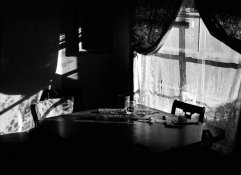
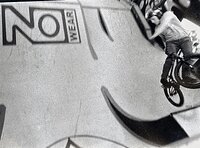
Lowlight freestyle

A
Lowlight freestyle

  • 0
  • 0
  • 0
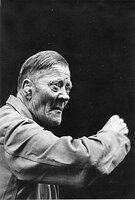
man arguing 1972

A
man arguing 1972

  • 6
  • 0
  • 50

Recent Classifieds

Forum statistics

Threads
203,016
Messages
2,848,670
Members
101,601
Latest member
instantcrow
Recent bookmarks
0

amastronardi

Member
Allowing Ads
Joined
Jul 14, 2013
Messages
5
Location
La Plata, Ar
Format
Multi Format
I'm newbie in analog photography and darkroom. Apology if asking a dummy question.


I was playing with Tri-X 400 and found it too grainy. I know that Tri-X is grainy, but I tried to print to 8x10 and it was too grainy. Is it correct or I'm doing it wrong? I developed the film using HC-110 (dilution B) for 6 minutes.

Can I get a finer grain using different chemicals? Which 400 ISO film do you recommend with finer grain?


Many thanks,
AM

PS: the attached photo is an example.

F80-0004-27.jpg
 
That's a nice portrait. Yes, it's a bit grainy but I don't think it's TOO grainy for my taste. Certainly not as grainy as Tri-X can get.

How deeply are you cropping into the image on the negative? Yes, if you blow Tri-X up too much it will get grainy but a full-frame 8x10 shouldn't be grainy at all.

Pushing or poor processing can make any film look grainy but, in my experience, the main reason is extreme cropping.
 
You should not suffer any longer.

So, in the spirit of kindness I offer to accept all your Tri-X. Simply send it straight to me and you will be freed!

:smile:
 
But seriously, I have a feeling that your film might be under exposed. It has that look and with underexposure comes more grain.
 
Thanks for the feedback. The underexposure could be a good reason... I always need to adjust the camera photometer... it seems like I forgot this time :s
 
Of the conventional films 400TX is the finest grained for its speed. You may be exposing or developing it incorrectly, most people do not find the grain a problem. Other options would be one of the T-grain films or a medium speed film.
 
Last edited by a moderator:
Tri-X is a fairly grainy film. But I was always admirably pleased with Microdol X 1:3. Since they no longer make this miracle concoction, move over to Ilford Perceptol. I've never used Perceptol, but they say it's the same thing. If it indeed is, then Tri-X grain problems are gone. The grain become very fine, and with good sharpness.
 
One other thought, is that a long lens? The longer the lens the more pronounced the grain...
 
I developed for 6 min as read many posts saying that 3.5 minutes is not enough. Next roll I'll try 3.5

Thanks,
AM
 
Tri-X is a fairly grainy film. But I was always admirably pleased with Microdol X 1:3. Since they no longer make this miracle concoction, move over to Ilford Perceptol. I've never used Perceptol, but they say it's the same thing. If it indeed is, then Tri-X grain problems are gone. The grain become very fine, and with good sharpness.

Thanks for the tip! I'll try this developer and see if it appeals me.

Thanks,
AM
 
One other thought, is that a long lens? The longer the lens the more pronounced the grain...

Zsas, is this a joke, as how can optics effect grain size?
 
Um.... I don't really agree Tri-X is grainy film. I use it and develop it with D-76, pretty much "by the book." While it is not as grainless as T-max or slower other films, grain is very well controlled.

I *think* OP's film is under exposed and under developed. Density range is not there and contrast isn't there either.

You can go to Freestyle's website and buy Arista Premium for really cheap and it's a rebranded Tri-X. I'd say play around with it.... It's a nice film.
 
Hi Frank/Clive - Is it not true if that was a portrait taken with a 35mm lens (on a 35mm camera) standing maybe .7 meter away - that the image would exhibit less grain in the oof area, than the same portrait (subjects filling the frame identically) and standing 2m away but using a 90mm lens? So my question to the OP, what lens are you using too it could lead to more pronounced effect, if the items in my earlier post were also exhibited (ie over dev)? More importantly, what is your setup (camera, lens, dev technique, etc.)...
 
Tri-X is very versatile. For portraits, I used a film speed setting of 200 and developed in HC-110 (dil B) for 6min, but this was the older Tri-X of about 18 years ago. I understand that the dev times are revised. I was very happy with the results. I used an enlarger that tends to give slightly lower contrast results. For a condenser enlarger a bit less development probably would have been in order.

Tri-X, as you know, is great for reportage and pushing, but at higher EI the results will be harsher and for portraits, the area around the eye sockets will be shadowy.
 
Greetings AM. You've really got many choices to lower your grain. Above all, make sure your chemistry is about 70 degrees. Increased developer temp can greatly increase grain, especially in faster films like Tri-x.

A lot of pro labs will process TXP (the pro version in 120 size) in D-76 diluted 1:1. It's not a bad combination if you ask the lab to pull the film 1 f stop and expose it at 250 ISO instead of 320 and you can also get nice results processed in TMAX RS (replenishment system) cut 1:1

Ilford HP5 PLUS ISO 400 either 35mm or 120 in Ilfotec. I like Tmax 400 processed in T-Max RS also cut 1:1 and used single shot looks good too when properly exposed.

Also, if you post scans of your negatives we can better determine your exposures in terms of being over or under or pretty much right on the money. Overexposing Tri-x can blow out details in highlights while undersexposing can trash details in the brighter areas.

All-in-all, like any other photographic processes, there's a large learning curve to refine your results but it's worth it and you shouldn't need much experimenting to get into the ballpark you want to be in.
Mark
 
Hi Frank/Clive - Is it not true if that was a portrait taken with a 35mm lens (on a 35mm camera) standing maybe .7 meter away - that the image would exhibit less grain in the oof area, than the same portrait (subjects filling the frame identically) and standing 2m away but using a 90mm lens? So my question to the OP, what lens are you using too it could lead to more pronounced effect, if the items in my earlier post were also exhibited (ie over dev)? More importantly, what is your setup (camera, lens, dev technique, etc.)...

I think I know the issue here. Out-of-focus areas are more prevalent when shooting with longer lenses... And these exhibit more grain -- because there is less "detail" to camoflage the grain.
 
I love how Tri-X looks in xtol. Even D-76. I've grown accustomed to its grain which I now quite like. I'm with you on not being a big fan of grain; most examples of HP5 I see are far too grainy for my taste. My favorite 400 speed is Neopan, but I guess you're out of luck there. It has far less grain, but I really like it when it does appear.

Tri-X in xtol:
8585492885_d5d8f4b41f_b.jpg
 
I think I know the issue here. Out-of-focus areas are more prevalent when shooting with longer lenses... And these exhibit more grain -- because there is less "detail" to camoflage the grain.
Hi Frank/Clive - Is it not true if that was a portrait taken with a 35mm lens (on a 35mm camera) standing maybe .7 meter away - that the image would exhibit less grain in the oof area, than the same portrait (subjects filling the frame identically) and standing 2m away but using a 90mm lens? So my question to the OP, what lens are you using too it could lead to more pronounced effect, if the items in my earlier post were also exhibited (ie over dev)? More importantly, what is your setup (camera, lens, dev technique, etc.)...
Thanks Bill for hearing me out. Exactly, and when I look at that wonderful portrait that the OP, Adrian, uploaded in post #1, I see that area to the right that makes me think, he's photographed this with a long lens (maybe 105mm or more) and the grain will get a heck'a more 'grainy' looking....you add that to the fact that it might have some dev kinks he needs to work out....well you've the perfect storm of sorts. I love Tri-X. I run it in Rodinal and HC-110 and never see grain like what is in Adrian's orig post....
 
When Kodak T-Max film was first available decades ago I switched from Tri-X to T-Max 400 (and sometimes T-Max P3200) and haven't used Tri-X since then. Each film has advantages and disadvantages. T-Max demands more careful control of time and temperature in development. Its reduced grain makes that effort worth while.
 
I developed for 6 min as read many posts saying that 3.5 minutes is not enough. Next roll I'll try 3.5

Thanks,
AM

No, don't do that. This doesn't look like overdevelopment, and I think everyone agrees that 3.5 minutes was a misprint that Kodak for some reason never fixed.

I agree that underexposure might be a culprit. HC-110 also isn't an especially fine-grained developer, and if the issue persists as you change other things, you might consider that as a variable.

-NT
 
With developers I use (D76 and T-Max RS) temperature will have no effect on grain if time is adjusted to give the same contrast.

Out of focus areas may LOOK grainier for the reason Bill identified and thanks for explaining that as it had me scratching my head. But they wont actually BE grainier - focal length will not affect actual grain.

I agree that this looks underexposed. That (and overdevelopment if you try that to compensate for it) will make photos grainier.

If Tri-X is still too grainy to suit after dialing in development switch to TMY-2. Or, my preference, simply a bigger negative!
 
Photrio.com contains affiliate links to products. We may receive a commission for purchases made through these links.
To read our full affiliate disclosure statement please click Here.

PHOTRIO PARTNERS EQUALLY FUNDING OUR COMMUNITY:


Ilford ADOX Freestyle Photographic Stearman Press Weldon Color Lab Blue Moon Camera & Machine
Top Bottom