• Welcome to Photrio!
    Registration is fast and free. Join today to unlock search, see fewer ads, and access all forum features.
    Click here to sign up

Tri-X coming out milky.

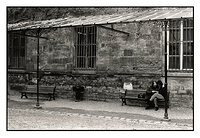
Amour - Paris

A
Amour - Paris

  • 0
  • 0
  • 39
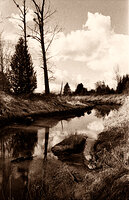
Bend in the river

H
Bend in the river

  • 2
  • 0
  • 58

Recent Classifieds

Forum statistics

Threads
203,235
Messages
2,851,848
Members
101,740
Latest member
Andrewford
Recent bookmarks
0

Ektagraphic

Member
Allowing Ads
Joined
Feb 3, 2009
Messages
2,928
Location
Massachusetts
Format
Medium Format
Hi Guys- I have developed a few rolls of Tri-X 400 and the non emulsion side (shiny side) when looking at it on top of a white piece of paper they look milky. Was this from over or under agitation? That is the only thing I can think of...The temeperature and timing was just right. The rolls of Plus-X I did came out perfect.--Patrick
 
Ian is right. It's not properly fixed.


WAIT... you said the NON-emulsion side?? Never heard of that problem.
 
Sounds like you need some fresh fixer. How many rolls have you put through the fixer, and what type of fixer have you used?
 
The anti-halation coating can be on the non-emulsion side. And that coating should come off with the fixer. So, either your fixer is exhausted, old, or you didn't give it enough time/agitation in the fixer. Re-fix in fresh fixer, then rewash and you should be fine.
 
right. The rolls of Plus-X I did came out perfect.--Patrick

Did you fix these first, then reuse the solution for the other films?

Inadequate fixing, through too short a time, or fixer exhaustion, was my first reaction, too.
 
Fixer's shot, most likely. You are using your chems single-shot and discarding, right?

That way you never ruin a roll you paid for and spent valuable time exposing---presumably with some care as to the results---over a few cents' worth
of chemistry.
 
Replace your hypo. Mixed hypo or bottles of liquid hypo only last two months.

Steve
 
If your chemistry (re: other posts) check your wash water - could be loaded with calcium-carbonate.
 
The fixer used for this was used for the first time. I didn't agitate much.
 
I guess that I really need to keep on top of agiation during fixing. Hopefully that solves the problem. I will let you guys know.
 
OK then. The most likely causes are two. Agitation is as important during fixation as it is during development. I use the same agitation technique for fixing as I do for development, and that works out OK for me. Granted you could let the film stand and it will eventually clear, but fixation proceeds more rapidly when you agitate at regular intervals. Unlike stand development, you won't get streaks if you allow fixation to proceed to completion. Second, and this rides right on the heels of point #1, you didn't allow enough time for the process to complete. Another thing to keep in mind is that old style, sodium thiosulfate fixers are notoriously slow working compared to the more modern ammonium thiosulfate, aka "rapid" fixers. They can take twice as long, or longer depending on the film, to complete the job.

 
did the "milky" negatives respond to re-fixing in fresh fixer? (they would of course also need re-washing.
 
Hi Guys- I have developed a few rolls of Tri-X 400 and the non emulsion side (shiny side) when looking at it on top of a white piece of paper they look milky. Was this from over or under agitation? That is the only thing I can think of...The temeperature and timing was just right. The rolls of Plus-X I did came out perfect.--Patrick

I'll add my vote to the fixer being the problem. What you should do, do a fixer clear test before each processing session, this makes sure that the fixer is still good, and gives you a clear time. Multiply this by 3, then round UP to the next full minute. With fresh fixer you write the clear time on the bottle, when the clear time doubles, toss it. For agitation, use the same method you did with the developer, if the developer was 5 seconds every 30, good enough, 10 seconds every minute, use that, continuous, well that's good too.
 
Single use of fixer is a big waste...

Until exhausted fixer you thought was fine fails to fix your negatives.

The stuff's dirt cheap---I get free shipping from B&H on those 5 gal cubes of C-41 fixer concentrate. Makes 25 gal; works out to less than $2/gal and works as well for B&W as for color.

Granted, my one-shot Jobo requires less than 200mL solution to cover a film roll; but I see no point penny pinching over a quarter's worth of fixer. I value my time and photographic effort much higher than that.
 
Until exhausted fixer you thought was fine fails to fix your negatives.

There are simple tests for fixer. If you are really worried, test the fixer before and after fixing.

Steve
 
Photrio.com contains affiliate links to products. We may receive a commission for purchases made through these links.
To read our full affiliate disclosure statement please click Here.

PHOTRIO PARTNERS EQUALLY FUNDING OUR COMMUNITY:


Ilford ADOX Freestyle Photographic Stearman Press Weldon Color Lab Blue Moon Camera & Machine
Top Bottom