
-
Welcome to Photrio!Registration is fast and free. Join today to unlock search, see fewer ads, and access all forum features.Click here to sign up
- Home
- Forums
- Analog Workflow Forums (100% Analog/Traditional)
- Analog Equipment
- Medium Format Cameras and Accessories
You are using an out of date browser. It may not display this or other websites correctly.
You should upgrade or use an alternative browser.
You should upgrade or use an alternative browser.
Totally fogged film; what caused it?
-
A
- Thread starter Melvin J Bramley
- Start date


Recent Classifieds
-
For Sale Linhof 135mm Focusing Cam for Technika IV 4x5 45.00.
- Started by John Ackley
-
For Sale Darkroom Tool Set for Print or Sheet Film Handling
- Started by davela
-
For Sale Testrite CS-1 Copy Stand with Original Box
- Started by davela
-
For Sale Pentax branded camera straps (1 black w/ viewfinder cap, 1 grey)
- Started by Disconnekt
Forum statistics


A roll of film that was completely BLACK indicates that it was exposed to light before development.
This is most commonly the case. An alternative explanation would be a very effective fogging agent somehow getting to the emulsion prior to or during development. This is quite uncommon, however. Potential agents that come to mind would be the fogging bath used for E6 (generally based on tin chloride) or a sulfur compound like thiourea or sodium sulfide.
Fogging to light is a more common scenario.
I'd still like to see a sample of the supposedly fogged film to remove any possibility of confusion about what were talking about

retina_restoration
Subscriber
We've been requesting it, but so far.....I'd still like to see a sample of the supposedly fogged film to remove any possibility of confusion about what were talking about
Melvin J Bramley
Member
I'd think it to be more of a developer problem. What developer are you using?
I am currently using XTOL, it's quite fresh
Melvin J Bramley
Member
We've been requesting it, but so far.....
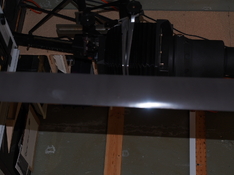
Here it is.
Attachments
John Wiegerink
Subscriber
I wish the strip were on a light table, but it is what it is I guess. I think I'm seeing a film that has been fogged. How heavily I can't tell from the picture, but it seems I can see some light colored object behind the strip show through. Am I wrong?Here it is.
retina_restoration
Subscriber
can you try again, holding it up to a window?I wish the strip were on a light table, but it is what it is I guess. I think I'm seeing a film that has been fogged. How heavily I can't tell from the picture, but it seems I can see some light colored object behind the strip show through. Am I wrong?

That photo reminds me of Nanaimo in the winter  .
.
A computer or tablet screen makes a great backlight.
What we would like to be able to discern is any hint at where the image frames might have once been - including the space between frames, as well as the rebate and the frame numbers.
.A computer or tablet screen makes a great backlight.
What we would like to be able to discern is any hint at where the image frames might have once been - including the space between frames, as well as the rebate and the frame numbers.

Light Capture
Advertiser
If it's that black as others said, it's not from the camera.
Melvin J Bramley
Member
If it's that black as others said, it's not from the camera.
I exposed and processed another roll of film, no problems.
Looks like I used stop bath twice instead of fixer.
You cannot fix stupid!
I exposed and processed another roll of film, no problems.
Looks like I used stop bath twice instead of fixer.
You cannot fix stupid!
So try fixing it now.
See what you get.
You can actually turn on the lights once the stop bath is finished - just ask anyone who follows the BTZS regime.
Light Capture
Advertiser
I exposed and processed another roll of film, no problems.
Looks like I used stop bath twice instead of fixer.
You cannot fix stupid!
It certainly happens more often than we would like to admit...
Especially when rushing or being mentally somewhere else.
Looks like I used stop bath twice instead of fixer.
That won't fog the film. If you didn't use fixer, you would have had to expose the unfixed film to light, and then run it through developer to get a totally black strip of film. If you use stop bath twice, skip fixer and then hang to dry, what you'll get initially is a strip of film that looks milky white with somewhat faint negative images on it. If you then expose that strip of film to intense light for an extended period, it will indeed turn dark. But you would have noticed the milky white appearance initially. How did this strip of film look when you just took it out of the tank and hung it up to dry?
retina_restoration
Subscriber
That won't fog the film. If you didn't use fixer, you would have had to expose the unfixed film to light, and then run it through developer to get a totally black strip of film. If you use stop bath twice, skip fixer and then hang to dry, what you'll get initially is a strip of film that looks milky white with somewhat faint negative images on it. If you then expose that strip of film to intense light for an extended period, it will indeed turn dark. But you would have noticed the milky white appearance initially. How did this strip of film look when you just took it out of the tank and hung it up to dry?
Given the lack of a meaningful photo of the film in question, I grow more puzzled by this - not less. It seems there are important details missing.
BrianShaw
Member
No matter, it might be more accurate to retitle the thread. The camera is most likely not to blame. 
abruzzi
Member
if you look at the photo closely, you can see some of the frames. TBH I've never bothered to look at film I've developed after stop and before fixing, but it occurs to me that fix actually does two things--it removes the undeveloped silver, but it also clear the base. In that photo it looks possible that the base is still uncleared, thought I'm not 100% sure what that lookes like. I'd suggest re-fixing to see what comes out.
John Wiegerink
Subscriber
He could try fixing again, but I really do not think that improper fixing is the problem here. Also, if it were a real lack of fixing to cause a visible density there more than likely would be a milky look to the film in question. I believe we a we are looking at a puzzle that has a piece that the cat ran off with. We'll never be able to put the puzzle together until we find where that blasted kitty cat stashed it. No sense me even speculating anymore. Off to do a little belated camera repair and tuneups.if you look at the photo closely, you can see some of the frames. TBH I've never bothered to look at film I've developed after stop and before fixing, but it occurs to me that fix actually does two things--it removes the undeveloped silver, but it also clear the base. In that photo it looks possible that the base is still uncleared, thought I'm not 100% sure what that lookes like. I'd suggest re-fixing to see what comes out.
Given the lack of a meaningful photo of the film in question, I grow more puzzled by this - not less. It seems there are important details missing.
Agree, and...
No matter, it might be more accurate to retitle the thread. The camera is most likely not to blame.
agree; I've changed the thread title.
And indeed, this seems to be a case of @John Wiegerink's Cat. Or Schrödingers. IDK; cats are funny creatures; I don't think they subscribe to the whole business of ownership anyway.
pentaxuser
Member
I'd think it to be more of a developer problem. What developer are you using?
How does a developer per se do what Melvin has described?
Thanks
pentaxuser

RalphLambrecht
Subscriber
No they aren't because the door relies on it's design of baffles that stops light entering and even an open shutter would still leave the edge of the film unexposed. Additionally the film is protected by it's backing paper so even if the door had been opened it's likely an image or two would survive. So if it's totally black all over with no edge marking I think it's been exposed to light at the processing stage.
I you used panchromatic film, remember it needs to be processed in total darkness. Any red or amber light in the darkroom will fog the film!
John Wiegerink
Subscriber
I said the same thing to myself, but if something WAY OUT of the ordinary was added to it, who knows. Like I said, I'm done trying to guess on the information we have been given.How does a developer per se do what Melvin has described?
Thanks
pentaxuser
I you used panchromatic film, remember it needs to be processed in total darkness. Any red or amber light in the darkroom will fog the film!
Yes, I considered this option, which is why thorough inspection of the 'negatives' is necessary. In the case of fogging to red light, it's usually possible to still recognize the image through the heavy fog. If you search this forum, there was a nice example posted around 18 months ago or so.
| Photrio.com contains affiliate links to products. We may receive a commission for purchases made through these links. To read our full affiliate disclosure statement please click Here. |
PHOTRIO PARTNERS EQUALLY FUNDING OUR COMMUNITY:  |