
• Welcome to Photrio!
    Registration is fast and free. Join today to unlock search, see fewer ads, and access all forum features.
    Click here to sign up

TMY2 or Tri-X for old lenses?

Venice

A
Venice

  • 0
  • 0
  • 41
Train

A
Train

  • 4
  • 2
  • 54

Recent Classifieds

Forum statistics

Threads
201,790
Messages
2,830,227
Members
100,950
Latest member
HamelP
Recent bookmarks
0

Vaughn

Subscriber
Allowing Ads
Joined
Dec 13, 2006
Messages
10,281
Location
Humboldt Co.
Format
Large Format
...A film that reduces the contrast of the bright areas and boosts the contrast in the shadow areas will give a better-balanced print. Tri-X does that. TMY does just the opposite, and there's not a damned thing you can do about it...
Unless, of course, one is using a print-making process that eats excess highlights for breakfast and sucks every detail out of the shadows...then TMY is the 'better' film...and, alas, so was Kodak Copy Film!:cool:

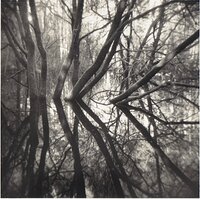
To put up another image: An 8x10 carbon print. Oak, Cascade Creek, YNP. FP4+ that was rebranded by Freestyle as Arista back in the day. Taken with a Fuji W 300/5.6. About seven stops of light metered..always one or two more hiding in places like this (metered, at box speed, 5 to 11.5, exposed at 7). A 15 second exposure -- no reciprocity adjustment (to drop the shadows some). Developed in Ilford PQ Universal Developer (1:9, 68F, 7min, in a Jobo Expert Drum). A very robust, healthy negative! I doubt if anything I did was technically 'ideal', but it prints wonderfully.

Totally nonsensical question -- If I am using a process from the mid-1800s, what film and lens combination should I really be using?!
:wink:
 

Attachments

  • OakCasCr.jpg
    OakCasCr.jpg
    625.8 KB · Views: 100
Last edited:

Lachlan Young

Member
Allowing Ads
Joined
Dec 2, 2005
Messages
5,082
Location
Glasgow
Format
Multi Format
He's using 35mm, remember?

And all those examples correspond to 35mm films.

The big difference is that back in the days of uncoated lenses, Kodak used to recommend developing to a higher (sometimes much higher) gamma in their data sheets than today because of the higher flare factor - in other words, experimentation may be needed (as it's unlikely to be a dagor design the OP is using in 35mm) to determine how much longer a developing time may be needed to get a negative the OP is happy with. Yes, this will change the effective curve shape, but the effective shadow exposure increase from flare may offset this. It is difficult to make further recommendations unless we are told the specific lens - a dagor design with 4 air/glass interfaces is vastly contrastier than a Leitz Xenon with 10.
 
Joined
Jan 21, 2003
Messages
15,715
Location
Switzerland
Format
Multi Format
As I said: 'within limits'.

That shadow tweak is a pretty big change... I think we're in the territory of 'Tri-X might technically have a small edge with older lenses compared to TMax 400, but aesthetically it still doesn't really matter as 'better' is subjective in the end, and a good craftsman will overcome the relatively small differences anyway'.

What you see in the shadow performance with changed development constitutes about the same difference in shadow contrast as the film curve differences between Tri-X and TMax 400.
 

Petraio Prime

Member
Allowing Ads
Joined
May 17, 2009
Messages
177
Format
35mm
That shadow tweak is a pretty big change... I think we're in the territory of 'Tri-X might technically have a small edge with older lenses compared to TMax 400, but aesthetically it still doesn't really matter as 'better' is subjective in the end, and a good craftsman will overcome the relatively small differences anyway'.

What you see in the shadow performance with changed development constitutes about the same difference in shadow contrast as the film curve differences between Tri-X and TMax 400.

I'm not sure that would be true. It would be better to compare prints.
 

Gerald C Koch

Member
Allowing Ads
Joined
Jul 12, 2010
Messages
8,131
Location
Southern USA
Format
Multi Format
Most likely it all comers down to what film you like rather any small advantage one film has with older lenses. As Ian pointed out not all single coated lenses behave the same. If it were up to me the title of the thread should be "... old lens that exhibit flare." Which is perhaps a bit more accurate.

One of the problems with the net is that self called experts can make statement like this without fear of contradiction. APUG is a forum and represents many people's take on a subject.
 
Last edited:

removed account4

Subscriber
Allowing Ads
Joined
Jun 21, 2003
Messages
29,832
Format
Hybrid
And all those examples correspond to 35mm films.

The big difference is that back in the days of uncoated lenses, Kodak used to recommend developing to a higher (sometimes much higher) gamma in their data sheets than today because of the higher flare factor - in other words, experimentation may be needed (as it's unlikely to be a dagor design the OP is using in 35mm) to determine how much longer a developing time may be needed to get a negative the OP is happy with. Yes, this will change the effective curve shape, but the effective shadow exposure increase from flare may offset this. It is difficult to make further recommendations unless we are told the specific lens - a dagor design with 4 air/glass interfaces is vastly contrastier than a Leitz Xenon with 10.

sorry for bolding that part but i have a question about this
i am clueless when it comes to old 35mm lenses timeframe you are talking about ..
and i was under the impression when kodak was suggesting this sort of thing it was for bigger negatives
that were contact printed. a lot of uncoated lens cameras were large negative folders and box cameras
and their films were often times exposed and developed to a contrast &c to make them printed on azo paper
( contact printed ) or another gaslight/silver chloride paper ... in the back room of a drugstore or lab.
so kodak suggested people do the same sort of thing for flm that was to be enlarged too ?
 

Petraio Prime

Member
Allowing Ads
Joined
May 17, 2009
Messages
177
Format
35mm
sorry for bolding that part but i have a question about this
i am clueless when it comes to old 35mm lenses timeframe you are talking about ..
and i was under the impression when kodak was suggesting this sort of thing it was for bigger negatives
that were contact printed. a lot of uncoated lens cameras were large negative folders and box cameras
and their films were often times exposed and developed to a contrast &c to make them printed on azo paper
( contact printed ) or another gaslight/silver chloride paper ... in the back room of a drugstore or lab.
so kodak suggested people do the same sort of thing for flm that was to be enlarged too ?


Yes, you are right. It took a while for the proper techniques to be worked out for 35mm film with the goal of enlargement. The degree of development needed to be vastly reduced.
 

removed account4

Subscriber
Allowing Ads
Joined
Jun 21, 2003
Messages
29,832
Format
Hybrid
thanks Petraio Prime
as i said i am clueless when it comes to this topic.
i am guessing they had a lot of "grade 1 " photo paper :smile:
 

Vaughn

Subscriber
Allowing Ads
Joined
Dec 13, 2006
Messages
10,281
Location
Humboldt Co.
Format
Large Format

TheToadMen

Subscriber
Allowing Ads
Joined
Sep 18, 2012
Messages
3,570
Location
Netherlands, EU
Format
Pinhole
Totally nonsensical question -- If I am using a process from the mid-1800s, what film and lens combination should I really be using?!

Hi Vaughn, I agree - up to a point. It's true the process will hide most (or all) of the specific characteristics of the film and lens itself. But the film and lens can be important to make a specific type of negative necessary for the specific process. Today I'm gonna print some Salt Prints and Albumen Prints. If I don't want to make use of digital negatives, then I'll need rather contrasty negatives for contact printing. For Cyanotype printing I'll need much more softer negatives.
But then in the mid 1800's there were only paper negatives from Fox Talbot at first and that worked pretty well too. :wink:
 

baachitraka

Member
Joined
Apr 6, 2011
Messages
3,646
Location
Bremen, Germany.
Format
Multi Format
I'm not sure that would be true. It would be better to compare prints.
That scheme works. Author is a portraitist and he based his exposure by taking one incident reading.

Also explains the effect with different developers.
 

ChuckP

Subscriber
Allowing Ads
Joined
Jan 8, 2003
Messages
722
Location
NW Chicagola
Format
Multi Format
I always thought that TMY was more of a straight line short toe film compared to the longer toe of Tri-X. In other words TMY less forgiving of underexposure in the shadows but having more shadow contrast than Tri-X. In this case lens flare into the shadows would result in TMY having a longer toe (similar to pre-exposure) but shadow contrast would still be higher than the flare into the longer Tri-X toe. So it would seem like if shadow contrast was important using uncoated lenses you need a short toe film and TMY is it.
 

Lachlan Young

Member
Allowing Ads
Joined
Dec 2, 2005
Messages
5,082
Location
Glasgow
Format
Multi Format
sorry for bolding that part but i have a question about this
i am clueless when it comes to old 35mm lenses timeframe you are talking about ..
and i was under the impression when kodak was suggesting this sort of thing it was for bigger negatives
that were contact printed. a lot of uncoated lens cameras were large negative folders and box cameras
and their films were often times exposed and developed to a contrast &c to make them printed on azo paper
( contact printed ) or another gaslight/silver chloride paper ... in the back room of a drugstore or lab.
so kodak suggested people do the same sort of thing for flm that was to be enlarged too ?


Going by their datasheets, they don't seem to differentiate that much. Remember too that widespread adoption of 135 was really a post WWII thing & that for most amateurs 120/ rollfilm in a variety of formats was the standard & was contact printed most of the time. Even those who were enlarging were unlikely to have been making massive prints - 3-4x enlargements at the max, no matter the format. And a lot of those contact prints would have been on Azo or Velox.

I recollect finding in a Kodak Reference Handbook that Kodak's recommendation for FX/PX/ Super-XX in 35mm that they be developed to a gamma of 0.8 in D-76. That would be about contemporaneous with the lenses this discussion centres on.

Anyone who was doing really high end work would probably have worked out their own processes that delivered what they needed in terms of contrast & exposure.

What all this does leave me wondering is whether the oft-referred 'blank-sky' effect that is attributed to ortho and blue-sensitive film has more to do with severe over development & printing on a relatively hard paper than to do with the film's sensitivity to colour - at least when dealing with ortho films. My own experience with Ortho+ suggests there might be something to this.
 

Petraio Prime

Member
Allowing Ads
Joined
May 17, 2009
Messages
177
Format
35mm
I always thought that TMY was more of a straight line short toe film compared to the longer toe of Tri-X. In other words TMY less forgiving of underexposure in the shadows but having more shadow contrast than Tri-X. In this case lens flare into the shadows would result in TMY having a longer toe (similar to pre-exposure) but shadow contrast would still be higher than the flare into the longer Tri-X toe. So it would seem like if shadow contrast was important using uncoated lenses you need a short toe film and TMY is it.

TMY has noticeably softer shadows than Tri-X. I have not tried TMY-2, so I cannot say with certainty that is is the same.
 

removed account4

Subscriber
Allowing Ads
Joined
Jun 21, 2003
Messages
29,832
Format
Hybrid
thanks for info on the data sheets &c. i thought they were more of a modern-world sort of thing ...

What all this does leave me wondering is whether the oft-referred 'blank-sky' effect that is attributed to ortho and blue-sensitive film has more to do with severe over development & printing on a relatively hard paper than to do with the film's sensitivity to colour - at least when dealing with ortho films. My own experience with Ortho+ suggests there might be something to this.

mine too, although i have never used ortho+
i've noticed the difference in exposure between what the sky needs
and what the subject needs is so different that it is either/or not both,
unless i had some sort split filter ( denise ross makes her own filters to split exposures )
ALSO i seem to remember to remedy this situation some people used to have a variety of
cloud/sky only exposures and drop them in / combination print with whatever they were
photographing that had a blank sky kind of what one would think about with photoshop these days ...
but i don't really think these advanced techniques were done for suzie who dropped off some film
from her Kodak 1A at the rexal pharmacy while her dad dropped a nickle in the bromo seltzer dispenser
because of the harrowing streetcar/trolly ride on the way there. i could be wrong though.
 

Lachlan Young

Member
Allowing Ads
Joined
Dec 2, 2005
Messages
5,082
Location
Glasgow
Format
Multi Format
thanks for info on the data sheets &c. i thought they were more of a modern-world sort of thing ...

At least from the one I have - which is late 1940s as I recall, there are pretty comprehensive time/ gamma curves & characteristic curves at a range of gammas etc. Obviously meant for the serious lab environment, not the roll-of-verichrome-every-six-months crowd. Going by them, it's clear that a range of Gamma 0.6-1.0 or 1.1-ish was what Kodak thought was reasonable, however it seems reasonable that the gamma 0.8/0.85/0.9 that they recommend for various films was the design gamma - ie the film was designed for the specified speed at the specified gamma.
 

MattKing

Moderator
Moderator
Joined
Apr 24, 2005
Messages
55,156
Location
Delta, BC Canada
Format
Medium Format
If you have ever been asked to print older "amateur" negatives, you probably observed what I have noticed - they tend to be very "thick" and contrasty.
I expect that that was what people wanted from their drugstore prints and holiday snaps.
 

Ian Grant

Subscriber
Allowing Ads
Joined
Aug 2, 2004
Messages
23,409
Location
West Midland
Format
Multi Format
If you have ever been asked to print older "amateur" negatives, you probably observed what I have noticed - they tend to be very "thick" and contrasty.
I expect that that was what people wanted from their drugstore prints and holiday snaps.

When I first used my Mum's old Brownie 127 I had the D&P done at a local chemists -early 1960's (they were sent away) same when I upgraded to an Agfa Rapid. Despite negatives being heavy and contrasty the prints weren't, I know know why as I have BJP Almanacs from the 1950's and early 60's showing the Ilford and Kodak D&P roll fed printers, flashing was used to control contrast and prints were universality quite flat, I wasn't impressed even at 8 or 9.

The early negatives I processed where quite different both from the 127 and Agfa Rapid, I used to reload the Rapid cassettes myself from bulk film until I bought a Zenit E.

Later I worked with a museum and printed from old negative, it was very difficult matching modern (1970's) papers to old glass plates from the 1890 and early films. We actually have far better papers and films now which are very much more versatile, the only exception being the Warm tone papers which can't match since Cadmium was banned.

Ian
 

Gerald C Koch

Member
Allowing Ads
Joined
Jul 12, 2010
Messages
8,131
Location
Southern USA
Format
Multi Format
If I understand "drugstore processing" everything was dumped in the same tank of general purpose developer like DK-60a. Didn't mater whether it was slow or fast film. They all were developed for the same time. Therefor some negatives would be over-developed and too dense. I really can't see saying that Kodak was off in its recommendations for development in the past. Didn't matter the drugstore processors were doing their own thing.
 

Ian Grant

Subscriber
Allowing Ads
Joined
Aug 2, 2004
Messages
23,409
Location
West Midland
Format
Multi Format
I really can't see saying that Kodak was off in its recommendations for development in the past. Didn't matter the drugstore processors were doing their own thing.

The Ilford Formulae and Packed Chemicals booklet I have from 1960 shows the same development time for most films in Autophen their Photofinishing (D&P) developer which was a PQ variant of ID-11/D76.

In practice I've found through tests and also many years of use that Agfa APX100 (100EI), Tmax100 (50EI), EFKE 25 (50EI) would all produce negatives that printed well on Grade 2 paper with the same development times in Rodinal and Xtol (replenished). (Note that EFKE/Adox 25 is a 50 EI speed in Daylight, 25EI hence the name in Tungsten light). I find it's similar with FP4, Delta 100& 400 and HP5 in Pyrocat HD

The only films that are wildly different are Foma which build up contrast very much faster during development. I'd suspect that there was an aim by the big film manufacturers for their films to be processed at a common development time in D&P units. Most labs still use a common dev time unless you're paying for hand processing, we did the B&W film processing for a local pro lab and they specified ID-11 (replenished) and a set time for all films, this never caused a problem.

Ian
 
Photrio.com contains affiliate links to products. We may receive a commission for purchases made through these links.
To read our full affiliate disclosure statement please click Here.

PHOTRIO PARTNERS EQUALLY FUNDING OUR COMMUNITY:


Ilford ADOX Freestyle Photographic Stearman Press Weldon Color Lab Blue Moon Camera & Machine
Top Bottom