
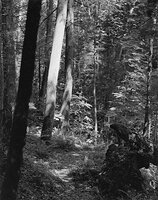
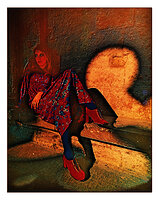
This test shows you just how important spectral sensitivity is, and why so many of us are always going on about it. Aside from obvious grain differences, it is the most distinguishing (and most ignored) characteristic of any film b/w, the way I see it.
It also shows you a little bit of the magic of Tri-X; the thing that makes it most unique! I love the film's slight darkening of warm hues (including, of course, most human skin), while it slightly boosts the tone of cool hues (sky, shade, plants). Not that many films have the "glow" that you get from Tri-X as a result of its combination of soft grain and higher sensitivity to cool light. (Efke/Adox 100 does feel somewhat similar.) This is why the loss of TXP in medium format is such a tragedy, IMO. This spectral sensitivity combined with its soft contrast made for a unique and beautiful film. You can bet your bottom dollar I will be stocking up on it in large format sizes. It is my absolute favorite for portraiture, especially in natural light.
It also shows you a little bit of the magic of Tri-X; the thing that makes it most unique! I love the film's slight darkening of warm hues (including, of course, most human skin), while it slightly boosts the tone of cool hues (sky, shade, plants). Not that many films have the "glow" that you get from Tri-X as a result of its combination of soft grain and higher sensitivity to cool light. (Efke/Adox 100 does feel somewhat similar.) This is why the loss of TXP in medium format is such a tragedy, IMO. This spectral sensitivity combined with its soft contrast made for a unique and beautiful film. You can bet your bottom dollar I will be stocking up on it in large format sizes. It is my absolute favorite for portraiture, especially in natural light.
Last edited by a moderator:


