
-
Welcome to Photrio!Registration is fast and free. Join today to unlock search, see fewer ads, and access all forum features.Click here to sign up
You are using an out of date browser. It may not display this or other websites correctly.
You should upgrade or use an alternative browser.
You should upgrade or use an alternative browser.
TMX and TMY...I really want to like them
-
A
- Thread starter kodachrome64
- Start date

Recent Classifieds
-
For Sale 4 vintage 35mm metal film canisters: Ilford, Kodak, Ansco, Adox
- Started by Jon Shiu
-
Sold SOLD! RW Vacuum Fidelity Elite 4x5 (5 units) & 8x10 (4 units) Film Holders
- Started by B.S.Kumar
-
Sold Cable Release Adapters for Leica, Nikon, Yashica, Rollei
- Started by Jon Shiu
-
Sold Stoesser Pin Registration Punch
- Started by Roger Thoms
Forum statistics
- Joined
- Jun 8, 2004
- Messages
- 391
- Format
- Medium Format
TMY is a very short toe film, in fact it has a very long straight line with little toe and shoulder.
The TRI-320 (TXP) that I have used is a very long toe film. This is one of the major reasons people generally rate it about a stop less in speed than the nominal 320. This brings important shadow detail up into the straight line part of the curve, which improves contrast.
There is apparently another TRI-X film that is available in roll film. I believe it is an ISO 400 film but I have never tested or used it. Perhaps this is the one with the short toe to which you refer?
Sandy King
Well, what lead me to this conclusion was a couple of articles in one of the swedish photomagazines written by Lars Kjellberg and Björn Andersson. These authors also wrote a book on b/w processing. (Lars Kjellberg later started up a swedish photo-magazine of his own which lived for a few years. In the late -90'ies he started the website photodo.com.) They did a series of tests on characteristics of all of the films available on the market then and also showed the plotted graphs on TMX, TMY, TX and TXP. These graphs clearly showed that TMY (developed in D76 1+1) was more long-toe than TX.
The published results clearly matched my own results and answered quite a few questions.
The TX (i.e. standard "amateur" TriX 400) is short-toe, which is one of the reasons for its popularity for pushing and low-light shooting. I fully agree with you Sandy about TXP being long-toe. I don't agree about TMY being short-toe though. At least not having the same shadow characteristics (read 'similar curve') as normal TX.
Taking this discussion back to intent of the original question, my experience is that TX is an easier, more forgiving film, which delivers without fuzz. TMY is more fuzzy with exposure, development etc. Also TMY renders the scenes different than TX, regardless of developer etc.
//Björn
- Joined
- Sep 16, 2006
- Messages
- 1,873
- Format
- 35mm
TMX and TMY
I prefer ACROS to TMX. It looks very nice at 100 in Fuji Microfine. If you want something easier for TMX try undiluted Microphen. I haven't used the TMY2 I bought yet. I found that in certain developers the current version of Tri-X had finer grain than TMY. Both Tri-X and Neopan 400 are easier to use than TMY. Once you get to 120 size you can enjoy the ease of use of the traditional films as well as their tonality without having to worry about grain so much. If the light is adequate I prefer Pan F+ to any of the 100 speed films.
I prefer ACROS to TMX. It looks very nice at 100 in Fuji Microfine. If you want something easier for TMX try undiluted Microphen. I haven't used the TMY2 I bought yet. I found that in certain developers the current version of Tri-X had finer grain than TMY. Both Tri-X and Neopan 400 are easier to use than TMY. Once you get to 120 size you can enjoy the ease of use of the traditional films as well as their tonality without having to worry about grain so much. If the light is adequate I prefer Pan F+ to any of the 100 speed films.
- Joined
- Jul 26, 2008
- Messages
- 1
- Format
- 35mm
Nick, get ready for a shock, I use Ilford's multicontrast PAPER deleloper at 1:29, it gives me the best neg results I have ever had, and believe me, Iv'e tried lots of neg developers, contrast is great, I shoot in low contrast lighting mostly, Tony
pentaxuser
Member
Nick, get ready for a shock, I use Ilford's multicontrast PAPER deleloper at 1:29, it gives me the best neg results I have ever had, and believe me, Iv'e tried lots of neg developers, contrast is great, I shoot in low contrast lighting mostly, Tony
I have just looked at Ilford 5 litre paper developer at one stockist in the U.K. and have worked out that this will make 150 ltrs of stock solution. At say 250cc per film in my Jobo tank this is 4 films per ltr or 600 films. At £18 for 5 ltrs this is 3p per film!
This much be the cheapest developer ever. Very tempting. Maybe you could show us some negs/prints from this solution. Makes the DDX price per film look like a king's ransom!
Then at 3p per film I'd disappear from APUG, change my e-mail and address and demand inclusion into a witness protection programme befor Simon Galley and his "boys" pay you a visit, followed by the Kodak etc boys.

This could be a bigger threat to Ilford's profitability that all the digi conversions put together.
Seriously if it really works this well and I am not saying it doesn't, it clearly does for you, then developing becomes as "cheap as chips" as a well known U.K. TV personality says
pentaxuser
OP
OP

Hmmm very interesting...I will have to give in to curiosity and try this combo...Nick, get ready for a shock, I use Ilford's multicontrast PAPER deleloper at 1:29, it gives me the best neg results I have ever had, and believe me, Iv'e tried lots of neg developers, contrast is great, I shoot in low contrast lighting mostly, Tony
I dev'd a roll of TMX in XTOL last night, and was equally disappointed with the results. It's probably good advice that it's not the developer. I like having a few different developer options to choose from.
On the other hand, I did a roll of Plus-X in D-76 stock and was ever so pleased with the results. I LOVE THAT FILM! I'm about to buy a 100 ft roll of PX and TX. I still want to keep messing with TMY and TMX though. For the record, I love the grain of PX and TX. I'm not worried about it, even in small format. The T-grained films have a character that I like, and I just wish the contrast was the way I want it. I don't want to use them necessarily for finer grain.
Thanks for all the suggestions...please keep them coming!
Nick

I dev'd a roll of TMX in XTOL last night, and was equally disappointed with the results.
One roll and you're disappointed with the results? You have NO IDEA what TMX and XTOL are capable of after 1 roll...
I promise this is my last post on the matter, but you do yourself and the materials a disservice by not properly testing them. Not really testing them at all from the sound of things. Any one or more of these combos MAY produce the exact look you're going for but the odds of you hitting on the best time/temp/agitation/dilution scheme after only 1 or even a couple tries is very slim.
Best of luck to you in your search. Shawn
- Joined
- Jun 1, 2003
- Messages
- 1,823
Good Afternoon, Nick,
Do yourself a favor and try T-Max Developer at 1:7. Start with about 10 minutes for TMX, 9 minutes for TMY and adjust from there depending on the scene contrast. My experience is that both films, but particularly TMX, respond extremely well to moderate push or pull when necessary.
Konical
Do yourself a favor and try T-Max Developer at 1:7. Start with about 10 minutes for TMX, 9 minutes for TMY and adjust from there depending on the scene contrast. My experience is that both films, but particularly TMX, respond extremely well to moderate push or pull when necessary.
Konical
OP
OP
Great idea Konical. Before I saw this, I found an article written by John Sexton here, and he suggests T-Max developer 1:9 for 11 minutes at 24 degrees. I tried this combo and it really did give me a much better look; one that I am looking for! It looks similar to the Plus-X look that I love so much, but with the properties of the T-grained film. And it uses half the developer! I will have to try the 1:7 combo also. Thank you Konical!
To all, I am not suggesting I am properly "testing" all of these devs. I have a couple of rolls that are NOT test rolls and I want to do research and take a gamble at the best combo, because I want these negatives. If I were shooting test rolls, I would be testing thoroughly. But, with the T-Max high dilution, I have a much better starting point, and it makes T-Max developer twice as economical. On par with HC-110 now.
Thanks for all the suggestions! I now realize the power of dilution!
To all, I am not suggesting I am properly "testing" all of these devs. I have a couple of rolls that are NOT test rolls and I want to do research and take a gamble at the best combo, because I want these negatives. If I were shooting test rolls, I would be testing thoroughly. But, with the T-Max high dilution, I have a much better starting point, and it makes T-Max developer twice as economical. On par with HC-110 now.
Thanks for all the suggestions! I now realize the power of dilution!
- Joined
- Aug 4, 2004
- Messages
- 461
- Format
- Multi Format
Used to use it for a lot of work and really liked how it looked. Contrast was fine, maneuverable and the reciprocity characteristics were great, especially so in very dimly lit indoor projects with exposures to four hours.
Stopped mainly due the shadow detail varying too much. Was told it is because of 'extended red sensitivity' and the blue light in shadows would underexpose. The answer was to bracket, or shoot a number of frames. I don't like doing things that way so I started looking at Ilford FP4+. It has been working just fine for me.
If you can't get contrast from TMax films you are doing something wrong. As for how it looks head to head with TriX or any other film. Only you can judge which prints you like. For whether or not it is a very good film, John Sexton seems to get good prints from it.
Stopped mainly due the shadow detail varying too much. Was told it is because of 'extended red sensitivity' and the blue light in shadows would underexpose. The answer was to bracket, or shoot a number of frames. I don't like doing things that way so I started looking at Ilford FP4+. It has been working just fine for me.
If you can't get contrast from TMax films you are doing something wrong. As for how it looks head to head with TriX or any other film. Only you can judge which prints you like. For whether or not it is a very good film, John Sexton seems to get good prints from it.
OP
OP
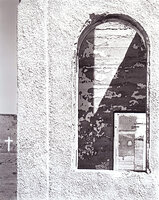
Here is one of the frames from my most recent roll of TMX, souped in T-MAX DEV 1+9 for 11 minutes per John Sexton's suggestions. I highly recommend trying his suggestions! I will be extensively testing different T-Max developer dilutions/times and also HC-110 at some point. I would like to try Rodinal also but have yet to buy any.


TMX can do ANYTHING
TMX might be the most versatile film EVER designed.
And that is the problem, for we expect a film to have a personality that doesn't change, is ALWAYS the same, and that different developers
will only have a minor effect (grain, etc).
TMX can change its personality at will,
depending on the developer.
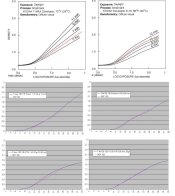
With D-76, it has a moderate straight line and a significant shoulder. (Shadow separation, Highlight Compression).
TMAx developer, depending upon the dilution, gives it a long straight line, or almost TXP highlight separation.
Rodinal ? A long, linear scale with no shoulder... but a little bump that opens up midtones.
XTOL, a 'compensated' look, less severe than D-76. FX-39 ? A straight line to D 1.5, and then a gentle shoulder.
I haven't tried EVERY developer with this stuff, but I remember the fury back in the '80s when folks loved it or hated it... like today, really. I remember comparing my first few rolls with a friend's first TMX; we compared our contact sheets, and it slowly dawned on us that D76 and Rodinal might transform the film completely. So, he shot a roll in Rodinal, I tried D76, and we confirmed it. COMPLETELY DIFFERENT FILM ! TMax developer was the 3rd variant.
NOTE: The linked Sexton article from KODACHROME's post was a real breakthrough at the time.
If you KNOW what you want the film to do, you can find a developer to do it for you. Attached, 2 curves from Kodak, and 4 from Foto Import. Have fun. (the dotted red lines approximate EKC's suggestions).
TMX might be the most versatile film EVER designed.
And that is the problem, for we expect a film to have a personality that doesn't change, is ALWAYS the same, and that different developers
will only have a minor effect (grain, etc).
TMX can change its personality at will,
depending on the developer.
With D-76, it has a moderate straight line and a significant shoulder. (Shadow separation, Highlight Compression).
TMAx developer, depending upon the dilution, gives it a long straight line, or almost TXP highlight separation.
Rodinal ? A long, linear scale with no shoulder... but a little bump that opens up midtones.
XTOL, a 'compensated' look, less severe than D-76. FX-39 ? A straight line to D 1.5, and then a gentle shoulder.
I haven't tried EVERY developer with this stuff, but I remember the fury back in the '80s when folks loved it or hated it... like today, really. I remember comparing my first few rolls with a friend's first TMX; we compared our contact sheets, and it slowly dawned on us that D76 and Rodinal might transform the film completely. So, he shot a roll in Rodinal, I tried D76, and we confirmed it. COMPLETELY DIFFERENT FILM ! TMax developer was the 3rd variant.
NOTE: The linked Sexton article from KODACHROME's post was a real breakthrough at the time.
If you KNOW what you want the film to do, you can find a developer to do it for you. Attached, 2 curves from Kodak, and 4 from Foto Import. Have fun. (the dotted red lines approximate EKC's suggestions).
Attachments
OP
OP
That's interesting, thanks for posting. Except I don't know exactly how to read the curves.
I don't think you said your format. If you are using 4x5, you should do the BTZS film test in your developer of choice offered by the View Camera Store for about $50. It is very easy and will give you a ton of information about your process.
You did not mention your method of processing. As someone pointed out, consistency is perhaps more important with TMAX than with other films. I started out with TMAX films and have found no reason to experiment. I am still using TMAX 100 4x5 with TMAX RS developer and still learning. I think I would stick to basics before resorting to paper developers or other esoteric processes.
You did not mention your method of processing. As someone pointed out, consistency is perhaps more important with TMAX than with other films. I started out with TMAX films and have found no reason to experiment. I am still using TMAX 100 4x5 with TMAX RS developer and still learning. I think I would stick to basics before resorting to paper developers or other esoteric processes.

In my tests I did not see much difference in response or curve type between the old and new TMY in Pyrocat-HD.
Sandy King
I started developing the new TMY using times from testing the old TMY. So far, so good. (Pyrocat-HD)
OP
OP
I am shooting 35mm, using agitation processing in a Jobo 1510 tank. I agitate for the first 30 seconds continuously, then for 5 seconds every 30 seconds per Kodak's instructions. I am absolutely in love with the results I got doing TMX in T-MAX DEV 1:9. It is extremely versatile! I'm glad I don't take everyone's opinion as fact because so many people poo-poo tmax dev around here. It really can be good.
Have you actually printed the negs that you think are low in contrast? If not, and you are judging based on looking at the negs alone, what you might be seeing is that a good T-max neg. looks about one stop underexposed compared to a more "old school" emulsion. If, having already established your working EIs, you were to shoot Tri-X and T-Max in the same exact conditions, and develop to exactly the same contrast index, the T-Max would *still* look more contrasty due to the shape of its senistometric curve.
I agree that the general look of Tri-X, Plus-X, FP4, HP5, etc. are better. The new T-Max is an amazing film, however, if you absolutely have to have everything as sharp and grain free as possible from a smaller-than-ideal format. It is a great film for low-light music shooting, IMO. I am thinking about making the switch from HP5 for this one thing. I tried it with a highly dilute developer and infrequent agitation technique, and it really is stunning for small format shot in almost no light. The grain increase from this development method is far less than with HP5. I wouldn't use it for much else, myself, but it kicks @$$ for low light shots that you want to be very sharp and low in grain. Definitely NOT a classic, look, but a very interesting one.
I agree that the general look of Tri-X, Plus-X, FP4, HP5, etc. are better. The new T-Max is an amazing film, however, if you absolutely have to have everything as sharp and grain free as possible from a smaller-than-ideal format. It is a great film for low-light music shooting, IMO. I am thinking about making the switch from HP5 for this one thing. I tried it with a highly dilute developer and infrequent agitation technique, and it really is stunning for small format shot in almost no light. The grain increase from this development method is far less than with HP5. I wouldn't use it for much else, myself, but it kicks @$$ for low light shots that you want to be very sharp and low in grain. Definitely NOT a classic, look, but a very interesting one.
Last edited by a moderator:
OP
OP
I have not printed the negs because I don't currently have a darkroom. I am scanning the negs and having them printed traditionally. I really like the results I got at the 1:9 dilution, and actually the TMX negs looked strikingly similar to Plus-X, just a little less grain. Plus-X and Tri-X won't be replaced though, for sure! When I get to start printing, I'm sure I may need to adjust some things. But for now scanning is the way I have to do it.
In that case, do some tests, and judge them using the densitometer in your scanning software, since that is all you have available. Or take the test shots and then take the negs to a lab and use their densitometer. If they are indeed lower in contrast than Tri-X, it is probable that you need to rate your film lower (to move the shadows onto the straight line portion of the curve) *and* give it more development.
Last edited by a moderator:
| Photrio.com contains affiliate links to products. We may receive a commission for purchases made through these links. To read our full affiliate disclosure statement please click Here. |
PHOTRIO PARTNERS EQUALLY FUNDING OUR COMMUNITY:  |