• Welcome to Photrio!
    Registration is fast and free. Join today to unlock search, see fewer ads, and access all forum features.
    Click here to sign up

TMAX100 - finicky compared to TMAX400?

feeling grey

A
feeling grey

  • 2
  • 0
  • 51
Inconsequential

H
Inconsequential

  • 2
  • 0
  • 55

Forum statistics

Threads
201,805
Messages
2,830,455
Members
100,964
Latest member
VintageLight&Shadow
Recent bookmarks
0

RichardJack

Member
Allowing Ads
Joined
Sep 14, 2011
Messages
331
Location
Long Island, NY
Format
Multi Format
Hi,
I find very little difference between TMX and TMY (at box speed), developed with TMAX developer at the recommended time other than TMX has slightly finer grain. I do find both films contrasty compared to my old favorite PXP in D76. I do like the tones better with Delta 100 & 400 than the Kodak films (using DDX). If you don't care for the TMX, give Delta 100 a try.
Just my two cents.
Rick
 

Ian Grant

Subscriber
Allowing Ads
Joined
Aug 2, 2004
Messages
23,409
Location
West Midland
Format
Multi Format
Thomas71, actually I found Tmax100 a bit lifeless at 1:50 for normal use and didn't like 1:25 either so I tested at 3:100 which I found perfect for my Normal processing of Tmax 100. I used Rodinal at 1:50 for N-2 development and 1:25 for N+2 development. The late Peter Goldfield who spent a year assisting Minor White was the UK importer of Agfa B&W materials for a few years, and also lead workshops, advocated using Rodinal dilution to control contrast.

You have to find what suits you best, it may well not be what manufacturers suggest.

Ian
 

Old-N-Feeble

Member
Allowing Ads
Joined
Feb 22, 2012
Messages
6,805
Location
South Texas
Format
Multi Format
My experience with TMAX films

TMAX400: grainless and very forgiving film, with a very long shoulder (you can overexpose this film without any problem in the high lights)

TMAX100: grainless film, but with a low micro-contrast in the mid tones; the reason why someone (me too) belives that TMAX100 is "thin and lifeless". It doesn't forgive any underexpose.

I develop TMAX100 with Rodinal 1+50 for 10 min and I expose @ 50, because Rodinal tends to "eat" some speed with most films.
I obtain quite good negatives, but I would like more contrast in the mid tones. In order to obtain a little more punchy in the mid tones, I tried to increase the developing time, but the results were disappointing (harsh contrast with bleached high lights).

According to my tastes, Ilford FP4 in Rodinal is definitely better than TMAX100: more grain but more acutance and punchier mid tones (very important for portraits).

TMAX400 is so forgiving that, at limit, you can forget to set your meter and you can still obtain printable negatives. However, TRI-X remains my favourite medium-speed film.

Have you considered underdeveloping a bit then fully selenium toning? I always found that technique to be effective in enhancing microcontrast without having to overdevelop and burn in highlights or worry about highlight compression.
 

LAG

Member
Allowing Ads
Joined
Aug 8, 2016
Messages
1,006
Location
The moon
Format
Multi Format
Excuse me

It seems some of you are finicky with the finicky definition. Terrific, thanks for making me smile!
 

DREW WILEY

Member
Allowing Ads
Joined
Jul 14, 2011
Messages
14,873
Format
8x10 Format
Delta films are very long toe, so inherently favor upper midtone and highlight expansion. But the trade-off is that they automatically struggle with crisp shadow separation in high contrast situations. If you want a lot of midtone expansion with TMax films, you have to meter the shadow values
carefully, then trust the excellent shadow characteristics of the much steeper toe, so you don't overexpose the film and shoulder off the highlights
(more a risk with TMX than TMY). Its a different tactic than the old method of overexposing film to get it up off the toe, like people did with Tri-X.
There are lots of other tricks you can also use, such as staining Pyro developers, unsharp masking, split printing with premium VC papers, etc.
Sometimes I deliberately undexpose TMax films to simply drop the shadows out into hard black, then heavily expand the midtones for some special
look. This in itself requires very careful metering of exactly what those shadows consist of. Film is fun.
 

Ian Grant

Subscriber
Allowing Ads
Joined
Aug 2, 2004
Messages
23,409
Location
West Midland
Format
Multi Format
Sorry.

1. TMX and TMY-2 differ in curve shape on the highlight end, where TMX has a long gentle shoulder while TMY-2 has a longer straight line
2. TMX does not have "weak edge effect"
3. Delta 100 has the same toe as TMX, and a nearly identical curve shape

I agree with you Michael, one of the reasons Peter Goldfield advocated Rodinal with Tmax100 was the excellent micro contrast across the tonal range this was of course due aprtially to the edge effects. I swirched back to Ilford films before TMY-2 was released but have been very happy using Delta 100 instead of TMX my development times and results are comparable which matches your last statement, I do find Delta 100 about half a stop faster though.

If I hadn't quite large stocks of Ilford film I would be quite happy using Tmax100 again, it's a superb film but then so is Delta 100 and before it's demise Agfa APX100 (I don't mean the current rebranded film).

Ian
 

Thomas71

Member
Allowing Ads
Joined
Oct 8, 2016
Messages
58
Location
ITALY
Format
Medium Format
Have you considered underdeveloping a bit then fully selenium toning? I always found that technique to be effective in enhancing microcontrast without having to overdevelop and burn in highlights or worry about highlight compression.

No, I haven't; I prefer keep the process symple (no Pyro developer, no selenium toning).
Anyway I've stopped using TMAX films after Kodak's price increase. Here in Italy prices of Kodak are around 6 euro per roll (120 Format), Ilford FP4-HP5 are more affordable (4,5 euro).
Now crisis bites; due my spotty and low wage works I'm forced to use FOMA Films (less than 3 eur per roll).
 

Harry Lime

Member
Allowing Ads
Joined
Dec 10, 2005
Messages
495
Format
35mm RF
Harry Lime, is that for controlling excessive contrast?

Yes, I found it too help with contrast and preserve the highlights.

I'm split on TMAX films.

On one hand the level of detail that both TMY 100 and 400 can capture is astonishing. TMY400 in particular looks like a 100asa cube film.

What I am not too fond of is the spectral response of TMY. I can't put my finger on it, but in purely aesthetic terms I prefer the response of Tri-X or HP5+. Certain parts of the color spectrum appear to reproduce darker with TMY than with something like Tri-X. This may contribute to the perception that TMY is a contrasty film.

http://125px.com/articles/photography/film/txtmytmz/

Also to my eye Tmax is a very modern looking film and my personal preference is for the older style cube films. But the simple fact that TMY400 offers the grain of a 100asa cube film is incredibly tempting.
 

Adrian Bacon

Subscriber
Allowing Ads
Joined
Oct 18, 2016
Messages
2,086
Location
Petaluma, CA.
Format
Multi Format
Tmax 100 is great. I shoot it along with tmy-2 all the time. I process in D76 at 1:1 one-shot and standard Kodak fixer with a 1 minute pre-soak at dev. temperature. I've shot it 4 stops under to 3 stops over, no push or pull and it always comes out great and is totally correctable once scanned in. You might not want to do that if your workflow is all analog, but in a hybrid, as long as you didn't completely lose your shadows to fog, and you scan it in 16 bit sample sizes, and raw gamma 1.0 before inverting to positive, it's totally correctable in PS. TMY-2 is basically a higher dynamic range version of tmax 100.

The D76 is 27 grams per 500 ml of water for 120 film in a Paterson tank. It's super simple and super easy to mix up and use one shot. I do it per roll right before I process.
 

jonasfj

Member
Allowing Ads
Joined
Dec 14, 2013
Messages
198
Format
35mm
These discussions always tend to get very confused and different people's opinions often contradict each others.

The characteristic curve describe how the exposure translates to density on the film. The slope of the curve determines the contrast.

The problem is that there is nothing saying that the characteristic curve of a film processed by two different individuals look the same.

The result depends on a large number of factors that can be divided in exposure and development. The first group involve the ISO you rate the film at, how you measure the light, how well the light meter is calibrated etc. The development factors include temperature, agitation, time and probably many other things.

If you try to keep all factors as constant as possible, you can manipulate the curve by rating your film at different ISO and by varying the development time. Lower ISO/shorter time = flatter negative. Higher ISO/longer time = more contrast.

Thus, you can get TMAX 100 and TMAX 400 look very similar with high contrast or low contrast. Whatever you choose.

The purpose of Ansel Adam's zone system is to produce a negative that contains the maximum amount of information. A typical printing paper is sensitive to about 10 stops of light. Thus, you want your subject to fit within ten stops of density on your negative. If your scene covers 14 stops, you want to produce a low contrast negative and vice versa if your scene has low contrast, you want to produce a high contrast negative.

Note, most scanners can not even resolve 10 stops so if you intend to scan you may want to aim for a lower contrast negative.

The look of your photograph is should be determined during the printing process (or in PS if you are scanning). If all information is available on the negative, you have maximum freedom to make artistic decisions. However, if your shadows do not contain any detail or the highlights are blown out, then you cannot change that during printing.

For example, I have found that exposing FP4+ at ISO 80-100 and by reducing the development time by about 30-40% fits my needs. How did I come up with that? I read this excellent article:
http://www.halfhill.com/speed1.html

Cheers,

Jonas
 

removed account4

Subscriber
Allowing Ads
Joined
Jun 21, 2003
Messages
29,832
Format
Hybrid
I don't understand this, Kodak themselves claim that TMax 100 can be shot at 100, or 200, with the same development-times.

How's that finicky?

Unless it's a lie off-course :tongue:

helinophoto: careful ! :smile:

tmy(400) is the same thing, kodak says you can expose it at 400 or 800 and develop normally ..
a few years ago, someone here on apug asked for an 800 speed b/w film that he didn't have to develop separately
( or somethiing like that ) and like you said about tmx/100 i said " how about using tmy400, kodak says you can shoot it at 400 or 800 and develop normally"
he suggested it couldn't be right, that kodak must be wrong and when i suggested he do a film test to see for himself
he suggested that he was too busy, or something else ( didn't have the film? chemistry or time? IDK i can't remember)
so i took a 4x5 camera, and an ambient meter reading and blocked off 1/2 a sheet of film and exposed it at 400 ..
then i switched sides of the film and exposed it at 800 ... and took the film and processed it ( along with a different brand i did the same thing with )
all together in the same developer all for the same time ... then scanned the results and they looked fine. i was then greeted
with claims that i someohow cheated, developed the film in such a way that the 800iso exposures developed for longer times or i lied
about how i processed the film ( how do you process 1/2 a sheet of 4x5 film 1 time and the other 1/2 another
time in an open tray in pitch black darkness ? ). i mean if it was a parody thread meant to be a joke i could understand where he was coming from,
but it wasn't, and over the years he said a variety of equally uninformed comments. to be honest, the internets never ceases to amaze me its pretty amazing the stuffs people say and believe.

===

jonas

different developers work well with different films. i have used xtol over the years with terrible results.
i'm no noob<ie>, and i know about over/under exposure / development
it just didn't build any density and gave me flat negatives no matter what i did. that is why
i suggested the OP try a different developer+a film test to see if
his results with a different developer were more acceptable to his needs.
there are lots of people who LOVE xtol. they use it everywhichway, but for some people
even the best developer in the world ( like xtol is said to be ) doesn't work out.
its best to find a developer one can use and then use it as much as possible
to learn all it can offer. some folks don't push themselves ( completely learn how to use their
developer of choice ) that's OK it works for them. me? i'd rather
know if i have crazy contrasy / harsh lighitng ( or the opposite ) i can process my film a certain way
and get negatives i can print by hand or stick in a electrifier .. but that's just me.

YMMV ( of course )

 

jonasfj

Member
Allowing Ads
Joined
Dec 14, 2013
Messages
198
Format
35mm
helinophoto: careful ! :smile:

jnanian:

You have found a film/developer combinations that works for you and that is excellent. :smile:

My point is just that it is difficult to compare with people on a forum, because there are so many other factors that significantly influence the result.

If you consider combinations of the major brand b/w films and the most common developers, it is possible to tailor the process to get negatives that are close identical when it comes to contrast and tone separation and it is possible to make a decision whether you want low or high contrast.

It is up to anyone, but I figure it is more logical to make the film/developer combinations that you have work for you, rather than testing new things at random. I will not deny that it is fun to play around though, but that is a different discussion.

Cheers,

jonas


different developers work well with different films. i have used xtol over the years with terrible results.
i'm no noob<ie>, and i know about over/under exposure / development
it just didn't build any density and gave me flat negatives no matter what i did. that is why
i suggested the OP try a different developer+a film test to see if
his results with a different developer were more acceptable to his needs.
there are lots of people who LOVE xtol. they use it everywhichway, but for some people
even the best developer in the world ( like xtol is said to be ) doesn't work out.
its best to find a developer one can use and then use it as much as possible
to learn all it can offer. some folks don't push themselves ( completely learn how to use their
developer of choice ) that's OK it works for them. me? i'd rather
know if i have crazy contrasy / harsh lighitng ( or the opposite ) i can process my film a certain way
and get negatives i can print by hand or stick in a electrifier .. but that's just me.

YMMV ( of course )
jnian
 

Athiril

Subscriber
Allowing Ads
Joined
Feb 6, 2009
Messages
3,062
Location
Tokyo
Format
Medium Format
Note, most scanners can not even resolve 10 stops so if you intend to scan you may want to aim for a lower contrast negative.

I don't think that is the case. Regardless 10 stops a negative is 3.0d if you're counting from 0.15 then 3.15d.

Your negative really shouldn't be approaching a dMax of 3.0 anyway unless you're specifically doing that on purpose
 

removed account4

Subscriber
Allowing Ads
Joined
Jun 21, 2003
Messages
29,832
Format
Hybrid
You have found a film/developer combinations that works for you and that is excellent. :smile:

My point is just that it is difficult to compare with people on a forum, because there are so many other factors that significantly influence the result.

If you consider combinations of the major brand b/w films and the most common developers, it is possible to tailor the process to get negatives that are close identical when it comes to contrast and tone separation and it is possible to make a decision whether you want low or high contrast.

It is up to anyone, but I figure it is more logical to make the film/developer combinations that you have work for you, rather than testing new things at random. I will not deny that it is fun to play around though, but that is a different discussion.

Cheers,

jonas

i agree with you ... sort of ...
sometimes developers don't do what they are designed to do, and no log curves or zone system will help...
i suggested the OP's might be atypical and it might be his developer.
it has nothing to do with log curves or making one film have the same density or contrast as another, or the zone system or ansel adams,
it has to do with the fact that for some of us "unfortunates" not all developers do what they are designed to do.
for a decade and 1/2 i have told many people to process their film in ansco 130. i suggest starting off with 1:6, 72ºF for about 6 1/2 mins.
i've had some people modify that time and get great negatives and i have others tell me it didn't work as intended, they moved on.

as i suggested in my original response to the OP, he should try a different developer, maybe the negatives will work out and he too can move on.
 

miha

Member
Allowing Ads
Joined
Feb 15, 2007
Messages
3,037
Location
Slovenia
Format
Multi Format
I find TMAX 100 and Rodinal & Co. 1+25 quite forgiving in exposure:

P1120687.JPG


meterles, Mamiya Super 180mm, selenium and polysulfide toned Fomatone chamois.
 

Ian Grant

Subscriber
Allowing Ads
Joined
Aug 2, 2004
Messages
23,409
Location
West Midland
Format
Multi Format
Would you not expect a compensating developer to be more forgiving?

In the above example the very short tonal range of the subject means exposure isn't critivcal, it doesn't men that combibnation of film/developer/dilution is normally forgiving :D

Yes a compensating developer can be more forgiving but can lead to a bland tonality if taken too far.

Ian
 

miha

Member
Allowing Ads
Joined
Feb 15, 2007
Messages
3,037
Location
Slovenia
Format
Multi Format

klownshed

Member
Allowing Ads
Joined
May 3, 2012
Messages
441
Location
Dorset, UK
Format
Multi Format
I don't often shoot TMAX but recently shot a 100 roll I had left over from A 5 pack I bought years ago.

I developed it in ID-11 and I'm very happy with the results. As others have mentioned the amount of detail is incredible.

But I only looked at the images, I haven't measured anything, sorry :-/

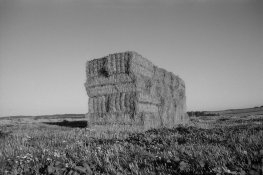
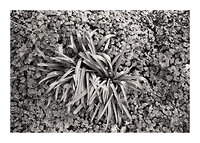
A couple of examples, one with nice high contrast. There is a ton of detail in the shadows in the bridge photo that can be brought out too. (I personally like the shadows darker in this photo darker, but the detail in the foliage in the shadows was surprisingly detailed).

Nice film and I didn't find it finicky at all. I am becoming quite happy with ID-11 as my primary developer, and Microphen for pushing HP5+.
 

Attachments

  • OM2n- TMAX100 - OCT2016-019.jpg
    OM2n- TMAX100 - OCT2016-019.jpg
    266.4 KB · Views: 136
  • OM2n- TMAX100 - OCT2016-014 (1).jpg
    OM2n- TMAX100 - OCT2016-014 (1).jpg
    226.2 KB · Views: 136

RalphLambrecht

Subscriber
Allowing Ads
Joined
Sep 19, 2003
Messages
14,923
Location
K,Germany
Format
Medium Format
I like the idea of TMAX100 for finer grained shots, however it never seems to come out as well as TMAX400, which is such a reliable film for me (KODAK watermarks excluded!)

The TMAX400 shots are always full bodied, with good contrast range. I typically shoot box speed, although have pushed on occasion.

TMAX100 are so often thin and lifeless, even when I give it extra development time. I shoot it at box speed.

I develop both with XTOL 1:1

Any hints? Does tmax100 need special attention? Need to be exposed longer? Different developer?
Max 400 is more forgiving than TMax100 as far as exposure or processing errors go but both are great films. I prefer 400 for portraits and 100 for landscapes.
 

MJLangdon

Member
Allowing Ads
Joined
Oct 25, 2016
Messages
33
Location
Devon
Format
Large Format
TMax 100 is the only film that I use in large format sheet film and 120 roll film.

I have done full tests on TMax 100 film with my standardised development method, using HC110 developer.
I personally rate it at ISO 80 which gives me 0.10 Base + Fog density, 0.20 Zone I net density and Zone VIII 1.30 net density.

I use a De Vere 504 colour enlarger for split grade printing on Illford warm tone multigrade FB gloss paper developed in Dektol.

The Blacks are so deep and the whites are nice and bright, while still retaining detail with scenes that have a full tonal range.

All I can suggest is that you research into how to test film densities and work out your own EI number.
Remember to standardise all your development routine, even down to the agitations to get predicable results.

Tests can then be done to find out the dynamic range of the film that contains detail.

Expose for the shadows and develop for the highlights.

Hope this helps.
 

Andrew O'Neill

Moderator
Moderator
Joined
Jan 16, 2004
Messages
12,925
Location
Coquitlam,BC Canada
Format
Multi Format
I always liked TMX 100 in Xtol 1+1. This past summer, I developed a few sheets in Blazinol (Rodinol wannabee), and they look great on the light table... haven't printed them yet, though!
 
Photrio.com contains affiliate links to products. We may receive a commission for purchases made through these links.
To read our full affiliate disclosure statement please click Here.

PHOTRIO PARTNERS EQUALLY FUNDING OUR COMMUNITY:


Ilford ADOX Freestyle Photographic Stearman Press Weldon Color Lab Blue Moon Camera & Machine
Top Bottom