

Romanko
Member
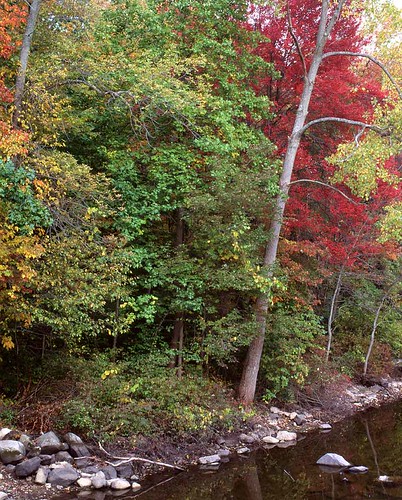
I would like to hear some tips on shooting Ektar. I had a closer look at a few rolls I shot recently and I really like this film. I am getting better at achieving more consistent results but there is still room for improvement.


Could you please share your experience with Ektar in a different thread. I'm starting to shoot more of it in 120. The film can be difficult at times and I would like to get more tips from people who use it regularly. I hope @DREW WILEY could contribute.

I believe these are characteristic curves.Spectral sensitivity; Portra in magenta, Ektar in brown:
'magenta' means green channel, right?However, Ektar shows a steeper blue curve (it crosses to yellow highlights in the positive), while magenta and especially red shoulder off distinctly (creating green and red = brown highlights).
Interesting suggestion. Australia in the summer is mostly yellow-brown but we do have nice blue skies and some red soil.Enjoy Ektar's blues and reds.
I believe these are characteristic curves.
'magenta' means green channel, right?
Australia in the summer is mostly yellow-brown but we do have nice blue skies and some red soil.
If I actually understood everything discussed thus far, these graphs with their "diffuse spectrul sensitivity" "log exposure" "hd curves" etc., would I be a better photographer?
The Beatles didn't know sheet music....

Is it possible to use 81a filter for slides in order to influence a little the scene where there is sun and shadows

And this is related to Ektar how?"For those wanting to “warm up” Ektachrome, an 81a or b, or light red colour compensating filter could be used."
from a brilliant review of Ektachrome by Mark Darragh.
Review of Kodak Ektachrome E100 4x5 sheet film by Mark Darragh - View Camera Australia
Ektachrome 100 4x5 review by Mark Darragh.viewcameraaustralia.org
Tangentally. Many photographers find these film stocks somewhat similar in rendering colors. Both could benefit from using a warming filter. They both start with "Ekta".And this is related to Ektar how?
Tangentally. Many photographers find these film stocks somewhat similar in rendering colors. Both could benefit from using a warming filter. They both start with "Ekta".

Ektar's antecedent was Ektar 25 in the 90's. But the whole Ektachrome brand line of chrome films goes way further back, but not as far back as Kodachrome.
 www.flickr.com
| Photrio.com contains affiliate links to products. We may receive a commission for purchases made through these links. To read our full affiliate disclosure statement please click Here. |
PHOTRIO PARTNERS EQUALLY FUNDING OUR COMMUNITY:  |

