
• Welcome to Photrio!
    Registration is fast and free. Join today to unlock search, see fewer ads, and access all forum features.
    Click here to sign up

Tips for shooting at 1600 ISO

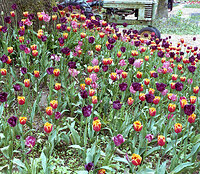
Tractor & Tulips

A
Tractor & Tulips

  • 0
  • 0
  • 12
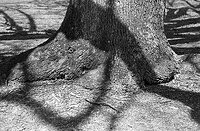
Tree with Big Shadows

Tree with Big Shadows

  • 2
  • 0
  • 71

Forum statistics

Threads
203,456
Messages
2,855,031
Members
101,853
Latest member
Expert Graphics Int.
Recent bookmarks
0

thisispants

Member
Allowing Ads
Joined
Jan 23, 2009
Messages
65
Format
35mm
Hello!

I've just popped in some tri-x pushed to 1600 to give it a whirl. I'm developing my own film for the first time so I thought Ii'd try a roll out and develop it...

I want to start taking some photos at gigs and things and thought learning how to get good results shooting at 1600 would be a good idea.

I have an OM1 with no external light meter. Im just wondering if there's any tricks to it? I can imagine on stage there's little spot lights and things which are bright, but which may not be enough to actually fully register with the cameras light meter to push the little stick meter thing up. Basically I just feel like I have no idea what it going to come out....

I'm a bit lost.
 
Spotlights can fool averaging and centre-weighted meters. You might want to get close to the stage to take a meter reading using only the spotlit area, or use a longer lens to do the same. If you can't do either, you'll have to estimate how many stops to close the lens down.

The real issue with pushed film is that you are really dialing up the contrast. Because the film is still an ISO 400 film, it simply won't record shadow detail at 1600. Sometimes this doesn't matter; sometimes this does. Still, it's fun to experiment.

Ilford Delta 3200 and Kodak T-Max 3200 are better films to use in these circumstances. They actually aren't 3200-speed films (they are marked as such for marketing reasons); they're closer to 800-1000. Still, that's less than a one-stop push if you're shooting at 1600, versus the two-stop push you're getting with pushed Tri-X.
 
I actually like pushed Tri-X better than the "official" 3200 films. Of course you always lose shadow detail when pushing, but in my experience it's not as much as you might expect, and to my eye Tri-X has nicer-looking grain than the others. It's largely a matter of taste, though.

As far as metering, I would spend some time just looking around at the stage through the viewfinder and thinking about the meter readings; OK, the darker areas here are going to need 1/50 at f/2.8 (or whatever), that lit area at stage left is about a stop brighter, and so on...and then ignore the meter and shoot based on those "pre-readings". It's not a perfect method, but I think it works better than trusting the meter in circumstances where it can be fooled by spotlights.

-NT
 
You really need to spot meter the performers on the stage or else climb up on the stage yourself at some point with an incident meter and meter the light. IME even matrix metering will overexpose spotlighted performers. It's a tough situation.
 
Photrio.com contains affiliate links to products. We may receive a commission for purchases made through these links.
To read our full affiliate disclosure statement please click Here.

PHOTRIO PARTNERS EQUALLY FUNDING OUR COMMUNITY:


Ilford ADOX Freestyle Photographic Stearman Press Weldon Color Lab Blue Moon Camera & Machine
Top Bottom
