
• Welcome to Photrio!
    Registration is fast and free. Join today to unlock search, see fewer ads, and access all forum features.
    Click here to sign up

Tips for processing Agfa Pan 25 dated 1995

Recent Classifieds

Forum statistics

Threads
202,847
Messages
2,846,452
Members
101,564
Latest member
swedafone
Recent bookmarks
0

guangong

Member
Allowing Ads
Joined
Sep 10, 2009
Messages
3,588
Format
Medium Format
In the process of moving my darkroom to another part of the house I discovered a long overlooked unopened brick of Agfapan 25. While not refrigerated, my basement's temperature remains constant and cool year round. Film was stored close to floor. I bought this film for slitting using Minox and Minolta 16 cameras. My usual developer is Rodinal. Develop as usual? Extend development time? If so, how much? Any advice from anyone with similar experience would be much appreciated.
 
What a find -- on NEW YEARS DAY, to boot!!!

I use AGFAPAN 25 all the time that is that old in my Minox & Minolta cameras -- but it's always been frozen. All you need to do is try a one foot piece of film at normal exposure & development. You might be surprised. I normally shoot APGAPAN 25 at ISO 12, and I bet you won't need to go that low to get great results.

After testing, keep it in the freezer.

Agfapan 25 is superb with small formats. You will be surprised how large you can make prints -- just keep that camera STEADY.

http://www.subclub.org/field/field.htm
 
I use AGFAPAN 25 all the time that is that old -- but it's always been frozen. All you need to do is try a one foot piece of film at normal exposure & development. You might be surprised. I normally shoot APGAPAN 25 at ISO 12, and I bet you won't need to go that low to get great results.

After testing, keep it in the freezer.

Agfapan 25 is superb with small formats. You will be surprised how large you can make prints -- just keep that camera STEADY.

I used Agfapan in the past with my Minox and Minolta 16 cameras with good results. I shot it at ASA 25. This brick was in a storage bin with stuff I had not used lfor a long time. Freezer right next to where film was found...thanks for reminding me.
 
As you know, making big prints from small negatives is like using a telephoto lens -- any movement is magnified. APX 25 is great for big prints as long as the camera is stable. Let us know how it goes.
 
I still have a few rolls of this that probably expired around the year 2000, just want to be kept in the loop, nice find for the new year.
How old is your rodinal?
 
As you know, making big prints from small negatives is like using a telephoto lens -- any movement is magnified. APX 25 is great for big prints as long as the camera is stable. Let us know how it goes.

I'll probably split a roll into several 15 shot Minox strips, thus giving me the opportunity to experiment a little. This must be delayed for several weeks because of visitors. But promos to pass on results.
 
I still have a few rolls of this that probably expired around the year 2000, just want to be kept in the loop, nice find for the new year.
How old is your rodinal?

I bought a bunch of bottles when announced that Agfa was discontinuing. I still have a few left. The stuff seems to last forever. As I already remarked, my basement is cool all year round. Although moving most of my darkroom to another room, will keep film processing in basement. For developing prints, I use a large Nova, which doesn't require a very large footprint.
 
Low ISO films hold up better than higher speed film, I would rate ISO 12, develop in HC 110, or rate at 25 and develop in Diafine.
 
I've still got a few rolls of both 120 and 35mm. Pyrocat HD works very well with it.
img].jpg
 
I have one remaining 17m box of this film (sometime early 90's, maybe 1991). I wouldn't cut it, but if I had to - I wouldn't use Rodinal. It might be good for many situations, but it's still not a fine grain developer.
 
Many years ago I experimented with Acufine, various Tetenal fine grain developers, and others. Couldn't see much difference. Grain is primarily determined by the size of the particles that make up a film's emulsion.
What should be noted is the fantastic resolving power of a Minox lens.
 
That's why I use D-76 to develop my APX 25 -- it produces high speed and high sharpness. I leave the grain to APX 25 -- there basically isn't any, so no need to try to make it smaller.
 
In the process of moving my darkroom to another part of the house I discovered a long overlooked unopened brick of Agfapan 25. While not refrigerated, my basement's temperature remains constant and cool year round. Film was stored close to floor. I bought this film for slitting using Minox and Minolta 16 cameras. My usual developer is Rodinal. Develop as usual? Extend development time? If so, how much? Any advice from anyone with similar experience would be much appreciated.

Brick of APX-25?

You might consider selling because you could make someone happy while at the same time making yourself happy! Any price is fair to someone who wants some
 
Brick of APX-25?

You might consider selling because you could make someone happy while at the same time making yourself happy! Any price is fair to someone who wants some

I'm very happy to have a whole unopened brick of Agfa 25 for myself. Agfa 25 was long considered the go-to film for Minox users. Not foolish enough to sell. Money doesn't make me happy.
 
Brick of APX-25?

You might consider selling because you could make someone happy while at the same time making yourself happy! Any price is fair to someone who wants some

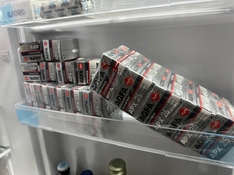
Ok, hereā€˜s a picture of my darkroom fridge. 2,5 bricks, not for sale, but maybe someone will be happy, just looking at isšŸ˜„
 

Attachments

  • IMG_9147.jpeg
    IMG_9147.jpeg
    99.3 KB · Views: 81
Agfa 25 was long considered the go-to film for Minox users.

For some of us it still is. That fixed f3.5 Minox lens say 1/250s on a sunny day with APX 25.

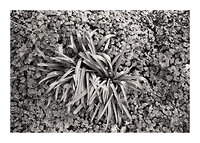
Here are a couple of my rolls:

apx25.JPG
 
Last edited:
I think you may be surprised at the images you'll get. I shot some 1986 Agfa SuperPan 200 (not the later stuff by Rollei called SuperPan) rated at ISO 100 -- at the time, it was out of date over 25 years. Your film is slower, which usually means less fog due to age. Developed in ID-11 1:1 70 degree F, two minutes water pre-soak, 14 minutes in developer, invert each minute. The film did have some fog, but the images, when scanned, were just fine. My notes from the development session were that the negatives looked better than if I'd used 510 Pyro, as the ID-11 brought up the upper values better. (Leica IIIa, Topcor 5cm f/2 LTM lens). Good luck!

1704319273166.png
 
Photrio.com contains affiliate links to products. We may receive a commission for purchases made through these links.
To read our full affiliate disclosure statement please click Here.

PHOTRIO PARTNERS EQUALLY FUNDING OUR COMMUNITY:


Ilford ADOX Freestyle Photographic Stearman Press Weldon Color Lab Blue Moon Camera & Machine
Top Bottom