
• Welcome to Photrio!
    Registration is fast and free. Join today to unlock search, see fewer ads, and access all forum features.
    Click here to sign up

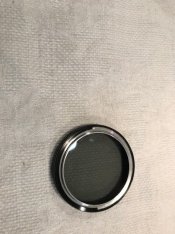
This polar filter......

Flooded woodland

Flooded woodland

  • 15
  • 2
  • 111
Babylon

D
Babylon

  • 3
  • 1
  • 94

Recent Classifieds

Forum statistics

Threads
202,843
Messages
2,846,377
Members
101,561
Latest member
SBurns28804
Recent bookmarks
0

CMoore

Member
Joined
Aug 23, 2015
Messages
6,347
Location
USA CA
Format
35mm
.....was not even sure what to call it to do a search.
Once again, i was wondering if there was another part to this.?
I have never seen a Circular Polar that did not just spin freely once it was mounted to the lens.
This has about 180 degrees before that little pin hits the Stop/Notch on either side.

What is the reason it is built this way.?
Thank You
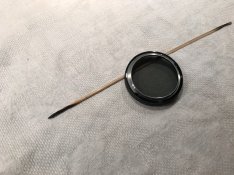
Polar.jpg
 
I've not heard them described as "polar".
As you rotate it, do you see it having an effect?
It might be for a particular application, like use with a copy table.
And by the way, how do you know that it is a circular polarizer, and not a linear one?
 
I've not heard them described as "polar".
As you rotate it, do you see it having an effect?
It might be for a particular application, like use with a copy table.
And by the way, how do you know that it is a circular polarizer, and not a linear one?
I just assumed it is circular because it turns through "Working and not working"
I have never used a Linear Polarizer..... not even sure how they compare to circular.
But to answer your question.....Yes.
When it is mounted you can see it "improve" reflection as you turn the lens. :wondering:
 
Circular polarizing filters came into existence shortly after auto focus was introduced. AF systems have difficulty or will not focus through linear polarizing filters but will through circular polarizing filters. Circular polarizing filters do not have as strong effect as linear polarizing filters.
What brand is your filter?
 
It is Nikon branded.
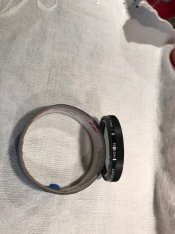
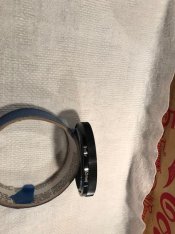
What seems a bit odd is......the two pieces are quite different in size.
If i can explain this......... suppose you have a 55mm Circular Polar. The threaded part is very close in diameter to the filter.
This Nikon......the filter piece has a much bigger diameter than the threaded piece.
 
The size is to help avoid vignetting especially if other filters might be used along with the polarizer, or if it’s used on a very wide lens. Assuming this is the 52mm version, it can be used on a multitude of lenses. Nikon makes a two-part lens hood specifically for it, that covers most of the range of lenses it fits.
As for why the rotation is limited, I don’t know for sure, but once you get to 180 degrees, you don’t accomplish anything by turning it more. I suppose it also helps with screwing it on since the outer ring can make the mounting ring hard to grip.
OTH, some might consider it as solving a problem that doesn’t need to be solved. But, they are really nicely made filters, mine is thirty years old and rotates as well now as it did new.
The things cost a king’s ransom new, so it deserves to be an impressive piece of kit.:wink:
 
I've not heard them described as "polar".

A polar filter is at its best at icy temperatures. That is what already its name refers too...
It is just meant to give fine rendering of snow.
This filter typically is unknown at moderate latitudes.

I see it for the first time myself.
 
A polar filter is at its best at icy temperatures. That is what already its name refers too...
It is just meant to give fine rendering of snow.
This filter typically is unknown at moderate latitudes.

I see it for the first time myself.
I do not own my computer...... its a lease.
If i go over a certain number of a keystrokes count, i have a big payment at the end of lease.
You two guys and your questions are costing me a fortune. :smile:
 
The size is to help avoid vignetting especially if other filters might be used along with the polarizer, or if it’s used on a very wide lens. Assuming this is the 52mm version, it can be used on a multitude of lenses. Nikon makes a two-part lens hood specifically for it, that covers most of the range of lenses it fits.
As for why the rotation is limited, I don’t know for sure, but once you get to 180 degrees, you don’t accomplish anything by turning it more. I suppose it also helps with screwing it on since the outer ring can make the mounting ring hard to grip.
OTH, some might consider it as solving a problem that doesn’t need to be solved. But, they are really nicely made filters, mine is thirty years old and rotates as well now as it did new.
The things cost a king’s ransom new, so it deserves to be an impressive piece of kit.:wink:
That is interesting..... Thank You :cool:
 
Circular polarizing filters do not have as strong effect as linear polarizing filters.
That is new to me.

But why having added a additional optical element, if not necessary? It is a different case when one is using both types of cameras alternating, those that need such and those that do not.
 
As for why the rotation is limited, I don’t know for sure, but once you get to 180 degrees, you don’t accomplish anything by turning it more.

The reduction to 180° makes sense as it saves the user from getting confused by getting 2 timnes the same effect. But of course the filter gets mechanically a bit more complex and costly.
 
"Circular polarizing filters do not have as strong effect as linear polarizing filters."
That has been my observation, as well.

"And by the way, how do you know that it is a circular polarizer, and not a linear one?"
One day I was playing with a new circular polarizer, off-camera, and I noticed if I looked through it the "wrong way" (reversed) then there was almost no effect. Linear polarizing filters produce the same effect no matter which way you look through them. This can easily be seen by looking at your LCD computer monitor through the polarizing filter while rotating the filter. The circular polarizer will black out if looking through the filter from the normal (film) point of view, but not if reversed. The linear filter will black out in both the normal and reversed viewing orientation.

"AF systems have difficulty or will not focus through linear polarizing filters but will through circular polarizing filters."
This may be true for many (most?) autofocus SLR cameras, but it does not apply to mirrorless cameras. Most autofocus SLR cameras use partially reflecting mirrors or beam splitters which direct some of the light to the viewfinder but allow some of the light to pass through the mirror to be used by the autofocus sensors. Only those cameras with partially reflecting mirrors or beam splitters require circular polarizing filters. The autofocus system on my mirrorless camera works fine with linear polarizers.

However, even though linear polarizers cost less and are more effective than circular polarizers, new ones are hard to find, because many manufactures now make only the circular kind for their top-end product line.
 
Last edited:
The circular polarizers were also necessary for cameras that used beam splitters for the metering system.
 
The issue of circular polarizers likely came already up in times before the introduction of autofocus. I just tried to find out for sure. Problem is there even are models were I suspect a need but such is not mentioned in the manual. The grade of error though should depend on the number of crituicakl panes too. (Anyone actully checked models on this?
In any case one can do a test on an unpolarizing object. If there is no change at the metering with a standard (linear) polarizer when rotating it, then the standard filter is ok at least for the exposure metering.


The circular version became so common that younger photographers often speak of circular polarizers, when they just mean a polarizer as such and its effect.
 
Last edited:
It is Nikon branded.
What seems a bit odd is......the two pieces are quite different in size.
If i can explain this......... suppose you have a 55mm Circular Polar. The threaded part is very close in diameter to the filter.
This Nikon......the filter piece has a much bigger diameter than the threaded piece.


I sounds like you have the Nikon 52mm "Polar" polarizing filter.

The larger thread on this filter is for the use of the Nikon HN-12 Lens Hood.

If it is the Nikon 72mm polarizing filter, the larger thread on the filter is for the Nikon HN-13 Lens Hood.
 
My 52mm Nikon "Polar" polarizing filter is linear.

I bought it before auto focus existed and before light meters relied on split beam mirrors.
 
My 52mm Nikon "Polar" polarizing filter is linear.

I bought it before auto focus existed and before light meters relied on split beam mirrors.
Thank you for including the capital "P" in "Polar".
I thought I was encountering another example of jargon - similar to those who refer to a photographer as a "'tog".
 
I sounds like you have the Nikon 52mm "Polar" polarizing filter.

The larger thread on this filter is for the use of the Nikon HN-12 Lens Hood.

If it is the Nikon 72mm polarizing filter, the larger thread on the filter is for the Nikon HN-13 Lens Hood.
You are correct.
Mine is 52mm and says "Polar"

Let me see if i can photo this thing a bit better.......

polar 01.jpg polar 02.jpg polar 03.jpg
 
I have one of those filters. It came with a Nikkormat and lens combination. I believe the lens it came with was the well-beloved 43-86 zoom. I don't think I have ever used it, since I almost never use the 43-86 zoom. I may have to dig it out and give it a spin (hopefully it fits one of my better-liked lenses.

My only experience with a linear polarizer came on a trip to the Amazon. When I applied to filter to my Minolta, only one-half of the image showed a polarized effect. Fortunately, the autofocus and exposure weren't affected and the images came out fine, but it was a starnge view through the camera.
 
Linear and circular polarizers are equally effective.

A circular polarizer is made by laminating a "quarter waveplate" to a linear polarizer. A quarter waveplate will 'twist' linear polarized light to circular polarization. The circular polarized light exiting the waveplate side behaves in the camera, on average, like unpolarized light. Beam splitters and the like in AF systems (real men don't AF, well, until they get cataracts) will vary the 'split' as the polarization of the light changes - that's why reflections off a glass window (a simple beam splitter, some light gets reflected and some light goes through the window) are polarized and can be eliminated with a polarizing filter set to 90 degrees of the polarization of the light reflecting off the window. If a linear polarizer is oriented in exactly the wrong way then no light will get split off to the AF sensor.

Light, and especially polarized light, gets really weird when you try to look at it closely. Pretty soon you are down a mathematical rabbit hole, and that's without getting all entangled in its quantum side. Just try on some of the Wikipedia articles for size. That's a problem with Wikipedia - it's written by "half experts": half experts try to make things look as complex as possible, real experts try to make things look as simple as possible.

A good primer on polarization: https://www.microscopyu.com/techniques/polarized-light/introduction-to-polarized-light
 
Last edited:
This may be true for many (most?) autofocus SLR cameras, but it does not apply to mirrorless cameras. Most autofocus SLR cameras use partially reflecting mirrors or beam splitters which direct some of the light to the viewfinder but allow some of the light to pass through the mirror to be used by the autofocus sensors. Only those cameras with partially reflecting mirrors or beam splitters require circular polarizing filters. The autofocus system on my mirrorless camera works fine with linear polarizers.

However, even though linear polarizers cost less and are more effective than circular polarizers, new ones are hard to find, because many manufactures now make only the circular kind for their top-end product line.
Excellent summary, runswith. On popular D photo forums, you often read notes from guys who claim they need a circular polarizer. No, they might need a polarizer, but often it is not necessarily the circular version. Do they think circular means round as opposed to square?

Thousands of used linear polarizer are for sale on the 'bay, often quite cheap.
 
Linear and circular polarizers are equally effective.

A circular polarizer is made by laminating a "quarter waveplate" to a linear polarizer. A quarter waveplate will 'twist' linear polarized light to circular polarization. The circular polarized light exiting the waveplate side behaves in the camera, on average, like unpolarized light. Beam splitters and the like in AF systems (real men don't AF, well, until they get cataracts) will vary the 'split' as the polarization of the light changes - that's why reflections off a glass window (a simple beam splitter, some light gets reflected and some light goes through the window) are polarized and can be eliminated with a polarizing filter set to 90 degrees of the polarization of the light reflecting off the window. If a linear polarizer is oriented in exactly the wrong way then no light will get split off to the AF sensor.

I have one thing to add, which is that a circular polarizer for photo use has the quarter wave plate BEHIND the linear polarizer.

This filters linearly polarized light as desired for pictorial purposes (like filtering reflections off glass), and then the 1/4 wave plate converts it to circular polarized entering the camera, because linearly polarized light incident on the beamsplitter may not make it into one of the beams.

But this means that a CPL filter is asymmetric from side to side. This is why runswithsizzers found that a CPL filter turned around has no visual effect. If you turn it around, the CPL filter filters circularly polarized light and turns it into linear polarized light exiting the filter. Since a normal pictorial scene does not have circularly polarized light (unless you spend a lot of time in optics labs), it doesn't seem to have any effect.
 
Is this used to photograph the polar vortex we are experiencing?:D
 
Photrio.com contains affiliate links to products. We may receive a commission for purchases made through these links.
To read our full affiliate disclosure statement please click Here.

PHOTRIO PARTNERS EQUALLY FUNDING OUR COMMUNITY:


Ilford ADOX Freestyle Photographic Stearman Press Weldon Color Lab Blue Moon Camera & Machine
Top Bottom