
• Welcome to Photrio!
    Registration is fast and free. Join today to unlock search, see fewer ads, and access all forum features.
    Click here to sign up

Things I learned in my darkroom I wished I knew before.

Filling In

H
Filling In

  • 0
  • 0
  • 0
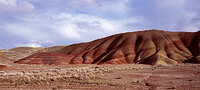
Painted Hills # 3.jpg

H
Painted Hills # 3.jpg

  • 3
  • 0
  • 64

Recent Classifieds

Forum statistics

Threads
203,208
Messages
2,851,364
Members
101,721
Latest member
rptn
Recent bookmarks
0
A hair dryer works well with RC prints.
 
I've been noticing, (with RC prints) dry down effects sort of take two steps. There is a change from wet to dry and from dry to completely dry... I usually dry mine to a point it feels dry to touch - front and back before making exposure judgment. Recently, I've been noticing the print looks different few hours later - almost as if it continued to dry. Am I seeing real change or is this something psychological?
 
I've been noticing the [RC] print looks different few hours later - almost as if it continued to dry. Am I seeing real change or is this something psychological?

RC papers, especially glossy ones, often have a 'veil' that obscures the deep shadows. Changing the angle of light can reduce or accentuate the veiling. Sometimes heating the print for a few minutes in a print dryer can reduce the veil.

Kodak's RC papers had the problem in spades, Agfa's would exhibit it but you had to look, Ilford's RC papers have very little veiling.

You don't mention the paper you are using, but I wouldn't be surprised if you found the level of veiling changing in the hours after drying.
 
The veiling is usually micro reticulation of the gelatin super coat caused by big temperature variations. If it occurs it can be cured by steaming the print surface.

Ian


RC papers, especially glossy ones, often have a 'veil' that obscures the deep shadows. Changing the angle of light can reduce or accentuate the veiling. Sometimes heating the print for a few minutes in a print dryer can reduce the veil.

Kodak's RC papers had the problem in spades, Agfa's would exhibit it but you had to look, Ilford's RC papers have very little veiling.

You don't mention the paper you are using, but I wouldn't be surprised if you found the level of veiling changing in the hours after drying.
 
For a test "strip" I cut whatever paper size I'm using into 6 pieces and toss them back into the bag. 8x10 gets cut into 6 pieces, 16x20 into 6 pieces, 5x7 maybe 4 pieces since they are small. I flop one down over an important area of the photo and expose and process it with an educated guestimate for exposure. I generally print things a tad bit lighter knowing it will dry down slightly darker. I don't bother to microwave it or dry it artficially, I know what's gonna happen when it dries. I've seen it happen before enough times. Different paper dry down a little bit more or less. If you FB paper, while it's drying you can see wet spots are lighter than dry spots. With RC paper, I find Ilford has less drydown difference than other paper like Foma, but that's not a statement on the quality of the paper, as they are both good papers.

Back when I only did one type of photography, I had an exposure meter for the enlarger and it worked well with a diffuser under the lens of the enlarger. Sort of averaging, but not perfect. I do a variety of stuff now, and I don't think my method of averaging using a diffuser would suffice.
 
Test strips only get you so far - IMO

And, I also find there is no such thing as the correct grade of paper

Different areas of my prints need different grades and different exposure to get the best out of them

So a test strip can get you "into the ball park" and then its a seemingly never ending series of full size prints as you tune local exposure and grade across different areas of the print

However, I keep refering back to the test strips to get an idea of how much further I might need to go the get an effect I am looking for

Martin
 
Martin

When I say test strips, it can mean a mosaic of test patches from any and all print areas. Once the 'quilt is done, I turn it into a final printing map. Test strips get you all the way!

But I fully agree with your last statement:

However, I keep refering back to the test strips to get an idea of how much further I might need to go the get an effect I am looking for.
 
Martin

When I say test strips, it can mean a mosaic of test patches from any and all print areas. Once the 'quilt is done, I turn it into a final printing map. Test strips get you all the way!

But I fully agree with your last statement:

However, I keep refering back to the test strips to get an idea of how much further I might need to go the get an effect I am looking for.

A can see how a mosaic would work for Ralph

Isn't this also how John Sexton works

Martin
 
Photrio.com contains affiliate links to products. We may receive a commission for purchases made through these links.
To read our full affiliate disclosure statement please click Here.

PHOTRIO PARTNERS EQUALLY FUNDING OUR COMMUNITY:


Ilford ADOX Freestyle Photographic Stearman Press Weldon Color Lab Blue Moon Camera & Machine
Top Bottom
