
• Welcome to Photrio!
    Registration is fast and free. Join today to unlock search, see fewer ads, and access all forum features.
    Click here to sign up

The Zone System

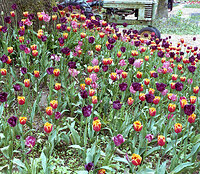
Tractor & Tulips

A
Tractor & Tulips

  • 0
  • 0
  • 10
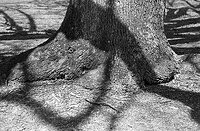
Tree with Big Shadows

Tree with Big Shadows

  • 2
  • 0
  • 69

Forum statistics

Threads
203,456
Messages
2,855,025
Members
101,852
Latest member
keith1420
Recent bookmarks
0

Ektagraphic

Member
Allowing Ads
Joined
Feb 3, 2009
Messages
2,928
Location
Massachusetts
Format
Medium Format
I was reading about the Zone system...Is there anyone using the Zone system with a reflective light meter. I don't have a handheld spot meter but I would really like to get one.
 
I was reading about the Zone system...Is there anyone using the Zone system with a reflective light meter. I don't have a handheld spot meter but I would really like to get one.

I'm confused! A spotmeter is a reflected lightmeter! There is a way to use an incident lightmeter for the Zone System, which was advocated by the late Phil Davis.
 
I believe that a refelective meter averages out the scene where a spot meter gives a reading of that spot specifically.
 
A spot meter is a reflective meter. Not all reflective meters are spot meters. They cover a large area than a spot meter. Reflective meters in cameras may not cover an area, but instead cover the FOV with a matrix.

Steve
 
But will it still work using the Zone System?
 
But will it still work using the Zone System?

Yes if you meter a uniform area or more convenient area of the same brightness that the meter covers. Example: if it is the same as your hand use your hand to read the light from.

Steve
 
A spot meter helps, but is not an absolute requirement to make use of the zone system.
The spot meter allows you to get readings of very specific places in your scene and is especially valuable when those places aren't in a walkable location.
 
Averaging reflected light meter plus walking up to subject = spot meter :smile:.

You need to understand the zone system first. Then, you can learn how to use a spot meter.

Don't try to learn how to use both at the same time.

Matt
 
OK, now I've got a question. Some call it a 'reflected' meter and some a 'reflective' meter. Which is correct?

I think both are awkward, so I am uncomfortable with both.

On the other hand, an "instrument that measures the intensity of light that has reflected off the surface of the subject which is to be photographed" is a bit unwieldy, don't you think?

Matt
 
I think both are awkward, so I am uncomfortable with both.

On the other hand, an "instrument that measures the intensity of light that has reflected off the surface of the subject which is to be photographed" is a bit unwieldy, don't you think?

Matt

Yes. Both are adjectives, so is the word 'incident'. Kodak and Wikipedia are using 'reflected' light meter.
 
I think both are awkward, so I am uncomfortable with both.

On the other hand, an "instrument that measures the intensity of light that has reflected off the surface of the subject which is to be photographed" is a bit unwieldy, don't you think?

Matt

That has a nice ring to it.

Steve
 
OK, now I've got a question. Some call it a 'reflected' meter and some a 'reflective' meter. Which is correct?

Either is good for me because I like to reflect on the subject before taking the photograph. Taking time can improve on the photograph.

Steve
 
Ektagraphic... just stay with it. A few answers here are leaning more toward indirect facetiousness than helpfulness. Pay no attention to those posts. The authors intend no harm. :smile:
 
I was reading about the Zone system...Is there anyone using the Zone system with a reflective light meter. I don't have a handheld spot meter but I would really like to get one.

OK. The Purists will tell you that you can't use The Zone System unless you engage in the corresponding development and printing processes/adjustments as well.

However, I have found the ideas behind the Zone System very helpful in working out a good exposure even though all my developing and printing are done by a commercial film processor.

depending on which book you read, the "System" requires the photographer to visualize the scene to be photographed as an array of nine (in some books more) "tones" (light intensities or "Zones"): a deep, pure black shadow would be a Zone "one" and a pure white would be a Zone "nine". The middle of the range would be a "five".

In practice, green grass, bare dirt, faded cement, old red bricks, faded bitumen, blue sky (opposite the sun) and the palm of your hand approximate to the middle step (i.e. Zone 5). (My palm is closer to Zone 5.5)

Each zone is separated by a doubling of light intensity: i.e. one "stop" or one "Exposure Value".

The simplest application (known as the keytone method) is simply to pick out
a known tone, measure the required exposure with your lightmeter, assign it to a zone and expose accordingly.

I can assure you it works like a charm! :smile:

The tone need not be a "middle gray": it can be any of the nine, but (because, whatever you meter will be interpreted by your meter as being Zone five) you will need to open up or to stop down accordingly, in order to place your metered tonality correctly with regard to your exposure and pre-visualized intent.

An "easy" way is to go for the most important highlight (or shadow) and act accordingly: the remaining tonalities will fall into place automatically.

Effectively, you only need to make one measurement per exposure.

This can be done with an ordinary "reflective" meter (I have several), providing you get close enough to the object (or its proxy) being measured.

A spot meter (I have several more) is very handy insofar as you can do your metering from a distance.

Neither meter will come up with an "automatic" answer: you will need to use your head every time...but it's not rocket-science either.:smile:
 
Last edited by a moderator:
OK. The Purists will tell you that you can't use The Zone System unless you engage in the corresponding development and printing processes/adjustments as well.

Not "can't", but "don't".
:wink:
 
Either is good for me because I like to reflect on the subject before taking the photograph. Taking time can improve on the photograph.

So why use a meter to do that for you?


And wouldn't that then be a "reflecting" meter?

:wink:
 
I was reading about the Zone system...Is there anyone using the Zone system with a reflective light meter. I don't have a handheld spot meter but I would really like to get one.

I am selling mine in the Classifieds section, it uses mercury batteries if you know how to replace them with modern ones like this article shows:

Dead Link Removed
 
Photrio.com contains affiliate links to products. We may receive a commission for purchases made through these links.
To read our full affiliate disclosure statement please click Here.

PHOTRIO PARTNERS EQUALLY FUNDING OUR COMMUNITY:



Ilford ADOX Freestyle Photographic Stearman Press Weldon Color Lab Blue Moon Camera & Machine
Top Bottom