
• Welcome to Photrio!
    Registration is fast and free. Join today to unlock search, see fewer ads, and access all forum features.
    Click here to sign up

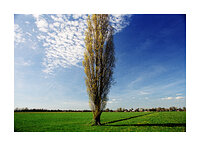
The single best advice I've had on enlarging; make more than one print version.

Cigar again

H
Cigar again

  • 1
  • 0
  • 26
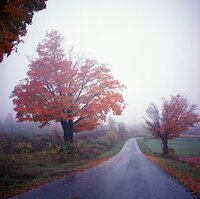
Rainy Day Trees

A
Rainy Day Trees

  • 8
  • 1
  • 119

Recent Classifieds

Forum statistics

Threads
203,178
Messages
2,850,793
Members
101,706
Latest member
FreddieH
Recent bookmarks
0

rpavich

Member
Allowing Ads
Joined
Aug 24, 2015
Messages
1,518
Location
West virginia, USA
Format
35mm
I don't know who said it but someone told me that their advice in getting better at printing was to make more than one version; i.e. when I thought I'd nailed it, make one or two slightly different. Along those lines someone said to leave the darkroom and let the print dry and come back to it with a fresh perspective.
At the time I didn't think anything of this advice but it's really come in handy. I cannot tell you the amount of times I was SURE that I nailed the perfect print and then later on the next day when seen along side other prints I realize how blah or how bad it looks, or one that I thought wasn't "the one" turned out to be best.

Just a thanks to the folks here giving of their time and expertise.
 
I usually make an extra one with about 15% less exposure in case I misjudge dry down. Spare prints can be used to practice spotting before working on the keeper and for toning experiments.
 
I usually make an extra one with about 15% less exposure in case I misjudge dry down. Spare prints can be used to practice spotting before working on the keeper and for toning experiments.
Me too. And the second one is moved up about half a contrast grade. The first "best" one will look good in a brightly lit room. The second "best" version will look good under subdued lighting.
 
Especially if you start out with RC and move to fiber paper, I found that the dry-down effect was much more significant. I now dry the test strips / prints in a microwave before I start working on final prints or planning my burning/dodging/split-contrast needs.

I often print at night, but don't make any decisions on final prints until I can look at them the next day.
 
I only use RC for contact sheets. I don't microwave my test strips. Heat does funny things to the emulsion. Besides, I would feel ridiculous. They didn't have microwaves (or RC) when I started printing. I just wipe them down with a sponge.
 
Obviously, microwaving RC paper is not an option, but I cut a sheet of the fiber paper I'm using into strips for testing different contrast and exposure times on various areas of the image.

Dry in the microwave for 20 sec, and although it curls up a bit I get a very close idea of what the exposure/contrast will look like. Final prints are air-dried on screens and later flattened in a dry-mount press. With Ilford MG fiber paper I get a 10-15% darkening after the print has dried.
 
Yeah, some guy named Adams used a microwave to quickly dry fiber prints.
 
Make some a lot lighter & a lot darker too-it may change your mind.
 
Advice is valid if you are printing for yourself. Somebody here wrote: if you are printing for the client - never show him 2 different prints (lighter and darker), the customer will always say "I want one in between those two" :smile:.
Lol..that's great.
 
It's been attributed to several very good darkroom guys, "If you want to be a better printer, buy a bigger garbage can."
 
cheap blow dryer works wonders for drying test strips and prints i don't use a magnetron
and going outside in room or day light to look at the print.
 
In general "Letting go of things" is kind of an important step to greatly improving your results as a photographer, or any art form really. But it is a careful balance. You don't want to be too quick to completely bin something, but at the same time it pays to not be in too much of a rush to get something out there.

Some images 'just work', and it is clear from the get go that you're happy with things and they're ready to show. Other images are complete failures, and it is pretty obvious that there is no value in them. But the complete failures in my mind are generally only technical issues from accidents. A tripped mistakenly tripped shutter, or totally wrong settings resulting in unusable blur or over/under exposure kind of thing.

For 'other stuff', it can pay to step away for awhile. You might not have what you feel is a great or a strong image at the time, but cataloguing it and tucking it away for awhile gives you the option of coming back and reviewing things later on.

I think for prints that keeping well documented folders full of tests for various negatives seems like a fairly sensible thing to do. What you might think of as a failed experiment today might show more promise or encourage better ideas later on down the road.


In short, riding that fine line along the edge of hoarding for prints and negatives has its rewards. Taking time with things pays off when experimenting, as does being picky with what you actually choose to show off.
 
Make the best print you can...hang it on the wall for a day or 2....then remake it if you see the necessity
 
I leave the 8x10 in my cube at work. After a few days I usually decide to make a slight change.
 
Photrio.com contains affiliate links to products. We may receive a commission for purchases made through these links.
To read our full affiliate disclosure statement please click Here.

PHOTRIO PARTNERS EQUALLY FUNDING OUR COMMUNITY:


Ilford ADOX Freestyle Photographic Stearman Press Weldon Color Lab Blue Moon Camera & Machine
Top Bottom
